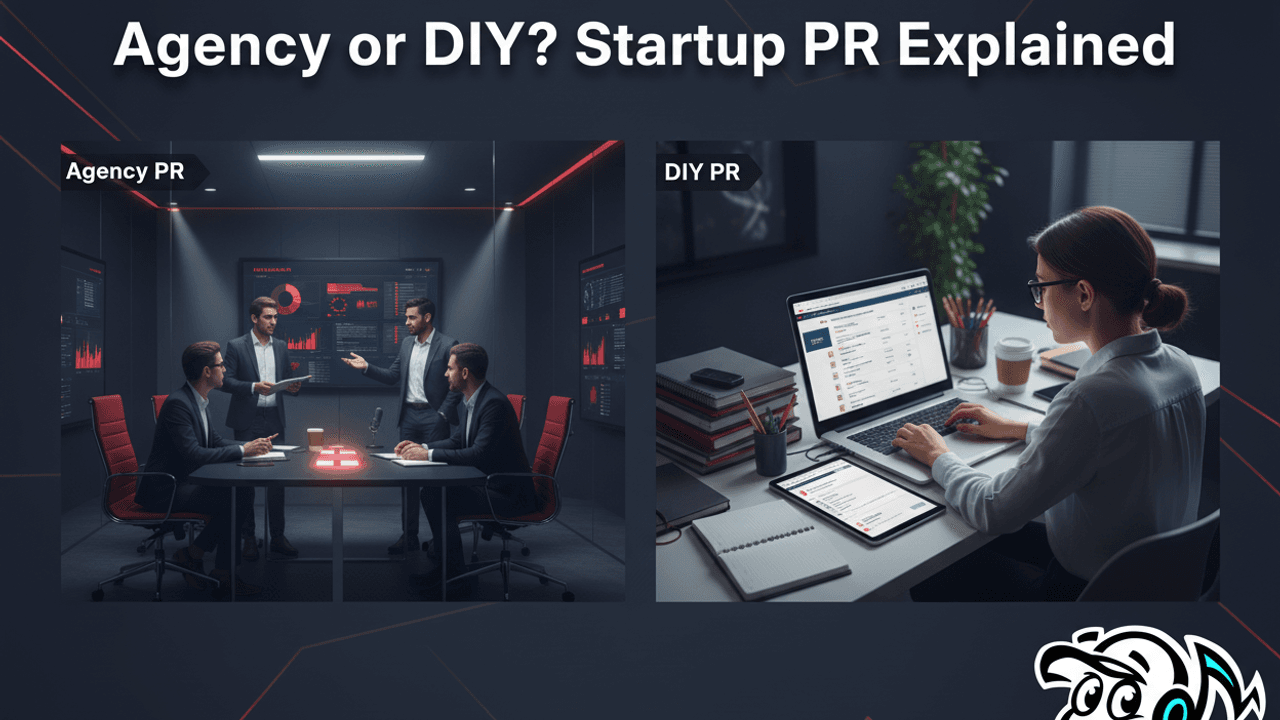
PR for Startups: When to Hire an Agency vs. DIY Your Media Outreach
For early-stage startups, solo consultants, and small business owners, gaining credible visibility is less a luxury and more a necessity. In a crowded market, simply having a great product or service isn't enough; you need to tell your story, build trust, and connect with your audience and potential investors. This is where Public Relations (PR) comes in. But for many founders, the immediate question isn't if they need PR, but how to get it. Should you invest precious resources in a PR agency, or can you effectively manage your own media outreach?
Why Credible Visibility Matters for Early-Stage Startups
From the moment you launch, your startup needs to build a narrative. Credible visibility isn't just about getting your name out there; it's about establishing legitimacy, fostering trust, and attracting the right attention. Positive media mentions, founder profiles, and thought leadership pieces can:
- Attract Customers: Media exposure can introduce your product or service to a wider, relevant audience.
- Secure Funding: Investors look for startups that can generate buzz and demonstrate market traction.
- Recruit Talent: A strong public profile makes your startup more attractive to potential employees.
- Build Credibility: Third-party endorsements from reputable media outlets carry significant weight, validating your offering in a way advertising cannot.
Without a dedicated PR team, many founders face a dilemma: how to achieve this without breaking the bank or diverting critical time from product development and sales. The core question revolves around balancing limited budget, time constraints, and the desire for authentic reach.
The Core Question: Balancing Resources, Reach, and Authenticity
The decision to hire a PR agency or embark on a DIY PR journey is a strategic one, deeply intertwined with your startup's current stage, financial health, and internal capabilities. Both paths offer distinct advantages and challenges. There's no one-size-fits-all answer, but by understanding the nuances of each, you can make an informed choice that aligns with your goals and resources. For a deeper dive into this initial choice, consider exploring our guide on Choosing Between DIY PR and a PR Agency.
The Case for Hiring a PR Agency: Pros, Cons, and Costs
For startups with significant funding or a critical need for rapid, broad exposure, a PR agency can seem like the obvious choice. Agencies bring a wealth of experience, connections, and strategic firepower to the table. However, this comes with its own set of considerations.
Advantages of Professional Expertise and Network Access
When you engage a PR agency, you're not just hiring individuals; you're gaining access to a team of seasoned professionals with specialized skills. Their advantages often include:
- Established Media Relationships: Agencies cultivate relationships with journalists, editors, and influencers across various industries. This network can be invaluable for securing media placements.
- Strategic Guidance: They can help craft a compelling narrative, identify newsworthy angles, and develop a comprehensive PR strategy tailored to your objectives.
- Crisis Management: In an age where a single misstep can go viral, agencies offer expertise in managing reputation and mitigating potential crises.
- Industry Insights: They monitor media trends, understand what journalists are looking for, and can position your startup effectively within the broader industry conversation.
- Time Savings: Outsourcing PR frees up your internal team, allowing founders to focus on core business operations.
Potential Drawbacks, High Costs, and Managing Expectations
While the benefits are clear, hiring a PR agency is a significant investment that comes with potential downsides:
- Significant Financial Investment: This is often the biggest hurdle for startups. Agency retainers can range from several thousand to tens of thousands of dollars per month, making it a substantial line item in a lean budget.
- Less Direct Control: While agencies work with you, you may have less direct control over day-to-day messaging and outreach compared to an in-house or DIY approach.
- Potential for Misaligned Goals: It's crucial to ensure the agency fully understands your vision, goals, and target audience. A mismatch can lead to ineffective campaigns.
- Managing Expectations: PR is not advertising. Agencies cannot guarantee specific media placements, and results can take time. It's essential to have realistic expectations about outcomes and timelines.
- Onboarding Time: Bringing an agency up to speed on your product, market, and story requires a significant time investment from your team initially.
When an Agency Makes Strategic Sense for Your Startup
Despite the costs, there are specific scenarios where a PR agency can provide unmatched value:
- Major Funding Rounds: Announcing a significant seed, Series A, or subsequent funding round often requires a well-coordinated PR blitz to maximize investor and media attention.
- Significant Product Launches: For products with broad appeal or disruptive potential, an agency can help generate widespread excitement and coverage.
- Rapid Scaling or Expansion: If your startup is growing quickly and needs to establish a strong presence in new markets or verticals, an agency can provide the dedicated external support required.
- Complex Storytelling: For highly technical products or nuanced narratives that require expert translation for a general audience, an agency's communication skills can be invaluable.
- Crisis Prevention/Management: If your industry carries inherent risks or your company faces a potential public relations challenge, an agency specializing in crisis communication is essential.
For more insights on this comparison, O'Dwyer's offers a detailed look at PR for Startups: When to Hire an Agency vs. In-House, which also applies to the DIY consideration.
Empowering Your Own DIY Media Outreach: A Strategic Approach
For many startups, particularly those bootstrapping or operating on lean budgets, the idea of a full-service PR agency is simply out of reach. This doesn't mean PR is impossible; it means embracing a strategic, hands-on, DIY approach. This path offers unique benefits and challenges.
Advantages of Hands-On PR: Authenticity and Cost-Effectiveness
Taking control of your own media outreach empowers you to tell your story directly, fostering a level of authenticity that can be hard to replicate:
- Direct Control Over Your Narrative: You are the expert on your business. DIY PR ensures your messaging is always on brand, accurate, and reflects your true voice and vision.
- Building Genuine Relationships: When founders directly engage with journalists, it often leads to more authentic, long-term relationships built on mutual respect and shared interests.
- Significant Cost Savings: Eliminating agency retainers frees up capital for other critical business functions. Your primary investment becomes time and effort.
- Learning and Development: Managing your own PR forces you to understand media landscapes, communication strategies, and storytelling, valuable skills for any founder.
- Agility and Responsiveness: You can react quickly to news cycles, industry trends, and media inquiries without needing to go through an intermediary.
Challenges, Time Commitment, and the Learning Curve
While appealing, DIY PR isn't a shortcut. It demands significant investment in other forms:
- Substantial Time and Effort: Media outreach, research, writing, and follow-up are time-consuming tasks. This can be a major challenge for founders already juggling multiple responsibilities.
- Lack of Established Relationships: Building rapport with journalists from scratch takes time and consistent effort. You won't have an agency's pre-existing network.
- Learning the Nuances of Media Engagement: Understanding what makes a story newsworthy, how to pitch effectively, and media etiquette requires a learning curve. Missteps can burn bridges.
- Potential for Burnout: The often-unrewarding nature of initial outreach, coupled with other startup demands, can lead to burnout if not managed effectively.
Essential Elements for DIY Success: Tools, Stories, and Persistence
Successfully navigating DIY media outreach requires a strategic mindset and the right approach. The Founder Institute provides an excellent guide in The Bootstrapper's Guide to Startup PR, highlighting key elements:
- Identify Your Target Media: Research journalists, publications, podcasts, and influencers who cover your industry or niche. Look for those who have written about similar topics or companies.
- Craft Compelling and Newsworthy Stories: Journalists care about unique angles, significant milestones, problem-solving innovations, and human interest. Focus on the "why" and the impact, not just the "what."
- Consistent and Personalized Outreach: Mass emails rarely work. Tailor every pitch to the specific journalist and publication, demonstrating you've done your research. Follow up politely and persistently.
- Leverage Founder Insights: Your unique perspective, challenges, and vision as a founder are powerful storytelling assets. Share your journey and expertise.
- Utilize PR Tools for Small Businesses: While you might not have an agency budget, there are affordable tools for media monitoring, contact management, and press release distribution.
Remember, getting media coverage without a large agency budget is entirely possible with the right strategy. Our post on Strategies for Gaining Media Coverage Without an Agency offers practical steps. And before you start reaching out, make sure you have your house in order with The PR Checklist: What Every SMB Needs Before Reaching Out to Media.
The Decision Framework: Choosing Your Optimal PR Path

The choice between an agency and DIY PR isn't a binary one. It's a spectrum, and your optimal path might even evolve over time. To make the best decision for your startup, consider these critical factors:
Assessing Your Current Budget and Available Resources
This is often the most straightforward, yet most impactful, factor. Be brutally honest about your financial capacity:
- Agency Costs: Can you realistically sustain a monthly retainer of $5,000 to $20,000+ for at least 6-12 months? This typically includes strategic planning, outreach, and reporting.
- DIY Costs: While "free," DIY still requires investment in tools (media databases, monitoring services, content creation assistance) and, crucially, your time. Value your time as a founder. What's the opportunity cost of you spending hours on PR versus other critical tasks?
- Cash Flow: Consider your runway. Can you afford the upfront investment an agency often requires, or is a gradual, self-directed approach more sustainable?
A detailed breakdown of financial capacity will significantly narrow down your options, directly impacting whether an agency or DIY approach is feasible. For a deeper financial comparison, refer back to insights from O'Dwyer's.
Evaluating Your Internal Time, Expertise, and Founder Bandwidth
Beyond money, time is a founder's most precious resource. Ask yourself:
- Founder Bandwidth: How much time can you, or a dedicated team member, realistically allocate to PR each week? DIY PR is not a "set it and forget it" task; it requires consistent effort.
- Internal Expertise: Do you or someone on your team have experience with media relations, strong writing skills, and an understanding of what makes a story newsworthy?
- Learning Curve Tolerance: Are you willing to invest time in learning the ropes of media outreach, or do you need immediate results from seasoned professionals?
An honest assessment of internal capabilities and your capacity for media engagement will prevent overcommitment and potential burnout.
Defining Your PR Goals, Desired Outcomes, and Timeline
Clarity on your objectives is paramount. What do you hope to achieve with PR, and by when?
- Specific Objectives: Are you aiming for a major product launch announcement, building thought leadership, attracting investors, or driving customer acquisition?
- Desired Outcomes: Do you need national coverage in top-tier publications, or is targeted industry press more valuable?
- Timeline: Do you have an urgent need for visibility (e.g., before a funding round closes), or is building long-term credibility a more gradual process you're comfortable with?
Urgent, high-stakes goals often lean towards agency support, while long-term brand building can be effectively managed DIY.
Exploring a Hybrid Approach: Combining DIY with Targeted Support
It's important to remember that PR doesn't have to be all or nothing. A hybrid approach often provides the best of both worlds:
- DIY Core, Agency for Projects: Maintain your core DIY efforts for ongoing storytelling and relationship building, but hire an agency for specific, high-impact projects like a major product launch or funding announcement.
- Consultancy for Strategy: Engage a PR consultant for a short-term project to develop your PR strategy, train your team, or connect you with initial media contacts, then execute the plan yourselves.
- Tools for Efficiency: Utilize AI-powered tools like ToniPR to streamline the content creation process, turning founder interviews into ready-to-use quotes, articles, and social posts, thereby maximizing your DIY efficiency.
This blended strategy allows you to leverage expert support where it's most needed while maintaining cost control and direct ownership of your narrative. For more on this, revisit our comprehensive guide: Choosing Between DIY PR and a PR Agency.
Leveraging AI for Credible DIY PR: The ToniPR Advantage
The landscape of DIY PR has been significantly transformed by AI. Tools like ToniPR are specifically designed to empower founders, consultants, and SMBs to manage their own media outreach with greater efficiency and impact, without sacrificing authenticity or credibility.
Streamlining Content Creation Without Losing Your Voice
One of the most time-consuming aspects of DIY PR is content creation: drafting press releases, writing compelling pitches, crafting social media updates, and developing articles. This is where AI excels. ToniPR uses an interview-led approach to capture your authentic voice and insights, then helps you transform those raw answers into polished, press-ready materials.
- Effortless Drafting: Instead of staring at a blank page, you answer PR-style questions in your own words. ToniPR then processes these answers to generate various content formats, from media quotes to LinkedIn posts.
- Consistency and Quality: AI ensures a consistent tone and professional quality across all outputs, saving you editing time and ensuring your message is always clear and concise.
- Focus on Your Message: By automating the drafting, you can focus on the strategic elements of your PR: what story to tell, to whom, and why it matters.
Crafting Authentic Founder Stories for Media and Social
The most compelling PR comes from genuine stories and insights, especially from founders. ToniPR's interview format is built around this principle. It helps you articulate your vision, challenges, and successes in a way that resonates with journalists and your audience.
- Capturing Nuance: The interview process allows for the depth and detail needed to convey your unique perspective, ensuring that the AI-generated content truly reflects your voice and values.
- Human-Centered AI: The goal isn't to replace you, but to augment your capabilities. The AI acts as a smart editor and content generator, ensuring your authentic narrative shines through while making it media-ready.
- Building Credibility: By consistently sharing your authentic story, you build trust and authority, which is fundamental to long-term PR success. Learn more about How Founders Build Credibility Online Without Hiring a PR Firm.
Repurposing Interview Answers for Maximum Impact Across Channels
Efficiency is key in DIY PR. ToniPR allows you to get maximum mileage out of every interview by transforming a single set of answers into multiple outputs, tailored for different platforms and audiences:
- Media Quotes: Ready-to-use quotes for press releases or media opportunities.
- LinkedIn Posts: Engaging content to boost your professional presence and thought leadership.
- Blog Posts & Articles: Longer-form content that expands on your insights and positions you as an industry expert.
- Bios and Company Descriptions: Concise, compelling summaries for various platforms.
This multi-channel repurposing significantly enhances your reach and ensures a cohesive message everywhere your brand appears. By streamlining the content creation process, ToniPR empowers you to be your own PR engine, turning your insights into actionable, press-ready content. Discover how ToniPR can streamline your PR efforts at tonipr.com.
Building Long-Term Credibility and Ethical PR Habits
Regardless of whether you choose an agency or DIY approach, the foundation of successful PR for any startup rests on building long-term credibility and adhering to ethical practices. True PR success isn't about fleeting viral moments but sustainable, trust-based relationships.
Prioritizing Consistency and Value Over Short-Term Virality
In the rush for attention, it can be tempting to chase trending topics or sensational headlines. However, for a startup, consistent, valuable communication is far more impactful. Focus on:
- Regular, Thoughtful Engagement: Consistently share insights, updates, and value-driven content that demonstrates your expertise and commitment to your audience.
- Solving Real Problems: Position your startup as a solution provider. Media and audiences are drawn to stories that genuinely address challenges.
- Sustainable Relationships: Build rapport with journalists and stakeholders over time, providing them with reliable, well-researched information.
Short-term virality might generate a spike in attention, but it rarely translates into lasting trust or business growth. Prioritize building a reputation as a reliable and valuable source.
The Power of Authentic Storytelling and Transparent Communication
Authenticity is your superpower. Your startup's unique journey, the challenges you've overcome, and the vision you hold are powerful narratives. Embrace:
- Genuine Insights: Share your real experiences and expertise, rather than simply regurgitating industry platitudes.
- Transparent Communication: Be open and honest about your product, your mission, and even your mistakes. Transparency builds immense trust.
- Your Unique Voice: Let your personality and the personality of your brand shine through. This is particularly effective in DIY PR, where your direct involvement ensures your voice isn't diluted.
Authentic storytelling creates a deeper connection with your audience and media, fostering engagement that goes beyond a single headline. This is crucial for building credibility as a founder.
Avoiding Hype, Misrepresentation, and Fostering Genuine Media Relationships
The PR industry has, at times, faced criticism for exaggerated claims or "spin." As a startup, you have an opportunity to set a new standard:
- Avoid Over-the-Top Hype: Stick to facts, provide data where possible, and avoid making unsubstantiated claims. Under-promise and over-deliver rather than the reverse.
- No Misrepresentation: Always be truthful. Misrepresenting facts, your capabilities, or your market position can irrevocably damage your reputation.
- Respect Journalists' Time and Needs: Understand that journalists are looking for credible, fact-based stories that are relevant to their audience. Provide them with clear, concise information and respect their deadlines.
- Manage Expectations: Never guarantee media coverage or specific outcomes. Focus on providing value and building relationships, and the coverage will follow naturally.
By committing to ethical PR habits, you not only protect your brand but also contribute to a more trustworthy media ecosystem, ultimately benefiting your long-term success.
Frequently Asked Questions
What is a realistic budget for startup PR, whether DIY or agency-led?
For an agency, a realistic budget for a startup typically ranges from $5,000 to $20,000+ per month for a retainer, depending on the agency's size, reputation, and the scope of work. This usually requires a minimum commitment of 3-6 months. For DIY PR, the "budget" primarily consists of your time and effort. However, you should allocate funds for essential tools, which can range from $50 to $500+ per month for media databases, monitoring services, and AI content assistants like ToniPR. While seemingly "free," remember to factor in the opportunity cost of your time as a founder.
How long does it typically take to see tangible results from DIY PR efforts?
Patience is key with PR, especially DIY. Tangible results, such as significant media placements, rarely happen overnight. You can expect to see initial traction, like responses to pitches or interest from smaller publications, within 3-6 months of consistent, strategic effort. Building a strong reputation and securing top-tier coverage can take 6-12 months or even longer. This timeline is heavily influenced by the newsworthiness of your story, the consistency of your outreach, and your ability to build genuine relationships with journalists.
What are the most effective PR tools for small businesses and startups looking to do their own media outreach?
For DIY PR, effective tools can significantly streamline your efforts:
- Media Databases: Services like Cision, Muck Rack, or even more affordable alternatives like Prowly or HARO (Help a Reporter Out) for finding journalist contacts and opportunities.
- Press Release Distribution: PR Newswire or Business Wire for broader distribution, or free services like PRLog for basic reach.
- Media Monitoring: Google Alerts for basic monitoring, or paid tools like Mention or Brandwatch for more comprehensive tracking of your brand and keywords.
- AI Content Creation: Tools like ToniPR that help you turn interviews into press-ready quotes, articles, and social posts, significantly reducing writing time and ensuring consistency.
- CRM/Outreach Tools: Simple spreadsheets or CRM systems to track your journalist contacts and pitch history.
Can a startup truly get significant media coverage without hiring a dedicated PR agency?
Absolutely, yes. Many successful startups have achieved significant media coverage through strategic DIY PR. The key is to understand what makes a story newsworthy, to build genuine relationships with journalists, and to be persistent and professional in your outreach. Focus on your unique story, founder insights, and the value you bring to the market. While an agency can open doors faster due to existing relationships, a compelling story told authentically by a passionate founder often resonates more deeply with journalists. Utilizing AI-powered tools like ToniPR can further level the playing field by helping you produce high-quality, press-ready content efficiently, making significant media coverage more attainable than ever for DIY efforts.