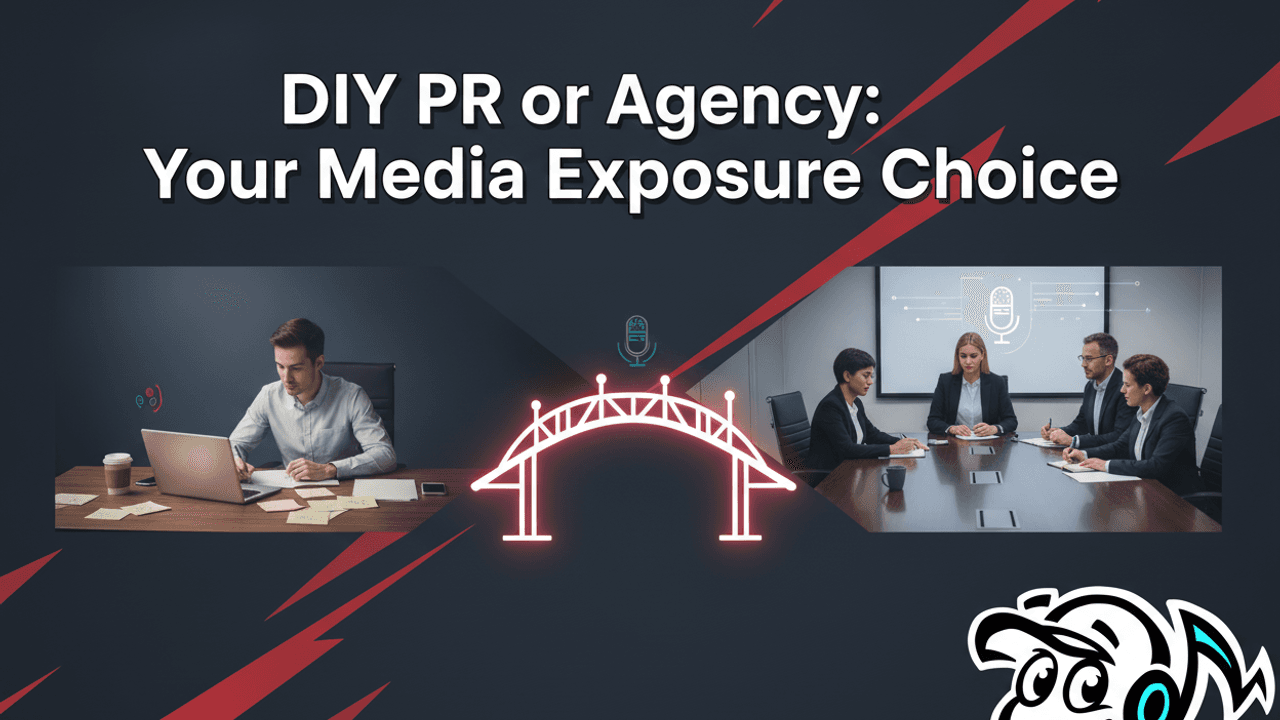
Introduction: The PR Dilemma for Founders and Consultants
As a founder, solo consultant, small business owner, or creator, you understand the critical need for visibility. Getting your story heard by the right audience can differentiate you in a crowded market, attract customers, and even secure funding. But for many, the world of Public Relations (PR) often feels like an exclusive club, requiring significant budgets or specialized expertise.
Navigating the landscape of media exposure
The journey to credible media exposure is rarely straightforward. You’re looking to share your innovations, insights, and unique value proposition, but how do you cut through the noise? The options often appear to be either a costly full-service PR agency or a daunting do-it-yourself (DIY) approach with an uncertain outcome.
The core question: DIY or professional help?
This fundamental question – whether to tackle PR yourself or engage an agency – is one many entrepreneurs grapple with. It’s a strategic decision that impacts not just your budget, but also your brand narrative, control over your message, and long-term credibility.
Setting expectations: Credibility over hype
Before diving into the pros and cons, it’s crucial to set realistic expectations. Effective PR isn't about guaranteed placements, viral stunts, or empty hype. It’s about building genuine relationships, sharing authentic stories, and providing real value to journalists and their audiences. Our focus at ToniPR is on empowering founders to build credible visibility through their own interview-led narratives, ensuring your voice remains central to your story. This guide will help you weigh your options practically, focusing on sustainable, ethical PR habits.
The Case for DIY PR: Control, Credibility, and Cost-Effectiveness
For many startups, small businesses, and individual consultants, the idea of “doing it yourself” isn't just about saving money – it's about maintaining direct control over their narrative and building personal credibility. DIY PR can be a powerful strategy when approached thoughtfully and consistently.
Why founders choose to 'go it alone'
The primary drivers behind opting for DIY PR are often financial. Early-stage companies and solo ventures typically operate on tight budgets, making a full-service PR agency an unrealistic expense. However, beyond cost, founders often choose this path because they are the ultimate experts on their own business. They possess an intimate understanding of their vision, mission, and the unique problems they solve, making them the most authentic storytellers.
Additionally, the desire for direct engagement with the media and the market is a significant factor. DIY PR allows founders to be the face and voice of their brand, fostering a more personal connection with their audience and the press. This direct interaction can be invaluable for building trust and establishing thought leadership.
Benefits of a hands-on approach to media relations
A hands-on approach to media relations offers several distinct advantages:
- Cost Savings: This is arguably the most immediate benefit. By undertaking PR efforts internally, you avoid agency fees, which can range from thousands to tens of thousands of dollars per month. These savings can be reinvested into product development, marketing, or other critical business areas. For practical, budget-friendly strategies, explore 10 Low-Cost PR Strategies for Startups and Small Businesses.
- Direct Control Over Your Message: When you handle your own PR, you maintain absolute control over every word, every nuance of your brand's story. This ensures that your narrative remains authentic and perfectly aligned with your vision, unfiltered by third-party interpretations.
- Building Personal Credibility: As a founder, your personal story and expertise are often intertwined with your company's brand. Engaging directly with media allows you to build your personal brand as a thought leader, fostering trust and authority. Learn more about How Founders Build Credibility Online Without Hiring a PR Firm.
- Authentic Relationships: Direct outreach can lead to more genuine and long-lasting relationships with journalists. When you're the one communicating, reporters get to know you personally, which can be invaluable for future opportunities.
- Learning and Agility: Managing your own PR forces you to learn about media landscapes, storytelling, and communication strategies. This knowledge makes you a more informed business leader, capable of adapting quickly to changing media trends.
Building your narrative and thought leadership
DIY PR is an excellent vehicle for building your unique narrative and establishing yourself or your company as a thought leader. By consistently sharing your insights, perspectives, and expertise through various channels – whether it’s a LinkedIn post, a blog article, or a direct pitch to a journalist – you can carve out a distinct position in your industry. This process emphasizes interview-led storytelling, allowing your authentic voice and expertise to shine through.
For more strategies on how to achieve media coverage without an agency, check out our insights on How to Get Featured in Media Without a PR Agency Budget and How to Get Featured in Top Publications Without a PR Agency.
Understanding the time and skill commitment
While DIY PR offers significant benefits, it's essential to be realistic about the commitment required. It's not a set-it-and-forget-it task. Effective DIY PR demands:
- Time: You’ll need to dedicate consistent hours each week to research, content creation, outreach, and follow-up.
- Skills: Strong writing, communication, and networking skills are crucial. You’ll need to craft compelling pitches, develop press materials, and engage confidently with media professionals.
- Patience and Persistence: Media relations is often a long game. Not every pitch will land, and not every story will be picked up immediately. Resilience is key.
- Strategic Thinking: You need to understand your target audience, identify relevant media outlets, and strategically align your story with current news cycles or industry trends.
The goal is to focus on consistent, ethical PR habits, building a reputation and relationships over time, rather than chasing short-term, unsustainable wins.
When a PR Agency Makes Strategic Sense: Expertise, Scale, and Bandwidth
While DIY PR offers undeniable advantages, there are distinct scenarios where the investment in a professional PR agency becomes not just justifiable, but strategically imperative. Agencies bring a level of expertise, reach, and bandwidth that individual founders or small internal teams simply cannot replicate.
Situations that warrant agency investment
Deciding to bring in a PR agency often aligns with specific business milestones or challenges. Consider engaging an agency when:
- You need broad media reach and established journalist relationships: Agencies have existing networks of contacts across various publications, broadcast outlets, and digital platforms. They can open doors that are often difficult for individual founders to access, especially for national or international coverage.
- You’re handling crisis communications or complex reputation management: In times of crisis, missteps can have devastating consequences. Agencies specialize in rapid response, crafting precise messaging, and managing difficult narratives to protect your brand’s reputation. Their experience can be invaluable in navigating sensitive situations.
- You’re launching major products or entering new markets requiring significant buzz: For high-stakes launches or strategic market entries, generating substantial, widespread media attention is crucial. Agencies have the resources to execute large-scale campaigns, coordinate multiple media touchpoints, and create the kind of buzz that can drive rapid awareness and adoption.
- You lack internal time, expertise, or resources for consistent PR efforts: If your team is stretched thin, or if you simply don’t have someone with dedicated PR experience, an agency fills that gap. They provide a dedicated team focused solely on your media objectives, ensuring consistent effort and professional execution.
- You require agency specialization in specific industries or media types: Some agencies specialize in niche industries (e.g., FinTech, SaaS, healthcare) or specific media formats (e.g., broadcast, investor relations, consumer tech). Their deep understanding of these areas and their relevant media contacts can be a significant advantage.
The value proposition of experienced PR professionals
An experienced PR agency offers more than just media contacts; they provide strategic counsel, a seasoned perspective, and a comprehensive approach to communication. Their value proposition includes:
- Strategic Insight: Agencies can help you refine your message, identify compelling story angles, and develop a PR strategy that aligns with your overall business goals.
- Execution Excellence: From crafting persuasive press releases and media kits to coordinating interviews and managing events, agencies have the operational expertise to execute campaigns flawlessly.
- Industry Knowledge: They understand the nuances of various media outlets, the preferences of different journalists, and the current trends shaping the news cycle.
- Measurement and Reporting: Professional agencies provide clear metrics and reports on their efforts, allowing you to track progress and understand the impact of your PR investment.
Understanding agency costs and scope of work
Agency costs can vary widely, typically ranging from a few thousand dollars per month for a smaller, specialized agency to tens of thousands for larger, full-service firms. These costs are usually based on a retainer model, with the scope of work clearly defined. It's essential to have a clear understanding of what’s included – media relations, thought leadership, content creation, crisis management, etc. – and what isn't, to avoid surprises.
Potential challenges and managing expectations
While agencies offer many benefits, it’s important to manage expectations. PR is never a guarantee, and even the best agency cannot promise specific placements or immediate results. Challenges can include:
- Cost vs. ROI: Ensuring that the agency’s fees deliver tangible value and a return on investment that justifies the expenditure.
- Onboarding Time: It takes time for an agency to fully understand your business, industry, and unique story.
- Alignment: Ensuring that the agency’s strategy and execution remain perfectly aligned with your brand’s voice and objectives. Regular communication and feedback are vital.
- Client Involvement: Even with an agency, your involvement as a founder or expert is crucial. They need your insights, availability for interviews, and approval on key messages.
A clear contract, open communication, and shared understanding of goals are paramount for a successful agency partnership.
Key Factors to Guide Your Decision: Time, Budget, Goals, and Control

Making the choice between DIY PR and hiring an agency isn't a one-size-fits-all decision. It requires a thoughtful assessment of your current resources, future aspirations, and the strategic importance of your public image. Here are the key factors to consider:
Assessing your internal resources and bandwidth
Before committing to either path, take an honest look at what you and your team can realistically dedicate to PR:
- Time: Do you or a designated team member have several hours each week to commit to research, writing, outreach, and follow-up? Consistent effort is crucial for DIY PR.
- Expertise: Do you have strong writing skills, an understanding of media relations, and the confidence to engage with journalists? If not, are you willing to learn and invest in developing these skills?
- Bandwidth: Is your team already stretched thin with core business operations? Adding PR responsibilities to an overloaded team is a recipe for burnout and ineffective results.
Evaluating your team's capacity for consistent outreach, content creation, and follow-up is the first step. If you lack the internal capacity, an agency can fill that void.
Defining your specific PR objectives and desired outcomes
What do you hope to achieve with PR? Vague goals like "more visibility" aren't helpful. Be specific:
- Thought Leadership: Do you want to be recognized as an expert in your field, regularly quoted in industry publications?
- Lead Generation: Is PR intended to drive traffic to your website, increase sign-ups, or generate qualified leads?
- Funding Awareness: Are you seeking to raise your profile to attract investors?
- Brand Awareness: Is the goal simply to get your company’s name and mission in front of a broader audience?
- Crisis Management: Are you preparing for or responding to a potentially damaging situation?
Clearly articulating what 'success' looks like will help you determine the best path. If your goals are highly ambitious, require immediate, widespread impact, or involve complex messaging, an agency might be more equipped to deliver.
Budgetary considerations: What can you realistically invest?
Your financial reality is often the most significant determinant. PR agency retainers can range from $3,000 to $20,000+ per month, depending on the agency's size, reputation, and the scope of work. DIY PR, while not “free,” primarily involves your time and potentially subscriptions to tools (which we’ll discuss next).
Compare the potential ROI of your DIY effort versus an agency investment. Consider not just the direct costs, but also the opportunity cost of your time. If your time is better spent on product development or sales, outsourcing PR might be a more efficient use of resources, focusing on credible outputs rather than just quantity.
How much control do you want over your story?
This is a philosophical but practical question. With DIY PR, you have absolute control over your messaging and how your story is told. Your authentic voice, derived from interview-led storytelling, remains paramount. With an agency, while they work to reflect your brand, there's an inherent layer of interpretation. You’ll be relying on their writers and strategists to articulate your vision, even with close collaboration.
Consider the importance of direct founder voice versus agency-crafted messaging. If your personal brand is central to your company’s identity, maintaining direct control might be more appealing.
The essential PR checklist for readiness
Regardless of your chosen path, certain foundational elements must be in place before you engage with the media. Use a checklist to ensure you’re ready:
- Do you have a clear, concise company story and value proposition?
- Are your website and social media profiles up-to-date and professional?
- Do you have high-resolution photos (headshots, product shots) readily available?
- Can you articulate your unique selling points and differentiators?
- Do you have a clear understanding of your target audience and the media they consume?
- Are you prepared to respond to media inquiries promptly and professionally?
Before reaching out to any media, ensure these foundational elements are in place. Our comprehensive guide, The PR Checklist: What Every SMB Needs Before Reaching Out to Media, can help you prepare.
Leveraging Tools for a Professional DIY Approach (and Hybrid Models)
The landscape of PR has been significantly transformed by technology, making a truly professional DIY approach more accessible than ever before. Founders, consultants, and SMBs no longer have to choose between expensive agencies and rudimentary, unpolished self-promotion. The rise of AI-powered tools has democratized access to high-quality PR outputs, enabling a “hybrid PR” model.
The rise of AI-powered PR tools for founders
In recent years, artificial intelligence has brought sophisticated capabilities to the fingertips of individuals and small teams. For PR, this means tools that can help with everything from identifying media contacts to drafting compelling content. These AI-powered platforms can analyze vast amounts of data, understand language nuances, and generate text that is coherent, persuasive, and tailored to specific PR needs.
This evolution means that the “DIY” in DIY PR no longer implies a compromise on quality. Instead, it suggests a smart, empowered approach where founders leverage technology to augment their efforts, ensuring their output rivals that of larger teams.
How tools professionalize your outputs (quotes, posts, articles)
One of the most significant challenges in DIY PR is consistently producing high-quality, press-ready content. This is where AI tools truly shine. They can help you:
- Refine Your Message: Take your raw thoughts and transform them into concise, impactful soundbites perfect for media quotes or social media posts.
- Generate Press-Ready Materials: Convert interview answers or key insights into polished, professional outputs like LinkedIn posts, blog articles, short-form bios, or even elements for a press release. This streamlines the content creation process, ensuring consistency and quality.
- Repurpose Content Efficiently: A single interview can yield multiple pieces of content – a quote for an article, a series of LinkedIn posts, a short bio for a speaking engagement. AI tools can help you quickly reformat and adapt your core message for various platforms.
- Improve Writing Quality: Beyond just drafting, these tools can assist with grammar, style, tone, and conciseness, ensuring your communication is always professional and impactful.
The focus is on tools that help refine your message, create press-ready materials, and streamline content repurposing, making your internal efforts more effective and professional.
The 'Hybrid PR' model: Combining DIY effort with strategic support
The availability of powerful tools has also given rise to a highly effective “Hybrid PR” model. This approach allows founders to maintain direct control over their narrative and day-to-day efforts while strategically leveraging external support for specific needs. This might involve:
- Using AI tools for content generation and repurposing.
- Hiring a freelance PR consultant for strategic guidance or targeted media outreach for a specific campaign.
- Engaging a PR agency for a short-term project (e.g., a product launch) rather than a long-term retainer.
- Outsourcing specific tasks like media list building or press kit design.
This hybrid approach allows for the control of narrative and cost-effectiveness of DIY, combined with the professional polish and strategic insights that external expertise or advanced tools can provide.
ToniPR's role in empowering interview-led storytelling
ToniPR is designed precisely for this new era of empowered DIY and Hybrid PR. We understand that as a founder, consultant, or SMB leader, your authentic voice and unique insights are your most powerful PR assets. That’s why our AI-powered product focuses on interview-led storytelling.
ToniPR helps you record answers to PR-style interview questions – the very questions a journalist would ask. Our AI then transforms these raw answers into a suite of press-ready outputs: compelling quotes, engaging LinkedIn posts, informative articles, concise bios, and more. This process ensures that your core message, delivered in your own words, is accurately and powerfully conveyed across various platforms.
By using ToniPR, you bridge the gap between your expertise and professional PR output, empowering you to tell your story credibly and effectively, without needing a full PR team. Explore how ToniPR can streamline your DIY PR efforts and amplify your voice at ToniPR.com.
Making Your PR Decision and Moving Forward Ethically
The decision between DIY PR and hiring an agency is a strategic one, deeply personal to your business stage, resources, and ambition. Regardless of the path you choose, the underlying principles of ethical, authentic communication remain paramount. True, lasting visibility is built on credibility, not fleeting trends or exaggerated claims.
Actionable steps for your chosen path
Once you’ve weighed the factors and made a decision, it’s time to translate that choice into action:
- If you’re going DIY:
- Develop a clear action plan: Outline your target media, key messages, content calendar, and outreach schedule.
- Invest in learning: Educate yourself on media pitching, storytelling, and content creation best practices.
- Utilize tools: Integrate AI-powered tools like ToniPR to streamline content creation and enhance output quality.
- Start small, iterate often: Begin with reachable targets and refine your approach based on feedback and results.
- If you’re hiring an agency:
- Vet thoroughly: Interview multiple agencies, check references, and review their case studies. Look for a cultural fit and deep industry knowledge.
- Define scope and KPIs: Ensure the contract clearly outlines deliverables, success metrics, and reporting frequency.
- Prepare for onboarding: Provide your agency with all necessary information about your company, vision, and goals to ensure a smooth start.
- Maintain open communication: Regular check-ins and honest feedback are crucial for a successful partnership.
Prioritizing authentic relationships over 'hacks'
In the quest for media attention, it can be tempting to look for “hacks” or shortcuts. However, sustainable PR is built on authentic relationships and genuine value. Avoid:
- Spamming journalists: Mass emails without personalization are ineffective and can damage your reputation.
- False promises or exaggerated claims: Credibility is fragile and easily lost. Always be honest and transparent.
- Demanding coverage: Journalists are not obligated to cover your story. Approach them with respect and offer valuable, relevant information.
Focus on offering real insights, solving problems, and being a reliable source. This approach fosters trust and leads to more meaningful and lasting media opportunities.
The long-term value of consistent, credible visibility
Public relations is a marathon, not a sprint. Sustained visibility and credibility are built over time through consistent effort, authentic engagement, and the continuous sharing of valuable insights. One-off placements are good, but a consistent presence that establishes you as a thought leader is far more impactful for long-term growth and brand equity.
Remember to encourage repurposing interview-led content across all owned channels – your website, blog, LinkedIn, newsletters – for maximum impact. Every piece of insight you share, every story you tell, contributes to your overall brand narrative. Whether you choose DIY or an agency, commit to an ethical, value-driven approach that champions your authentic voice and builds lasting trust with your audience and the media.
Frequently Asked Questions
What's the typical cost difference between DIY PR and hiring a PR agency?
The cost difference can be substantial. DIY PR primarily involves your time and potentially subscriptions to PR tools or services, which might range from $50 to $500+ per month for advanced features. In contrast, hiring a PR agency typically costs anywhere from $3,000 to $20,000+ per month, depending on the agency's size, reputation, location, and the scope of work (e.g., media relations, thought leadership, crisis management). While DIY PR requires a significant time investment, it offers a much lower financial barrier to entry, making it more accessible for startups, solo consultants, and small businesses.
How much time should I realistically dedicate to DIY PR each week for effective results?
For DIY PR to be effective, you should realistically dedicate at least 5-10 hours per week. This time should be distributed across research (identifying relevant media and trends), content creation (drafting pitches, articles, social media posts), outreach (sending personalized emails to journalists), and follow-up. Consistency is key; sporadic efforts are unlikely to yield significant results. Tools like ToniPR can help reduce the content creation time, allowing you to focus more on strategy and outreach.
Can I start with DIY PR and then transition to an agency (or vice versa)?
Absolutely. Many businesses begin with DIY PR to conserve resources and learn the ropes of media relations. As they grow, secure funding, or face more complex PR needs (e.g., major product launches, crisis management), they often transition to hiring an agency. This phased approach allows you to build a foundation and understand your PR needs before making a significant investment. Conversely, a business might start with an agency for a specific campaign, and then, armed with the knowledge and initial traction, move to a more DIY or hybrid model for ongoing efforts to manage costs. The "Hybrid PR" model, leveraging tools and occasional expert consultation, is increasingly popular for this flexibility.
What are the biggest risks or common pitfalls to avoid when attempting DIY PR?
The biggest risks and pitfalls in DIY PR include:
- Lack of consistency: Inconsistent efforts lead to inconsistent results. PR requires ongoing engagement.
- Poor pitching: Sending generic, untargeted pitches that don't offer value to journalists is a common mistake that can damage your reputation with the media.
- Unrealistic expectations: Expecting immediate, widespread coverage from minimal effort is a recipe for disappointment. PR builds over time.
- Ignoring ethical guidelines: Spamming, making false claims, or trying to “trick” journalists are unethical and detrimental in the long run.
- Lack of professional polish: Poorly written materials, grammatical errors, or unprofessional communication can undermine your credibility. This is where AI-powered tools can significantly help.
- Not understanding media needs: Failing to research what a journalist covers or what their audience is interested in leads to wasted effort and frustration.
Avoiding these pitfalls requires patience, strategic thinking, continuous learning, and a commitment to authentic and professional communication.