Introduction: Why a Clear Understanding of PR & Marketing Fuels Growth
For many solo consultants, small business owners, startup founders, and creators, the lines between Public Relations (PR) and Marketing often seem blurry. Both are crucial for visibility and growth, but their distinct approaches, objectives, and metrics can be confusing. Dispelling this confusion isn't just an academic exercise; it's a strategic imperative for anyone looking to build a credible, sustainable presence without a full PR team.
Beyond the Buzzwords: Dispelling Common Misconceptions
It’s easy to lump PR and marketing together under the umbrella of "getting the word out." However, this oversimplification can lead to misdirected efforts and wasted resources. While both aim to promote your business, their methods and underlying goals differ significantly. Marketing often focuses on direct promotion and sales, whereas PR is about building reputation, trust, and long-term relationships through third-party validation. Understanding this fundamental difference is the first step toward effective strategy.
For a deeper dive into common misconceptions, you might find our article Debunking PR Myths: What Small Businesses Really Need to Know insightful.
The Strategic Advantage for Founders, Consultants, and SMBs
For growing businesses operating with limited budgets and teams, a clear grasp of PR and marketing provides a strategic advantage. It allows you to make informed decisions about where to invest your time and resources, ensuring that every effort contributes meaningfully to your overall growth. This isn't about choosing one over the other, but understanding how they complement each other to create a holistic strategy that fosters credible visibility and sustainable impact, rather than just chasing quick, hype-driven wins.
Public Relations (PR): Building Credibility and Trust
At its core, Public Relations is about shaping public perception and building trust. It's the strategic communication process that cultivates mutually beneficial relationships between organizations and their publics. Unlike marketing, which often seeks direct conversion, PR focuses on creating a positive environment for your brand to thrive.
The Essence of Earned Media and Third-Party Validation
The hallmark of effective PR is earned media. This refers to coverage you gain through editorial efforts – think news articles, podcast interviews, features in industry publications, or mentions by influential figures – rather than through paid advertising. When a reputable journalist or publication covers your story, product, or expertise, it carries an inherent level of credibility that paid advertisements simply cannot match. This "third-party validation" signals to your audience that your work is noteworthy and trusted by objective sources, significantly enhancing your reputation.
Key Objectives: Reputation, Relationships, and Influence
The primary objectives of PR revolve around three pillars:
- Reputation Management: Protecting and enhancing your brand's image. This includes proactive efforts to build goodwill and reactive strategies to address negative publicity.
- Relationship Building: Fostering strong connections with media, influencers, customers, employees, and the broader community. These relationships are critical for long-term support and advocacy.
- Influence: Positioning your brand or yourself as a thought leader and trusted authority in your field. This involves sharing your expertise and insights to influence opinions and perceptions.
PR works to create a positive narrative around your business, making it easier for marketing efforts to succeed by pre-establishing trust and interest.
Examples in Action: From Media Mentions to Thought Leadership
For founders, consultants, and small businesses, PR can manifest in various practical ways:
- Media Features: Being interviewed for a local newspaper story about your business's impact on the community, or having your unique solution highlighted in an industry online publication.
- Podcast Appearances: Sharing your expertise as a guest on relevant podcasts, reaching a targeted audience eager for insights.
- Speaking Engagements: Presenting at industry conferences or local business events, establishing yourself as an expert.
- Awards and Recognition: Gaining accolades for your products, services, or business practices, which can be leveraged for further PR and marketing.
- Community Involvement: Sponsoring local events or participating in charitable initiatives, demonstrating your brand's values.
These activities don't directly sell, but they build a foundation of credibility that makes future sales and growth more likely.
Marketing: Driving Awareness and Direct Engagement
Marketing, in contrast to PR, is more directly focused on promoting products or services to target audiences with the aim of generating leads and sales. It encompasses a broader range of activities designed to create, communicate, deliver, and exchange offerings that have value for customers.
The Landscape of Owned, Paid, and Shared Channels
Marketing leverages various channels, often categorized as:
- Owned Channels: These are assets your business controls, such as your website, blog, email list, and social media profiles. Content here is entirely within your editorial control.
- Paid Channels: These involve direct payment for exposure, including advertising on search engines (Google Ads), social media (Facebook, LinkedIn ads), display ads, sponsored content, and traditional media advertisements.
- Shared Channels: This category refers to social media and other platforms where content is shared and amplified by users. While you might post the original content, its reach and impact depend on audience engagement and sharing.
Each channel serves a specific purpose in the marketing funnel, from initial awareness to conversion.
Core Objectives: Lead Generation, Sales, and Market Reach
The core objectives of marketing are typically quantifiable and directly tied to business growth:
- Lead Generation: Attracting potential customers and capturing their contact information.
- Sales Conversion: Turning leads into paying customers.
- Market Reach: Expanding your brand's presence and visibility within target demographics.
- Customer Retention: Building loyalty and encouraging repeat business from existing customers.
Marketing efforts are designed to drive specific actions and often have clear calls to action (CTAs).
Tactics in Play: Content, Social, Ads, and SEO
A variety of tactics fall under the marketing umbrella:
- Content Marketing: Creating and distributing valuable, relevant, and consistent content (blog posts, videos, infographics, whitepapers) to attract and retain a clearly defined audience. For tips on maintaining a steady flow of content, see The Entrepreneur's Guide to Consistent Content Creation.
- Social Media Marketing: Using platforms like LinkedIn, Instagram, or X (formerly Twitter) to engage with audiences, build community, and promote offerings.
- Email Marketing: Building a subscriber list and sending targeted messages to nurture leads and drive sales.
- Search Engine Optimization (SEO): Optimizing your website and content to rank higher in search engine results, driving organic traffic.
- Paid Advertising: Running targeted campaigns on various platforms to reach specific demographics with promotional messages.
These tactics aim to directly influence purchasing decisions and measure their impact through metrics like website traffic, conversion rates, and return on ad spend.
The Strategic Synergy: Where PR and Marketing Converge for Maximum Impact
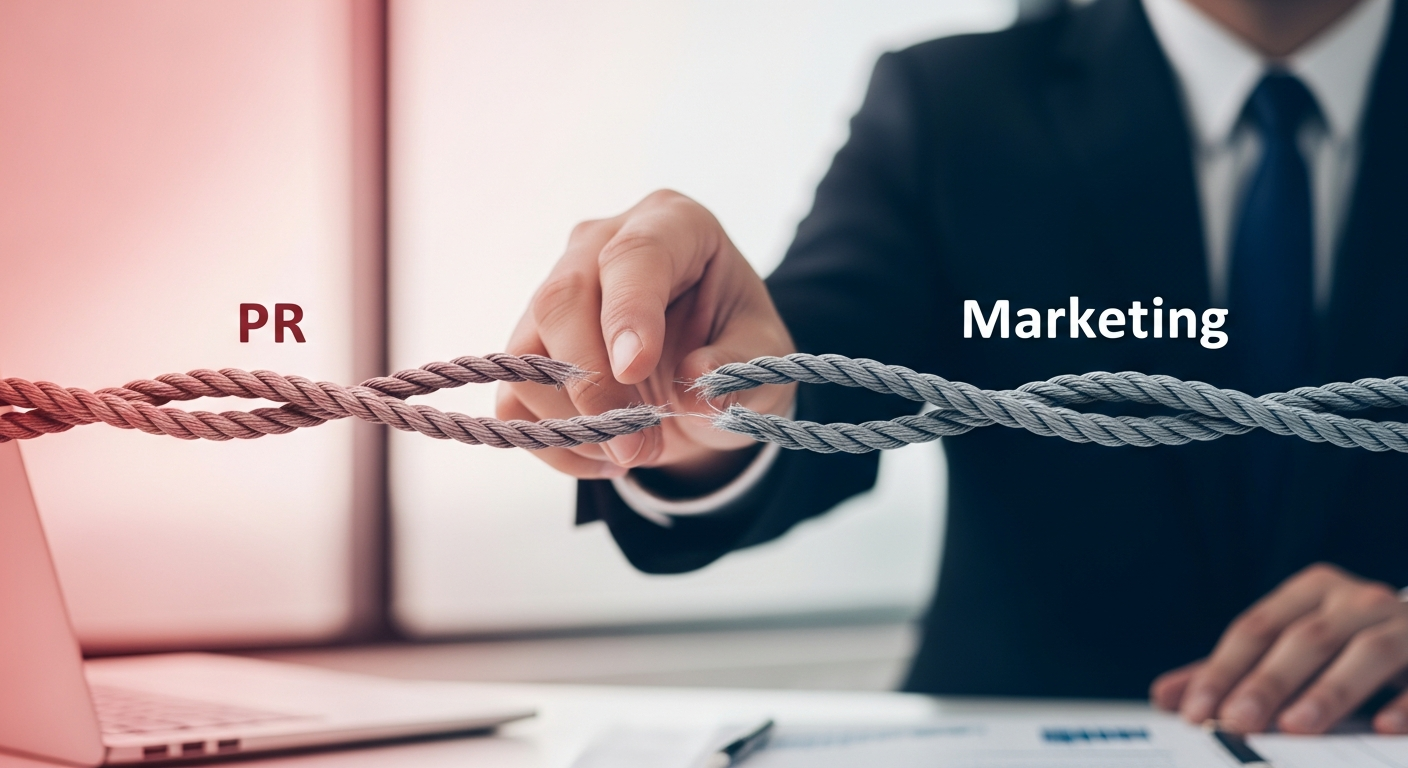
While PR and marketing have distinct functions, their greatest power lies in their synergy. When integrated thoughtfully, they create a powerful, cohesive strategy that amplifies your message, strengthens your brand, and drives sustainable growth.
Distinct Roles, Complementary Goals: A Strategic Overview
To summarize, PR builds the foundation of trust and credibility, often through earned media and third-party validation, focusing on reputation and long-term relationships. Marketing, on the other hand, builds awareness and drives direct engagement and sales through owned, paid, and shared channels, with a focus on measurable commercial goals.
Imagine PR as the architect who designs the strong, respected structure of your brand, and marketing as the interior designer and salesperson who makes it attractive, functional, and desirable to move into. Both are essential for a complete and successful project.
Bridging the Gap: How Both Contribute to a Strong Brand Narrative
The most successful businesses weave PR and marketing into a single, compelling brand narrative. PR can generate positive media attention around a new product launch, which marketing can then leverage in its advertising campaigns, social media content, and sales pitches. Conversely, strong marketing efforts can create buzz and interest that makes your business more appealing to journalists and media outlets.
For instance, a startup might use PR to secure a feature in a tech publication discussing their innovative approach. Marketing then takes that credible mention, shares it across social channels, includes it in email newsletters, and features it on their website, reinforcing the message of innovation and trust. This integrated approach ensures consistency and amplifies the impact of every piece of communication.
Developing a consistent personal brand is a great way to bridge these efforts. Learn more in From Zero to Authority: A Personal Branding Timeline for Professionals.
Why Integration Isn't Just Good, It's Essential for Modern Growth
In today's fragmented media landscape, consumers are bombarded with messages. An integrated PR and marketing strategy ensures that your brand speaks with a unified voice across all touchpoints. This consistency builds stronger brand recognition, enhances recall, and ultimately fosters deeper trust. It also maximizes the impact of your efforts, ensuring that the credibility earned through PR amplifies your marketing messages, and the awareness generated by marketing leads back to a respected, trusted brand identity.
Leveraging Interview-Led Storytelling for Integrated PR & Marketing
For founders, consultants, and SMBs, the challenge often lies in generating high-quality, authentic content consistently. This is where interview-led storytelling shines as a powerful, credible tactic that naturally bridges PR and marketing efforts.
Your Voice, Your Story: The Power of Authentic Interviews
At the heart of both good PR and effective marketing is a compelling story. Who better to tell your story than you? Authentic, interview-led content captures your unique voice, expertise, and passion, making your message resonate more deeply with your audience. Instead of writing generic content, an interview format allows you to articulate your insights naturally, providing rich, nuanced narratives that are inherently credible because they come directly from you.
This approach moves beyond mere facts and figures to convey the human element, the challenges overcome, and the vision driving your work – elements crucial for building genuine connections and trust.
Content Repurposing: One Conversation, Many Outputs
The real magic of interview-led storytelling, especially for lean teams, is its incredible potential for content repurposing. A single recorded interview can be a goldmine of assets for both your PR and marketing strategies:
- For PR:
- Quotes for Media Pitches: Extract powerful quotes for press releases or media outreach.
- Thought Leadership Articles: Develop full articles or op-eds based on your insights, positioning you as an industry expert.
- Podcast/Broadcast Soundbites: Use key audio clips for your own promotional material or as material for guest appearances.
- Speaker Bios/Talking Points: Craft compelling speaker bios and talking points for future engagements.
- For Marketing:
- LinkedIn Posts: Turn interview snippets into engaging posts that showcase your expertise and prompt discussion.
- Blog Posts: Transcribe and expand on interview answers to create detailed blog articles for your website.
- Website & Landing Page Copy: Use your authentic voice from the interview to craft persuasive and credible website content.
- Email Newsletter Content: Share insights and stories from your interview directly with your subscribers.
- Social Media Graphics: Create quotable images for platforms like Instagram or X.
This strategic approach to content creation means you get maximum mileage from your efforts. To dive deeper into making your content go further, read How to Repurpose Content Effectively for Maximum Reach.
This is precisely where ToniPR can help. We transform your recorded answers to PR-style interview questions into press-ready outputs like quotes, LinkedIn posts, articles, and bios, streamlining your content creation process. Discover how at ToniPR — AI PR interviews.
Ethical PR & Honest Marketing: Building Credibility, Not Hype
In an age of information overload, authenticity and honesty are paramount. Interview-led storytelling inherently supports ethical PR and honest marketing by grounding your communications in your genuine voice and expertise. It discourages exaggerated claims or hype, focusing instead on credible insights and real experiences.
By using your own words, you maintain control over the narrative and ensure that your brand promises are aligned with what you can deliver. This approach builds long-term credibility, fostering trust with your audience, which is far more valuable than short-term, hype-driven wins that often lead to disappointment and damaged reputations.
Practical Steps for Founders, Consultants & SMBs
You don't need a massive budget or a dedicated team to implement an integrated PR and marketing strategy. The key is to be strategic, consistent, and authentic.
Start Small, Think Big: Implementing Your Integrated Strategy
Begin by identifying your core message and target audience. What do you want to be known for, and who do you want to reach? Start with one or two integrated campaigns rather than trying to do everything at once. For example, if you're launching a new service, plan a series of LinkedIn posts (marketing) that build anticipation, and simultaneously draft a compelling story idea for a local business publication (PR) that highlights the unique problem your service solves. Once the article is published, share it widely through your marketing channels.
Consistency is more important than volume. A regular cadence of thoughtful content and outreach will yield better long-term results than sporadic, intense bursts of activity.
Tools and Tactics for Solo Operators and Small Teams
Leverage accessible tools and tactics:
- Content Creation: Use tools like ToniPR to efficiently turn your insights into diverse content formats. Simple video recording tools for interviews can also be effective.
- Social Media Scheduling: Tools like Buffer or Hootsuite allow you to plan and schedule your LinkedIn, X, or Instagram posts in advance, ensuring consistent presence.
- Email Marketing Platforms: Mailchimp or ConvertKit offer robust features for building and nurturing your email list.
- Media Monitoring: Set up Google Alerts for your name, company, and keywords to track mentions and identify PR opportunities.
- Networking: Actively engage with journalists, industry influencers, and peers on LinkedIn. Build genuine relationships before you need them.
Focus on your strengths. If you're a strong writer, lean into blog posts. If you're comfortable speaking, explore podcasts and video content. The goal is to maximize your existing expertise.
Measuring Success Beyond Traditional Metrics
For small businesses, success metrics might look different from large corporations. While media placements and sales are important, also consider:
- Brand Mentions & Sentiment: Are people talking about you, and is it positive? Tools like social listening can help.
- Website Traffic & Engagement from Earned Media: How much traffic comes to your site after a media mention? What's the bounce rate and time on page?
- LinkedIn Engagement: Are your posts generating comments, shares, and new connections?
- Email List Growth: Is your subscriber base growing, indicating increased interest?
- Quality of Inquiries: Are you receiving more inquiries from ideal clients who mention hearing about you through a credible source?
- Thought Leadership Impact: Are you being invited to speak or contribute to industry discussions, signaling your growing authority?
Focus on qualitative feedback as well. What are clients saying? Are they mentioning specific articles or interviews that resonated with them? These insights provide a holistic view of your integrated PR and marketing impact, emphasizing credibility and engagement over vanity metrics.
Frequently Asked Questions
Is PR more important than marketing for a new startup?
Neither is inherently "more important"; they serve different, complementary functions. For a new startup, PR can be crucial for building initial credibility and trust, especially when you lack a known brand. Third-party validation from media can provide an essential foundation of legitimacy, making marketing efforts more effective. However, marketing is vital for direct outreach, lead generation, and converting that initial interest into sales. An integrated approach, where early PR wins are leveraged by marketing, is generally the most effective strategy for sustainable growth.
How can a solo consultant effectively manage both PR and marketing efforts?
Solo consultants can manage both by focusing on consistency, repurposing content, and leveraging their expertise. Start by identifying your niche and core message. Use interview-led storytelling (like with ToniPR) to generate versatile content from a single effort. Repurpose this content across various channels: a thought leadership article (PR) can become multiple LinkedIn posts (marketing), an email newsletter segment, or talking points for a podcast appearance. Dedicate specific, consistent time blocks each week to content creation, outreach, and engagement. Building authentic relationships with a few key journalists or influencers can also be more effective than broad, untargeted outreach.
What's the most cost-effective way for a small business to integrate PR and marketing?
The most cost-effective way is through strategic content repurposing and leveraging your own voice. Start by creating high-value, authentic content, often through interviews or deep dives into your expertise. This content can then be sliced and diced for various platforms: a blog post (marketing) can be pitched to a media outlet as an op-ed (PR), and an interview you give can be transcribed into an article (PR) and its key insights shared as social media updates (marketing). Utilizing free tools for social media management, email marketing, and media monitoring, along with platforms like ToniPR to streamline content creation, can significantly reduce costs while maximizing impact.
How do you measure the success of integrated PR and marketing campaigns?
Measuring success involves looking beyond single-channel metrics. For integrated campaigns, consider:
- Website Traffic & Referrals: Track traffic spikes after PR mentions and analyze referral sources to see where visitors are coming from.
- Brand Mentions & Sentiment: Monitor online mentions of your brand across media and social platforms, assessing the tone (positive, neutral, negative).
- Engagement Rates: Look at likes, shares, comments on social media, and open/click-through rates on emails that incorporate PR mentions.
- Lead Quality: Are leads generated after an integrated campaign more qualified or easier to convert?
- Conversion Rates: Directly measure sales or sign-ups that can be attributed to the combined influence of PR credibility and marketing calls to action.
- SEO Impact: Note improvements in search rankings or domain authority driven by high-quality backlinks from earned media.
The goal is to see how PR-driven credibility enhances marketing's ability to drive action, and vice-versa, creating a more robust and trustworthy path to growth.