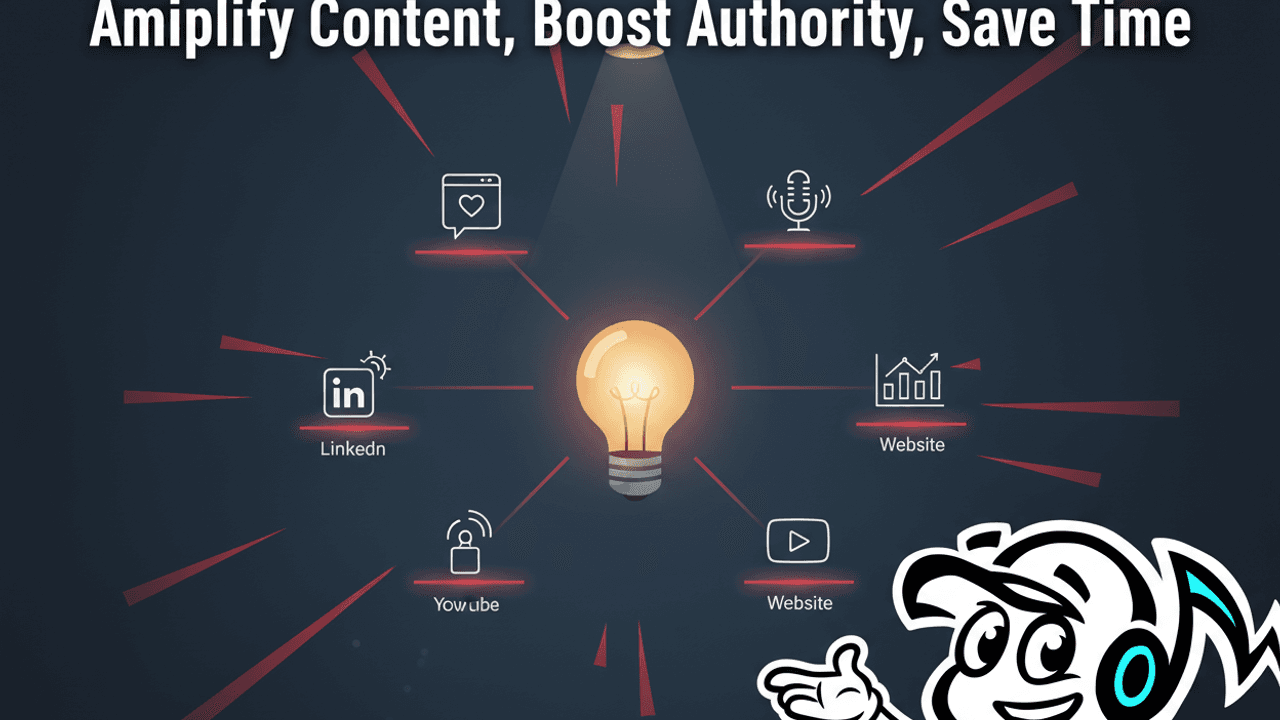
Introduction: Why Repurpose Content? The Credibility & Efficiency Edge
As a solo consultant, startup founder, or small business owner, you understand the constant pressure to maintain visibility and build authority. In today's crowded digital landscape, a consistent, credible online presence isn't just nice to have; it's essential. Yet, the demands of running your business often leave little time for the continuous grind of content creation. This is where a smart, strategic approach to content, particularly repurposing content effectively, becomes your most powerful ally.
The Inevitable Content Challenge for Founders, Consultants, and SMBs
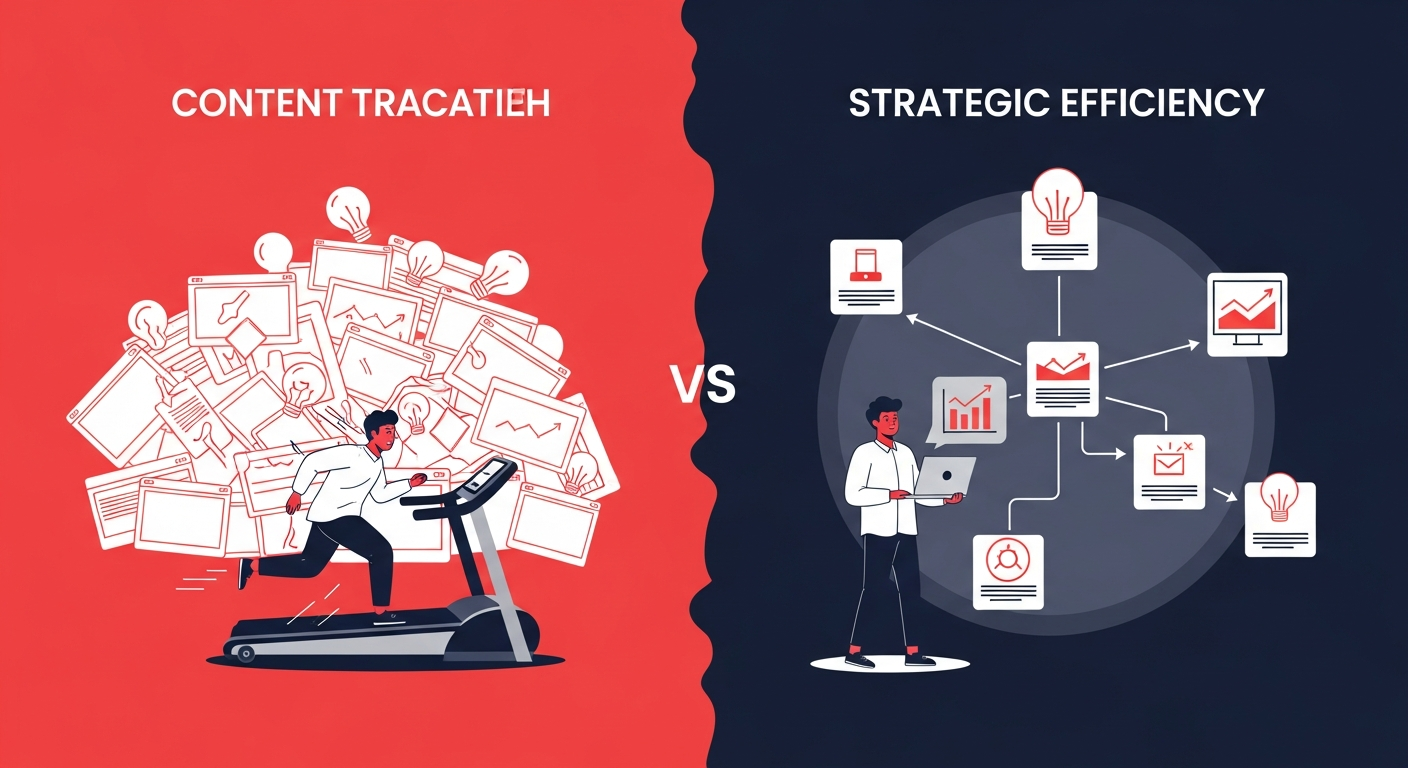
The "content treadmill" is a familiar foe for many entrepreneurs. There's an insatiable demand for fresh articles, social media updates, and thought leadership pieces. Constantly generating new ideas and crafting original content can be exhausting, leading to burnout and inconsistent publishing schedules. This struggle often means valuable insights remain trapped in your head or in one-off conversations, never reaching the wider audience that could benefit from your expertise. If you're looking to maximize your impact while minimizing time, or seeking to maintain a consistent content flow without burnout, repurposing is the answer.
Repurposing: Your Strategic Advantage for Credibility & Efficiency
Repurposing content isn't about laziness; it's about strategic efficiency. It's about taking your existing, high-value insights and transforming them into multiple formats to reach different audiences across various platforms. This approach allows you to achieve consistent visibility and build authority without the constant pressure of starting from scratch. By leveraging your existing knowledge and expertise, you can amplify your message, reinforce key themes, and solidify your position as a credible voice in your industry. It's a sustainable content strategy that allows you to save time and focus on what you do best, all while maximizing your content reach and enhancing your professional reputation.
From Interview Insights to Evergreen Assets: The ToniPR Foundation
At the heart of any effective content repurposing strategy lies a rich, authentic source of original material. For founders, consultants, and SMBs, this often comes directly from their lived experience, their unique perspectives, and their answers to crucial industry questions. This is precisely where interview-led storytelling shines.
The Power of Interview-Led Storytelling for Founders and Consultants
Interviews naturally elicit authentic, detailed responses that reflect your true expertise and voice. Unlike carefully crafted marketing copy, spoken answers often carry a raw honesty and depth that resonates deeply with audiences. When you articulate your thoughts in response to thoughtful questions, you're not just providing information; you're telling your story, explaining your 'why,' and sharing the nuances of your experience. This interview content transformation process turns your spontaneous insights into a powerful primary source, brimming with credible, founder-friendly narratives.
Transforming Spoken Expertise into Written Gold: The ToniPR Approach
ToniPR is designed to capture these invaluable interview insights and transform them into press-ready outputs. We help you record answers to PR-style questions, then process those spoken words into structured, polished content. This process naturally lends itself to creating "evergreen content" – material that remains relevant and valuable over time, continuously attracting and engaging your audience without frequent updates. Your thoughtful responses to core questions about your business, industry, and philosophy inherently possess this evergreen quality. They become the foundational assets for your content repurposing strategy, ready to be carved into various formats. By taking your expertise and turning it into evergreen content for SEO and broader distribution, ToniPR provides the solid ground for maximizing your content reach across all your professional platforms.
Crafting Your Multi-Channel Content Repurposing Strategy
Repurposing content effectively isn't just about cutting and pasting; it's about a strategic approach that maximizes impact across various channels. A well-planned content repurposing strategy ensures your message reaches the right people, in the right format, at the right time.
Defining Your Audience & Content Goals for Impact
Before you start breaking down your core content, it's crucial to understand who you're trying to reach and what you want to achieve. Ask yourself:
- Who is my target audience for this specific piece of content? Are they potential clients, industry peers, or aspiring entrepreneurs?
- Which platforms do they frequent most? (e.g., LinkedIn for professionals, industry-specific forums, email newsletters).
- What content formats do they prefer? (e.g., short, digestible posts; in-depth articles; quick videos).
Next, define clear, measurable objectives for your repurposed content. Are you aiming to increase brand awareness, drive traffic to your website, generate leads, or establish thought leadership? Specific goals will guide your format choices and distribution tactics, ensuring your content amplification tactics are always aligned with your business objectives.
Adopting a Structured Repurposing Framework
To truly maximize content reach, a systematic approach is essential. Consider frameworks like the P-A-D-R concept (Plan, Adapt, Distribute, Refine) outlined by Cognism in their guide on Content Repurposing: B2B Strategy, Templates & Examples. This framework emphasizes planning what content can be repurposed, adapting it for different channels, strategically distributing it, and then refining your approach based on performance. It’s not just about creating more content; it’s about creating smarter content by breaking down a core piece (like an interview transcript) into smaller, digestible, and platform-specific assets.
Identifying High-Impact Content Formats for Your Niche
Your core interview content can be a goldmine for a multi-channel content strategy. Consider how a single, comprehensive interview answer can be transformed:
- Full Blog Post: The detailed answer forms the basis of an in-depth article.
- LinkedIn Carousel/Thread: Key takeaways become slides or a series of concise posts.
- Email Newsletter Snippet: A compelling insight or actionable tip.
- Quote Graphic: A powerful statement overlaid on a simple design for social media.
- Short Video Script: An explanation of a concept, delivered verbally.
- Podcast Snippet: A particularly insightful segment from the original audio.
For B2B audiences, prioritize formats that offer educational value, actionable advice, and demonstrate expertise. Long-form articles, detailed guides, case studies (derived from client stories in interviews), and professional social media updates tend to perform well, making them ideal candidates for your content amplification tactics.
Practical Transformation: Turning Interview Answers into Diverse Outputs
The real magic of repurposing content effectively lies in the practical steps of transforming your raw interview insights into polished, platform-specific outputs. Here's how to turn your spoken expertise into a strategic content ecosystem.
Extracting Powerful Quotes for Social Media & Testimonials
Listen closely to your interview transcripts for concise, impactful statements. Look for sentences that:
- Summarize a key idea.
- Offer a strong opinion or unique perspective.
- Provide a clear, actionable piece of advice.
- Express a benefit or outcome.
These "quote-worthy" snippets are perfect for social media graphics (e.g., Instagram, LinkedIn), tweetable moments, or even as powerful testimonials when discussing client success or personal philosophy. ToniPR helps by identifying and refining these gems, making it easier to pull out compelling soundbites for immediate use.
Developing Engaging LinkedIn Posts and Threads
LinkedIn is a prime platform for B2B professionals. Transform your interview answers into:
- Short-form posts: Take a single point from an answer and elaborate on it briefly, posing a question to encourage engagement.
- Multi-post threads/Carousels: Break down a more complex answer into a series of interconnected posts or visually appealing carousel slides. Each slide can tackle a sub-point, making dense information digestible. Focus on delivering value, sharing insights, and fostering professional discussion. This is a key part of your LinkedIn content repurposing strategy.
Expanding Insights into Blog Articles and Newsletters
A detailed interview answer can be the skeleton for a comprehensive blog post or a segment in your email newsletter. Use the core answer as your thesis statement, then elaborate on each point with examples, data (if available), and further explanations. You can:
- Expand on background information or context.
- Provide step-by-step guidance derived from your advice.
- Discuss implications or future trends mentioned.
This allows you to create valuable long-form content efficiently, leveraging insights you've already articulated. ToniPR's output can often serve as a strong first draft, streamlining the process of turning spoken words into structured articles.
Creating Visuals and Infographics from Key Takeaways
Not all content needs to be text. Key data points, processes, or foundational concepts from your interviews can be transformed into visuals:
- Simple Infographics: Illustrate a process or statistical finding.
- Quote Graphics: As mentioned, powerful quotes are highly shareable.
- Short Video Snippets: Record yourself briefly explaining a key concept from your interview, or animate text from your responses.
These visual assets are excellent for breaking up text-heavy feeds on social media and can significantly boost the shareability and understanding of your message. ToniPR streamlines the initial capture of your ideas, making the subsequent visual transformation much more straightforward.
Strategic Amplification: Boosting Your Repurposed Content on LinkedIn
Once you've transformed your interview insights into diverse content formats, the next critical step is strategic amplification. For founders, consultants, and SMBs, LinkedIn stands out as an unparalleled platform for professional visibility and credible engagement.
Why LinkedIn is Paramount for B2B Founders, Consultants, and Creators
LinkedIn isn't just a job board; it's the world's largest professional network and a powerful content distribution channel for B2B. Its audience is inherently primed for professional insights, industry discussions, and thought leadership. By consistently sharing high-quality, repurposed content on LinkedIn, you can:
- Establish Authority: Position yourself as an expert in your field.
- Expand Your Network: Connect with peers, potential clients, and collaborators.
- Generate Leads: Attract inquiries from businesses seeking your solutions.
- Influence Opinion: Contribute to industry conversations and shape perceptions.
For founders looking to boost their professional visibility, LinkedIn is a non-negotiable platform. Learn more about LinkedIn for Founders: 5 Strategies to Boost Your Professional Visibility to maximize your impact.
Advanced Strategies for Professional Engagement and Visibility
Simply posting content isn't enough. To truly maximize your content reach on LinkedIn, consider these tactics:
- Optimize for the Algorithm: LinkedIn favors content that generates engagement. Craft compelling hooks, ask questions, and encourage comments and shares.
- Engage Authentically: Don't just post and leave. Respond to comments, engage with other people's content, and participate in relevant groups. This builds community and signals to the algorithm that you're an active, valuable member of the platform.
- Tag Strategically: Tag relevant individuals, companies, or industry hashtags to increase visibility, but always do so ethically and only when genuinely relevant.
- Vary Your Content Types: LinkedIn supports text posts, articles, videos, carousels, and polls. Use a mix of these to keep your feed interesting and cater to different consumption preferences.
For an even deeper dive into optimizing your presence, Social Media Examiner offers an Advanced LinkedIn Content Strategy for More Leads and Sales that can significantly enhance your content amplification tactics.
Leveraging LinkedIn's Native Features for Maximum Impact
LinkedIn provides several native tools that are ideal for amplifying your repurposed content:
- LinkedIn Articles: For longer-form content derived from your interview answers, publishing directly on LinkedIn Articles can enhance discoverability and establish you as a thought leader. These articles are indexed by search engines and stay on your profile.
- LinkedIn Newsletters: If you consistently produce valuable content, consider launching a LinkedIn Newsletter. Subscribers are notified directly, providing a powerful direct-to-audience channel for your repurposed articles.
- LinkedIn Video: Short, punchy video clips (explaining a key insight from your interview) can capture attention. Native video uploads often receive greater algorithmic preference.
- LinkedIn Events & Live: Use these features to promote discussions around your content or host live Q&A sessions based on common themes from your interviews.
By ethically leveraging these features and consistently sharing your credible, interview-led insights, you can transform your LinkedIn presence into a powerful engine for building authority and driving business growth. This is the essence of effective LinkedIn content repurposing.
Maintaining Authenticity and Credibility in Repurposing
The goal of repurposing content effectively is to expand your reach and reinforce your message, not to dilute your brand or mislead your audience. Credibility is paramount for founders, consultants, and SMBs. Here's how to ensure your content repurposing strategy upholds the highest standards of authenticity and value.
Preserving Your Unique Voice Across All Formats
Your unique voice and perspective are what differentiate you. While adapting content for different platforms, ensure you maintain a consistent brand voice and tone. If your original interview answers were conversational and direct, your repurposed LinkedIn posts and blog snippets should reflect that same personality. Avoid adopting generic marketing jargon. Your audience connects with authenticity, so let your genuine self shine through in every piece of content, regardless of its format.
Ensuring Accuracy, Freshness, and Value in Every Piece
Repurposing doesn't mean simply copy-pasting old material. It requires a thoughtful review process:
- Fact-Checking: Always verify any statistics, claims, or industry data, especially if the original content is older. Market conditions, regulations, and technologies can change rapidly.
- Updating Information: If new developments have occurred since the original content was created, integrate them. This demonstrates that you are current and continuously engaged with your field.
- Adding New Perspectives: Look for opportunities to add fresh insights, recent examples, or a new angle to the repurposed piece. This makes it more valuable and less like a mere rehash. Ask yourself: "What new value can I add to this insight for this specific audience and platform?"
This commitment to freshness ensures your content remains valuable and doesn't feel repetitive, which is crucial for building long-term trust and establishing you as a reliable source of information.
The Ethical Imperative of Content Repurposing
Ethical content practices are non-negotiable. When repurposing, always:
- Avoid Misleading Claims: Never exaggerate benefits, make unsubstantiated promises, or imply guarantees about outcomes (e.g., media placement, rankings, revenue) that you cannot control or verify.
- Be Transparent: While it's not always necessary to explicitly state "this content was repurposed from an interview," ensure the core message remains intact and isn't distorted. If you're drawing heavily from a specific source, consider crediting it.
- Focus on Value: The primary goal should always be to provide genuine value to your audience. Repurposing should enhance, not diminish, the quality and integrity of your message.
By adhering to these principles, you build a reputation for honesty and reliability, fostering the kind of long-term trust that is invaluable for any founder, consultant, or SMB seeking credible visibility.
Frequently Asked Questions
How often should I repurpose content to maintain engagement without overwhelming my audience?
The ideal frequency depends on your audience, platform, and the volume of your original content. For LinkedIn, posting 3-5 times a week with a mix of original and repurposed content is often effective. For blog posts, repurposing a major interview into 2-3 new articles per month can be sustainable. The key is to vary the format and focus. Don't post the exact same content across all channels simultaneously. Instead, adapt it uniquely for each platform. Listen to your audience's feedback and monitor engagement metrics; if you see a drop-off, you might be posting too frequently or not varying your content enough.
What are the most effective content types to repurpose for B2B audiences, specifically for founders and consultants?
For B2B audiences, content that educates, solves problems, and establishes authority tends to perform best. Highly effective repurposed types include:
- In-depth blog posts/articles: Expand on a core interview answer.
- LinkedIn threads/carousels: Break down complex ideas into digestible, actionable points.
- Case studies/client success stories: If your interview touches on client experiences, turn them into structured narratives.
- "How-to" guides or checklists: Extract actionable steps from your advice.
- Quote graphics: Share powerful insights or statistics for quick consumption.
- Short video explanations: Briefly explain a concept or answer a common question from your interview.
The goal is to provide tangible value and demonstrate expertise in a professional, credible manner.
How can I ensure my repurposed content remains fresh and valuable, rather than just repetitive?
To keep repurposed content fresh:
- Add new context: Frame the old insight with current industry trends or news.
- Update data: Replace outdated statistics with the latest figures.
- Expand on a specific point: Instead of re-sharing the whole, pick one aspect and delve deeper into it.
- Change the format: A written article becomes a visual infographic; an audio clip becomes a text quote.
- Target a different audience segment: Tailor the message to address a specific pain point for a niche within your broader audience.
- Solicit interaction: Ask new questions related to the repurposed content to spark fresh conversations.
The key is to add a new layer of value or perspective to each iteration, making it distinct from its original form.
Is it acceptable to post very similar content on different platforms, and what are the best practices for doing so ethically?
Yes, it is acceptable and often encouraged to post similar content on different platforms as part of a multi-channel content strategy, provided it's adapted appropriately. Best practices for doing so ethically include:
- Adapt, don't duplicate: Always tailor the content to the native style and audience expectations of each platform. A LinkedIn post will differ from a tweet, even if they convey the same core message.
- Vary timing: Avoid posting identical content simultaneously across all platforms. Space out your posts to maximize reach and avoid overwhelming your audience.
- Link back to the original source: If a piece of content is an excerpt or summary of a larger article on your blog, link back to the full piece. This drives traffic and provides context.
- Add unique value: For each platform, try to add a unique element—a specific question, a different visual, or an additional insight—that makes it distinct.
- Be transparent: While you don't need to explicitly say "repurposed content," ensure your messaging is always clear, honest, and doesn't mislead the audience about the content's origin or intent.
Ethical repurposing is about extending the life and reach of valuable content, not about deceptive practices.