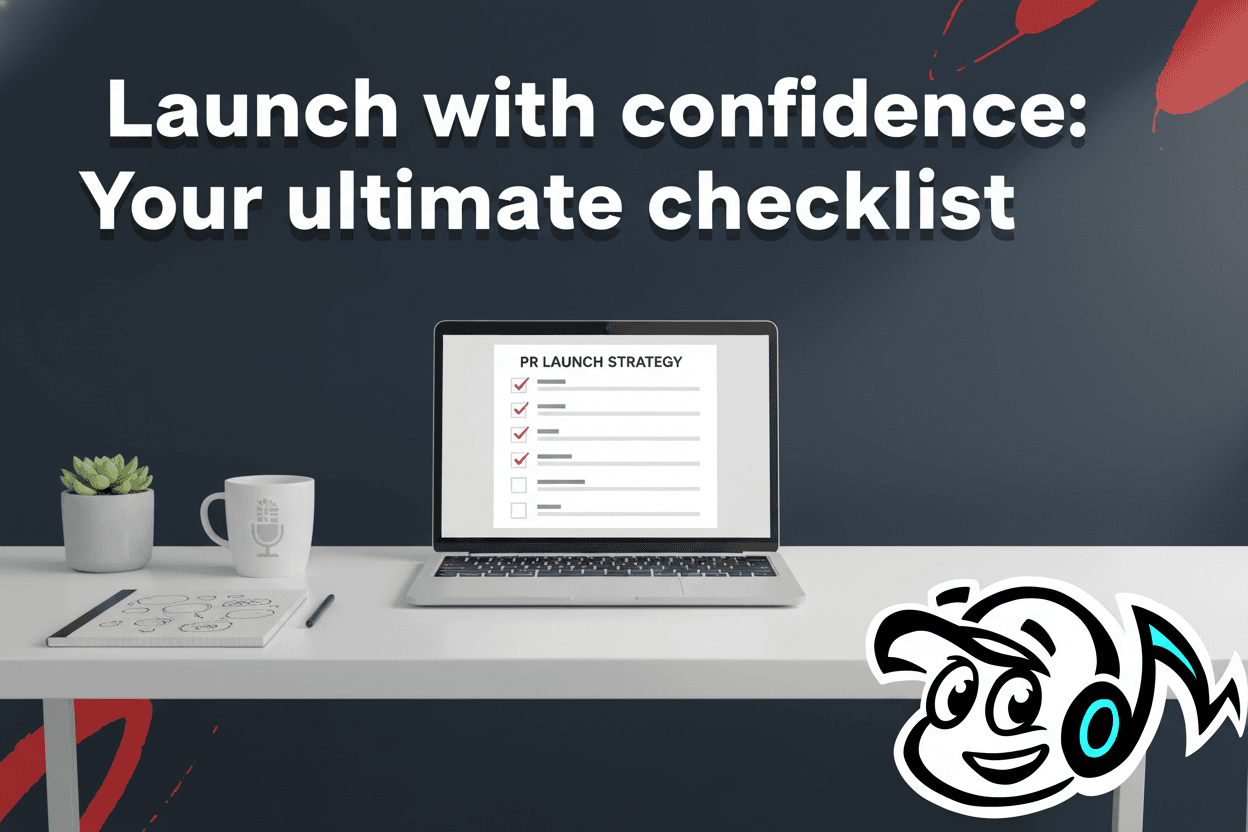
The ultimate checklist for launching a new product or service.
Launching a new product or service is an exhilarating journey, fraught with both immense potential and unique challenges. For solo consultants, small business owners, startup founders, and creators, the stakes are particularly high. You're not just bringing an idea to life; you're building a reputation, often with limited resources and without a dedicated PR team.
This isn't about chasing viral trends or making unrealistic promises. It's about building something sustainable, something that resonates with your audience because it's genuinely valuable and credibly communicated. The goal is to move beyond the hype and lay a solid foundation for long-term success.
Introduction: Beyond the Hype – Why a Credible Launch Matters
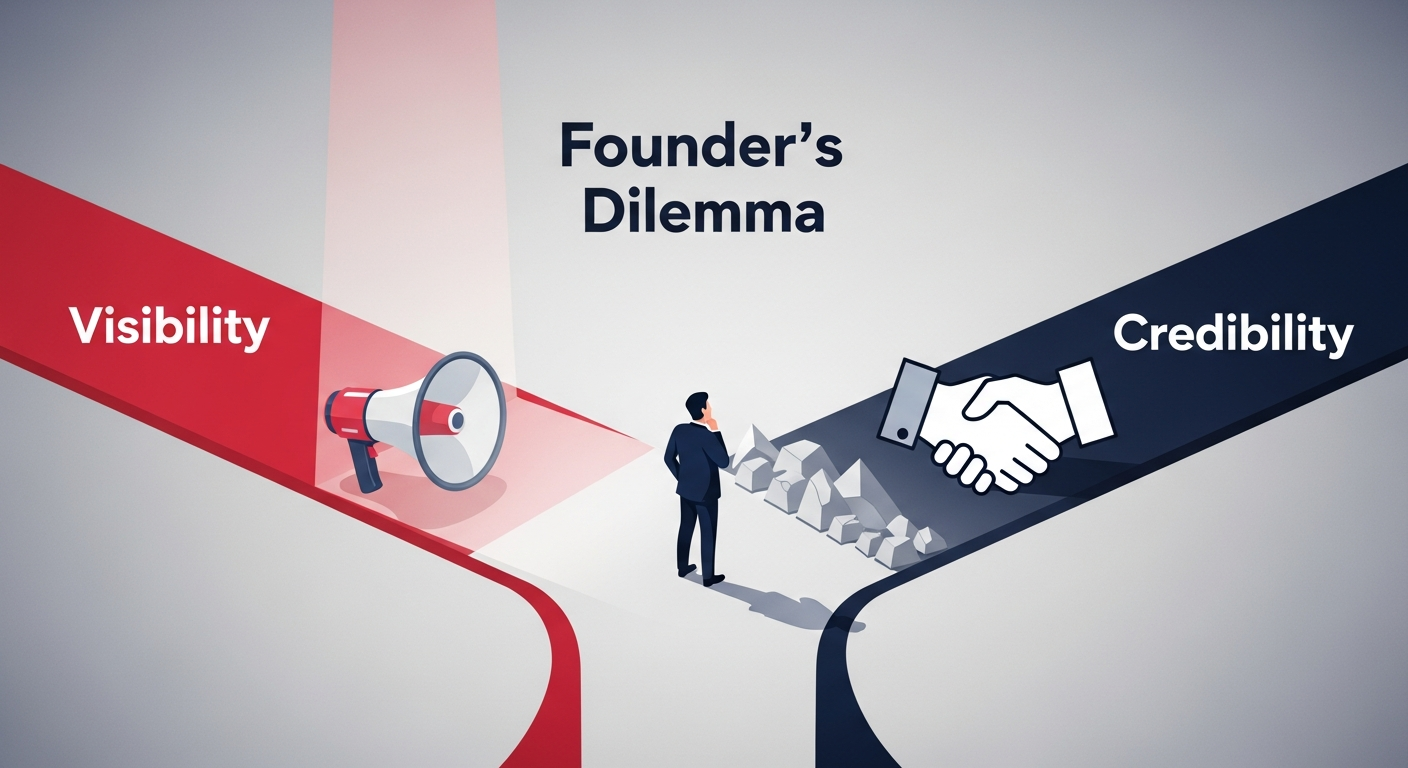
In today's crowded digital landscape, every new offering vies for attention. The temptation to shout the loudest, to promise the most, is immense. Yet, for founders, consultants, and small business owners, this often leads to a dilemma: how do you achieve visibility without sacrificing the credibility that underpins trust and sustainable growth?
The Founder's Dilemma: Visibility vs. Credibility
Many first-time founders and small business owners find themselves caught between the desire for immediate impact and the need to build a trustworthy brand. Hype might generate initial buzz, but it rarely fosters loyalty or long-term engagement. A credible launch, on the other hand, prioritizes authentic connection, transparent communication, and genuine value. It’s about telling your story in a way that resonates, not just amplifies.
What This Checklist Covers: Execution Meets Storytelling
This comprehensive product launch checklist is designed to guide you through every critical phase, from initial concept to post-launch iteration. We'll cover not just the operational steps of building and delivering your product or service, but also the equally vital strategies for crafting a compelling narrative and communicating it effectively. You'll learn how to avoid common pitfalls of hype-driven launches, instead focusing on building authentic connections and establishing your authority from day one. This roadmap integrates both meticulous execution and impactful communication, ensuring your launch isn't just successful, but also sustainable.
Phase 1: Pre-Launch Foundations & Strategic Positioning
Before you even think about announcing your offering to the world, robust foundational work is essential. This phase is about understanding your market, refining your offering, and ensuring your business is ready for prime time.
Market Research & Validation: Knowing Your Audience
A successful launch begins with a deep understanding of who you're serving and what problems you're solving. Don't just assume; validate. Conduct thorough market research to identify your target audience's demographics, psychographics, pain points, and existing solutions they might be using. Talk to potential customers, run surveys, and analyze competitor offerings. This isn't just about finding a gap; it's about confirming a genuine need and demand for your unique solution. Understanding your audience helps you tailor your product, messaging, and ultimately, your entire go-to-market strategy.
Defining Your Unique Value Proposition (UVP)
Once you know your audience, you need to clearly articulate why your product or service is the best choice for them. Your Unique Value Proposition (UVP) is the core reason a customer should choose you over anyone else. It's not just a list of features; it's the specific benefit or solution you provide that no one else does, or does as well. Focus on clarity, relevance, and differentiation. What makes you stand out? What unique problem do you solve? How do you solve it better? A strong UVP becomes the cornerstone of all your messaging. For a deeper dive into making your offering stand out, explore how to strategically position your new product or service.
Building Your Minimum Viable Product/Service (MVP/MVS)
Resist the urge to launch with every possible feature. Instead, focus on building a Minimum Viable Product (MVP) or Minimum Viable Service (MVS) that delivers essential value to your early adopters. An MVP/MVS should address the core problem your audience faces with the fewest possible features, allowing you to get to market faster, gather real-world feedback, and iterate based on actual user experience. This agile approach minimizes risk, conserves resources, and ensures you're building something people truly want and need.
Legal, Financial, and Operational Readiness
The exciting part is creating the product, but the responsible part is preparing the business infrastructure. Before launch, ensure all necessary legal structures are in place (e.g., business registration, terms of service, privacy policy, intellectual property protection). Secure your financial readiness, including funding, pricing models, and payment processing. Operationally, think about how you'll deliver your product or service, manage customer support, and scale as you grow. Overlooking these critical details can derail even the most promising launch.
Phase 2: Crafting Your Compelling Narrative & Messaging Strategy
With your foundations in place, it's time to build the story around your launch. This phase is crucial for connecting with your audience on an emotional and intellectual level, establishing credibility, and preparing for effective communication.
Developing Your Authentic Founder Story
People don't just buy products; they buy into stories and the people behind them. Your authentic founder story is a powerful tool for building connection and trust. It's not about fabricating a tale, but about articulating your origin – the problem you saw, the passion that drove you, the journey you undertook to create your solution. This narrative should balance personal conviction with a clear understanding of market need. It humanizes your brand and provides a relatable context for your offering. To understand more about structuring an origin story that balances emotional resonance with logical proof, consider insights on how first-time founders build credible founder narratives.
Identifying Key Messages & Target Audiences
Your core message should be consistent, but how you articulate it will vary based on who you're talking to. Identify your key messages – the handful of compelling points you want everyone to remember about your launch. Then, segment your target audiences: customers, potential investors, media, industry influencers, and even your own team. Tailor your communication to each group, highlighting what's most relevant and valuable to them. Consistency in your core message, combined with thoughtful adaptation for different audiences, ensures clarity and impact across all channels.
Preparing Your Press-Ready Content Assets
Effective communication during a launch requires preparation. Before you even reach out to media or publish your announcement, have your content assets ready. This includes concise, impactful quotes about your product or service, compelling soundbites that capture its essence, and a comprehensive list of Frequently Asked Questions (FAQs) with clear, consistent answers. These assets serve as your foundational talking points, ensuring accuracy and consistency across all your communication channels, from your website to media interviews.
The Interview-Led Approach to Credibility
In a world saturated with promotional content, genuine interviews stand out. They offer an authentic, human voice that builds credibility far more effectively than a brochure. By adopting an interview-led approach, you can capture your founder story, key messages, and unique insights in a structured yet natural way. This process helps you refine your messaging, articulate your vision, and generate versatile content that can be repurposed into quotes for press releases, soundbites for social media, detailed blog posts, or even a compelling "About Us" page. This structured interview process is precisely what ToniPR is built for, helping you streamline your launch communications and generate press-ready outputs. Learn how to streamline your launch communications with ToniPR's AI-powered interviews.
Phase 3: Executing Your Go-to-Market & PR Activities
This is where your meticulous planning comes to fruition. This phase focuses on actively engaging your audience and the wider world, ensuring your launch makes a meaningful impact.
Building Pre-Launch Buzz & Teasers
Don't wait for launch day to start the conversation. Begin building anticipation well in advance. This can involve strategic social media teasers, behind-the-scenes content that showcases your journey, email campaigns offering early access or exclusive sneak peeks, and engaging with potential customers in relevant online communities. The goal is to generate excitement, gather early interest, and build a foundational audience eager for your official announcement. A well-executed pre-launch strategy makes your actual launch feel like a culmination, not a beginning from scratch.
Announcing Your Launch with Impact
When launch day arrives, make sure your announcement is impactful and clear. A compelling press release is a fundamental tool for this, but it’s just one piece of the puzzle. Distribute your announcement strategically to relevant media outlets, industry publications, and your existing network. Ensure your website is updated with all the new information, and coordinate your social media channels for a unified message. The announcement should clearly state what you're launching, who it's for, and the unique value it provides. For practical guidance on crafting your announcement, refer to our guide on how to craft a compelling press release to announce your launch.
Engaging with Media, Influencers, and Your Community
Beyond the initial press release, active engagement is key. Identify journalists, bloggers, podcasters, and industry influencers who cover your niche and genuinely align with your values. Personalize your outreach, focusing on how your story or product is relevant to their audience. Remember, ethical PR habits mean building relationships, not just sending out mass pitches. Engage with your existing community on social media, respond to comments, and foster conversations. This direct engagement builds trust and expands your reach organically. For a deeper dive into essential PR strategies for small businesses, check out our resource on how to leverage essential PR fundamentals for your product launch.
Establishing Your Online Presence & Content Strategy
Your online presence is your digital storefront and megaphone. Ensure your website is optimized, clearly communicates your UVP, and provides an intuitive user experience. Develop a consistent content strategy that goes beyond launch announcements. This includes valuable blog posts, case studies, tutorials, and social media content that educates, entertains, and solves problems for your target audience. Regular, high-quality content not only positions you as a thought leader but also improves your search engine visibility over time. Explore various cost-effective ways to get your message out by learning how to implement affordable marketing strategies for your launch.
Phase 4: Post-Launch: Nurturing Growth & Iterating with Credibility
A launch is not a finish line; it's the starting gun for continuous growth and refinement. This phase focuses on listening, adapting, and sustaining your momentum with integrity.
Monitoring Performance & Gathering Feedback
The work doesn't stop after the launch; it evolves. Actively monitor key performance indicators (KPIs) related to your launch goals, whether that's website traffic, conversion rates, social media engagement, or initial sales. Crucially, establish robust channels for gathering customer feedback. This could be through in-app surveys, direct outreach, social listening, or customer support interactions. Understand what's working, what's confusing, and what could be improved. This data-driven approach is vital for making informed decisions.
Iterating on Your Product/Service and Messaging
Based on the performance data and customer feedback, be prepared to iterate. This applies not just to your product or service features, but also to your messaging. Perhaps a certain feature isn't resonating, or your UVP isn't as clear as you thought. Embrace an agile mindset, making continuous improvements and adjustments. This demonstrates responsiveness and a commitment to meeting customer needs, further enhancing your credibility in the market.
Sustaining Your Story & Ongoing PR Efforts
Maintaining visibility requires sustained effort. Your launch story is just the beginning. Continue to tell your evolving story by sharing updates, celebrating milestones, highlighting customer successes, and offering thought leadership on industry trends. Engage in ongoing PR efforts, which might include pitching new angles to media, participating in podcasts, or speaking at relevant events. Consistent, authentic communication keeps your brand top-of-mind and reinforces your position as an authority in your niche.
Building Community and Customer Loyalty
Ultimately, long-term success hinges on building a loyal customer base and a thriving community around your brand. Provide exceptional customer support, actively engage with your community on social media and forums, and create opportunities for customers to connect with each other. Consider loyalty programs, exclusive content, or early access to new features as ways to reward and retain your most valuable advocates. These relationships are the bedrock of sustainable growth and the most credible form of word-of-mouth marketing.
Frequently Asked Questions
What are the essential steps in a product or service launch checklist?
The essential steps for a product or service launch can be categorized into four phases: Phase 1: Pre-Launch Foundations & Strategic Positioning (market research, UVP definition, MVP/MVS development, legal/operational readiness); Phase 2: Crafting Your Compelling Narrative & Messaging Strategy (founder story, key messages, content assets, interview-led approach); Phase 3: Executing Your Go-to-Market & PR Activities (building buzz, official announcement, media/influencer engagement, online presence); and Phase 4: Post-Launch: Nurturing Growth & Iterating with Credibility (monitoring performance, iteration, sustained PR, community building).
How can a small business or solo founder build credibility for a new offering without a large PR budget?
Solo founders and small businesses can build credibility effectively without a massive PR budget by focusing on authenticity and strategic communication. Key strategies include:
- Authentic Storytelling: Share your genuine founder story and the problem you're solving.
- Clear UVP: Articulate what makes your offering uniquely valuable and different.
- Interview-Led Content: Use structured interviews (like those powered by ToniPR) to capture genuine insights and generate versatile, press-ready content. This approach helps you sound authoritative and articulate without needing a full PR team.
- Early Adopter Feedback: Show you're listening and iterating based on real user input.
- Thought Leadership: Consistently share valuable content that educates your audience.
- Ethical Media Relations: Build genuine relationships with relevant journalists and influencers.
- Community Engagement: Actively engage with your audience and foster a loyal community.
When should I start preparing my PR and communications for a new product launch?
You should start preparing your PR and communications strategy much earlier than you might think – ideally during Phase 1: Pre-Launch Foundations, alongside product development. This means defining your key messages, crafting your founder story, and identifying your target media well before your product is fully built. By Phase 2: Crafting Your Compelling Narrative, you should be actively developing press-ready content assets and planning your interview-led approach. Early preparation ensures your messaging is consistent, refined, and ready to go when you begin building pre-launch buzz and engaging with media.
What's the role of founder storytelling in a successful product launch?
Founder storytelling plays a crucial role in a successful product launch because it humanizes your brand and builds an authentic connection with your audience. It's not just about what your product does, but why it exists and who created it. A compelling founder story:
- Builds Trust: People connect with passion, experience, and integrity.
- Differentiates You: In a crowded market, your unique journey can be your strongest differentiator.
- Creates Emotional Resonance: A good story evokes empathy and helps your audience understand the "why" behind your solution.
- Provides Context: It explains the problem you set out to solve and your commitment to addressing it.
- Generates Media Interest: Journalists are often more interested in a compelling narrative than just a list of features.