Launch Your Podcast: A Step-by-Step Guide for Entrepreneurs
In today's competitive landscape, establishing credibility and thought leadership is paramount for solo consultants, small business owners, startup founders, and agency leads. While traditional PR can be effective, it often requires significant resources. Enter podcasting: an accessible, powerful tool for interview-led storytelling that offers a direct line to your audience, enhancing your PR strategy without needing a full-time team.
This comprehensive guide will walk you through every step of launching a podcast for entrepreneurs, from strategic planning and essential equipment to content creation, marketing, and the crucial art of repurposing your audio into press-ready assets. We'll focus on building genuine connections, ethical PR habits, and practical approaches to amplify your message and grow your business.
The Strategic Advantage: Why Entrepreneurs Need a Podcast for PR
Podcasting has evolved beyond a niche hobby into a mainstream media powerhouse. For entrepreneurs, it's not just another marketing channel; it's a strategic PR tool that builds trust, establishes authority, and fosters deep engagement with your target audience.
Beyond Marketing: Podcasting as a PR Powerhouse
While podcasts certainly serve marketing functions, their true strength for entrepreneurs lies in their ability to deliver authentic, interview-led storytelling. Unlike advertising, which can feel transactional, a podcast invites listeners into a conversation, building a relationship over time. This format allows you to showcase your expertise, share valuable insights, and humanize your brand in a way that traditional media often cannot. It's about providing consistent value, which naturally elevates your perceived authority and makes your brand more referable.
The rise of podcasting as a corporate PR tool is undeniable. Businesses are leveraging this medium to connect directly with their stakeholders, share company news, discuss industry trends, and even manage crises with transparency. As an entrepreneur, you can harness this same power to control your narrative and present your unique perspective to the world. For a deeper dive into this phenomenon, read about the rise of podcasting as a corporate PR tool.
Building Credibility and Trust Through Authentic Conversations
Authenticity is the currency of modern PR. In an era of skepticism, listeners crave genuine interactions and expert insights that aren't overly polished or salesy. Podcasting, especially through an interview format, provides a platform for truly authentic conversations. When you host or participate in an interview, you're not just delivering information; you're engaging in a dialogue. This allows your personality, values, and expertise to shine through, fostering a deeper connection and building trust with your audience. Consistent, valuable content delivered through this medium positions you as a reliable source of information and a credible voice in your industry.
Establishing Thought Leadership in Your Niche
A well-produced, consistent podcast is a direct path to establishing yourself as a thought leader. By consistently discussing relevant topics, interviewing industry experts, and offering unique perspectives, you position your brand at the forefront of your niche. Each episode becomes a testament to your expertise and commitment to your field. This isn't about being the loudest voice; it's about being the most insightful and reliable one. For entrepreneurs, this kind of visibility is invaluable for attracting clients, collaborators, and media opportunities. Learn more about how to achieve this with the entrepreneur's guide to thought leadership in media.
Laying the Foundation: Strategic Planning for Your Business Podcast
Before you hit record, a solid strategic plan is essential. This foundational work ensures your podcast aligns with your business objectives and resonates with your target audience, making every effort count.
Defining Your Niche, Audience, and Core Message
Who are you talking to, and what unique value will you offer them? These are fundamental questions. Your ideal listener should be clearly defined: their pain points, interests, professional background, and aspirations. Your niche might be "solo consultants struggling with client acquisition" or "SaaS founders navigating seed funding." Once you know your audience, craft a core message that directly addresses their needs and positions your podcast as the go-to resource for solutions and insights in that specific area. Pinpointing your ideal listener and the unique value your podcast will offer is the first step to creating truly impactful content.
Setting Clear Goals: PR, Lead Generation, or Brand Building?
Your podcast should serve clear business objectives. Are you primarily aiming for enhanced PR and media visibility? Do you want to generate leads for your services or products? Is it about building brand awareness and loyalty? Perhaps it's a combination. Setting specific, measurable, achievable, relevant, and time-bound (SMART) goals will guide your content strategy, marketing efforts, and ultimately, your measurement of success. Aligning your podcast goals with your broader business and PR objectives ensures your efforts are strategic and impactful.
Choosing Your Podcast Format and Episode Structure
The format of your podcast dictates its flow and appeal. Common formats include:
- Interview-based: Features conversations with guests (ideal for B2B and thought leadership).
- Solo-host: You deliver insights, stories, or lessons directly to the listener.
- Co-hosted: Two or more hosts discuss topics, offering dynamic banter and multiple perspectives.
- Narrative/Storytelling: Focuses on in-depth stories, often with sound design and multiple voices.
For entrepreneurs, the interview format is often highly effective for PR, as it allows for diverse voices, shared expertise, and natural storytelling. Once you decide on a format, consider your episode structure: intro music, sponsor reads (if any), main content segments, calls to action, and outro. Consistency in structure helps listeners know what to expect. Decide between interview, solo, co-hosted, or narrative formats based on your goals and resources.
Crafting a Catchy Name and Visual Identity
Your podcast's name and visual identity (cover art) are its first impression. A catchy, memorable name should ideally be descriptive of your niche or core message while remaining unique. Your cover art needs to be visually appealing, legible at small sizes, and reflective of your brand. Think about colors, fonts, and imagery that resonate with your target audience and stand out in podcast directories. Create a memorable brand for your podcast that resonates with your audience and accurately represents your content. For a more detailed guide on getting started, check out our practical checklist for launching your business podcast.
Gear Up: Essential Equipment and Recording Setup for Beginners
You don't need a professional studio to start a podcast, but investing in a few key pieces of equipment can significantly elevate your audio quality, which is crucial for listener retention and perceived professionalism.
Microphone Choices: USB vs. XLR for Quality Audio
The microphone is arguably the most critical piece of equipment. A good mic ensures your voice is clear, crisp, and free from distractions. For beginners, USB microphones are an excellent starting point: they plug directly into your computer and are generally plug-and-play. Popular choices include the Blue Yeti or Rode NT-USB Mini. As you advance, or if you plan to have multiple guests in the same physical space, XLR microphones (like the Shure SM7B or Rode Procaster, paired with an audio interface) offer superior sound quality and more flexibility. Invest in a good quality microphone to ensure professional sound from the outset.
Headphones and Basic Accessories for Clear Monitoring
Headphones are not just for listening back; they are essential for monitoring your audio while recording. They allow you to hear exactly what the microphone is picking up, helping you catch background noise, adjust your speaking volume, and identify technical issues in real-time. Over-ear, closed-back headphones are generally preferred to prevent audio bleed into the microphone. Additionally, consider a pop filter (to reduce harsh "p" and "b" sounds) and a desk stand or boom arm to position your microphone optimally. These basic accessories contribute significantly to clear, professional audio.
Choosing Your Recording and Editing Software
Once you have your hardware, you'll need software to record and edit. For recording, many podcasters use simple audio recording applications like Audacity (free), GarageBand (free for Mac), or more advanced Digital Audio Workstations (DAWs) like Adobe Audition or Reaper. For remote interviews, platforms like Zoom, Riverside.fm, or SquadCast offer high-quality separate audio tracks for each participant, making editing much easier. Explore user-friendly software options for both recording and post-production. For editing, the same DAWs can be used to clean up audio, remove pauses, add music, and mix tracks. There are also AI-powered editing tools emerging that can automate some of these processes.
Setting Up Your Podcast Space for Optimal Sound
Your recording environment matters as much as your equipment. A quiet space with minimal echoes is ideal. Small rooms with soft furnishings (couches, curtains, rugs, bookshelves) tend to absorb sound better than large, empty, hard-surfaced rooms. Record in a closet if necessary – clothes are excellent sound dampeners! Minimize background noise by turning off air conditioning, fans, and silencing notifications. Speak directly into the microphone, maintaining a consistent distance. Understanding the basics of soundproofing and creating a quiet recording environment is a game-changer for audio quality. Learn simple editing techniques to enhance clarity and listener experience, ensuring your audience enjoys every moment.
Crafting Compelling Content: Interview Mastery and Consistent Storytelling
Content is the heart of your podcast. For entrepreneurs, this often means leveraging the power of interviews to extract valuable insights and tell compelling stories that resonate with your audience and establish your authority.
Developing Engaging Episode Topics and Guest Lists
Your topics should be relevant to your audience's pain points and interests, aligning with your core message and business goals. Brainstorm evergreen topics that will remain valuable over time, as well as timely subjects that address current industry trends. For interview-based podcasts, identifying relevant topics naturally leads to impactful guests. Seek out industry leaders, successful entrepreneurs, experts, and even clients who can offer unique perspectives and share their experiences. A diverse and insightful guest list not only attracts listeners but also broadens your network and enhances your show's credibility. Identify relevant topics and impactful guests that align with your niche and provide value.
Mastering the Art of the Interview: Preparation and Execution
A great interview feels like a natural conversation, but it's built on thorough preparation. Research your guests extensively to understand their background, achievements, and recent work. Prepare a list of open-ended questions designed to elicit stories, insights, and actionable advice, rather than simple yes/no answers. However, be flexible; allow the conversation to flow naturally, ready to pivot if an interesting tangent emerges. During the interview, practice active listening, ask follow-up questions, and ensure your guest feels comfortable and valued. Your role is to guide the conversation and extract the most valuable insights for your audience. Learn techniques for conducting insightful interviews that extract valuable stories and insights, making your podcast a must-listen.
Structuring Your Episodes for Maximum Listener Engagement
Even with compelling content, structure is key to keeping listeners engaged. A typical episode structure might include:
- Catchy Intro: A brief piece of music and a hook that introduces the topic and guest.
- Sponsor Read (Optional): If you have one, integrate it smoothly.
- Main Interview/Content: The core of your episode, broken into logical segments.
- Key Takeaways/Summary: Reiterate the most important points discussed.
- Call to Action: Encourage listeners to subscribe, review, visit your website, or engage with your guest.
- Outro: Thank your guest, preview the next episode, and fade out with music.
Varying the pace, incorporating sound bites, and ensuring smooth transitions all contribute to an engaging listening experience. Create a flow for your episodes that keeps listeners hooked from start to finish, ensuring your message resonates.
Developing a Consistent Content Strategy for Your Podcast
Consistency is vital for building an audience and maintaining momentum. This applies to your publishing schedule, your content quality, and your overall messaging. Decide on a realistic publishing frequency (weekly, bi-weekly, monthly) and stick to it. This builds anticipation and allows your audience to form a habit of listening. Plan your content calendar in advance, outlining topics, potential guests, and recording dates. This proactive approach helps avoid last-minute stress and ensures a steady stream of high-quality content. Implement a realistic publishing schedule to build audience loyalty and establish your podcast as a reliable resource. For help with this, explore the business owner's guide to consistent content creation.
Launch and Grow: Marketing Your Podcast to Reach Your Audience
Launching a podcast is just the beginning. To truly make an impact, you need a robust marketing strategy to ensure your message reaches and resonates with your target audience.
Pre-Launch Hype: Building Anticipation
Don't wait until your first episode drops to start talking about your podcast. Begin building anticipation weeks, or even months, in advance. Announce your upcoming show on your existing social media channels, email list, and website. Share behind-the-scenes glimpses of your recording process, introduce your concept, and tease your first guests or topics. Create short audio snippets or video teasers. This pre-launch buzz generates initial interest and provides a ready audience for your debut. Strategize your launch plan to maximize initial visibility and create a compelling narrative around your upcoming show.
Distributing Your Podcast Across Key Platforms
Once your episodes are produced, you need to make them available to listeners. This involves choosing a podcast hosting platform (e.g., Libsyn, Buzzsprout, Transistor, Anchor/Spotify for Podcasters). Your host will generate an RSS feed, which is the technical backbone of your podcast. You then submit this RSS feed to major podcast directories such as Apple Podcasts, Spotify, Google Podcasts, Stitcher, and Amazon Music. Getting listed on these platforms is crucial for discoverability, as most listeners use them to find and subscribe to new shows. Understand podcast directories and RSS feeds, and ensure your show is available wherever your audience listens.
Marketing Your Episodes: Beyond Social Media
While social media is a valuable tool for sharing episodes, your podcast marketing strategy should extend much further. Leverage your existing email list by sending out episode announcements with direct links and key takeaways. Cross-promote with your guests, asking them to share their episodes with their networks. Consider guest appearances on other podcasts to reach new audiences. Optimize your podcast for search engines by including relevant keywords in your episode titles, descriptions, and show notes. Transcribe your episodes and publish them as blog posts on your website, further enhancing your SEO and providing content for different consumption preferences. Leverage email lists, cross-promotions, and SEO for podcasts to broaden your reach.
Engaging with Your Listener Community for Organic Growth
Your listeners are your most valuable asset. Encourage reviews and ratings on podcast platforms, as these boost visibility and provide social proof. Respond to comments and questions on social media. Ask for feedback on topics they'd like to hear or guests they'd like to see. Consider creating a dedicated community group (e.g., on LinkedIn or a private Facebook group) where listeners can connect with you and each other. Building a loyal, engaged community not only fosters advocacy for your show but also provides invaluable insights for future content. Encourage reviews, feedback, and interaction to foster a loyal community and drive organic growth. For more detailed strategies, read about proven tactics for building and growing your podcast audience.
Maximizing Your Podcast's ROI: Repurposing for PR and Monetization
The true power of your business podcast extends far beyond the audio itself. By strategically repurposing your content, you can amplify your PR efforts, generate valuable assets, and unlock monetization opportunities, ensuring a strong return on your investment.
Transforming Audio into Press-Ready Assets
Every podcast episode is a treasure trove of potential press assets. Your interviews contain quotable soundbites, insightful statistics, compelling anecdotes, and unique perspectives that are perfect for media pitches, social media updates, and more. Don't let these gems live only in audio form. By transcribing your episodes, you create a text-based foundation from which to extract powerful quotes and key takeaways. These can be polished into concise, impactful statements ready for journalists, bloggers, or your own outreach efforts. Learn how to extract valuable quotes, soundbites, and insights from your interviews to maximize their PR potential.
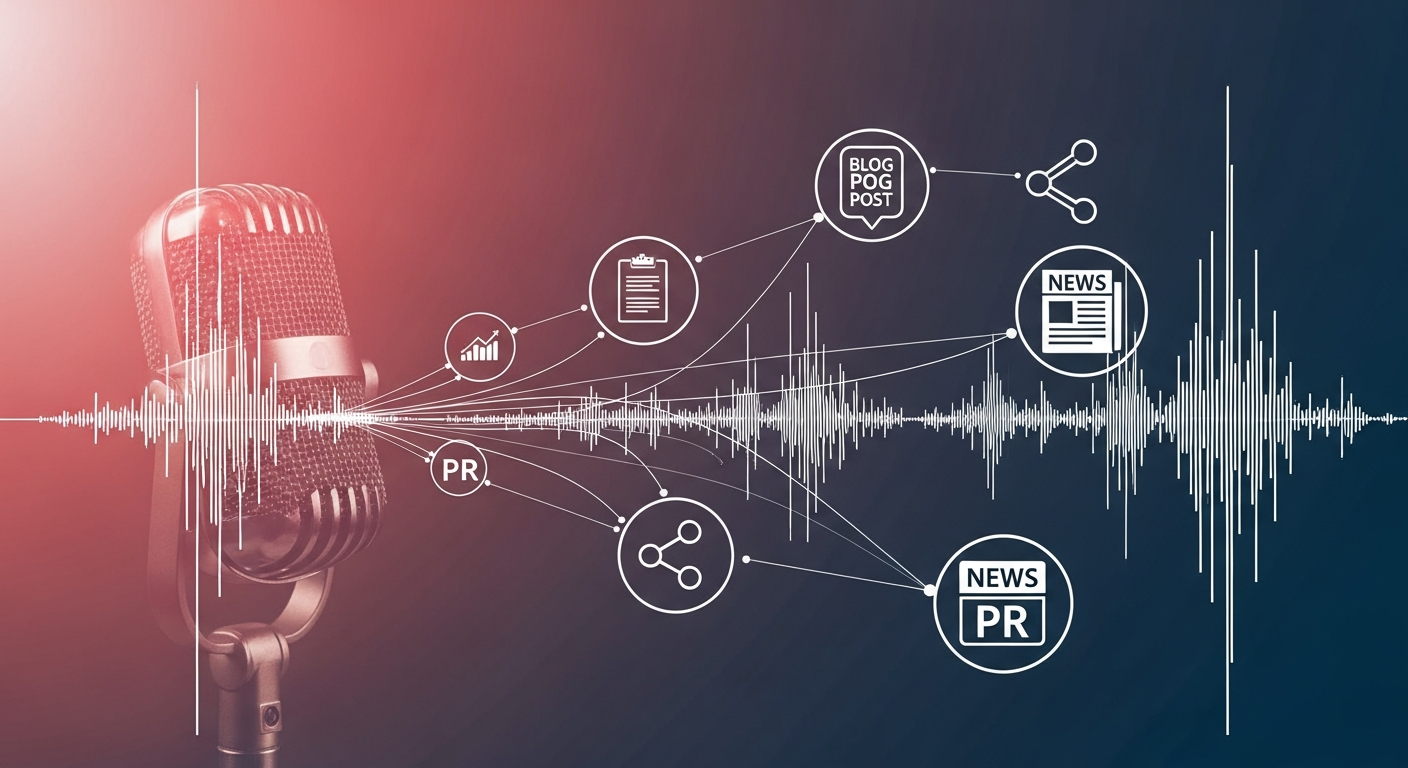
Strategic Content Repurposing: Quotes, LinkedIn, Blog Posts, and More
Repurposing your podcast content is a highly efficient way to maximize your reach and reinforce your message across multiple platforms. Consider these transformations:
- Quotes and Graphics: Turn memorable quotes into shareable graphics for Instagram, Twitter, and LinkedIn.
- LinkedIn Posts: Summarize key insights from an episode into a compelling LinkedIn post, tagging your guest and relevant connections.
- Blog Posts: Transform episode transcripts into detailed blog posts, expanding on points and adding visual elements. This also boosts your website's SEO.
- Short Video Clips: Extract compelling audio clips and pair them with a static image or dynamic waveform for YouTube Shorts, Instagram Reels, or TikTok.
- Newsletters: Include episode summaries and direct links in your email newsletters.
- Press Releases/Media Pitches: Use episode themes, guest expertise, or unique insights to craft targeted pitches to relevant media outlets.
By systematizing the process of turning each episode into multiple content pieces, you significantly broaden your reach and strengthen your overall content strategy. For a comprehensive guide on this, check out Foundation Marketing's guide on podcast repurposing.
This is where tools like ToniPR can be a game-changer. Imagine recording your podcast interview and then having AI assist you in turning those spoken words into polished quotes, ready-to-post LinkedIn updates, or even article outlines. ToniPR helps you efficiently transform your valuable audio content into diverse, press-ready outputs, ensuring your insights reach a wider audience without extensive manual effort. Discover how ToniPR can help you repurpose podcast interviews into press-ready content, streamlining your PR efforts.
Exploring Monetization Avenues for B2B Podcasts
While B2B podcasts often prioritize brand building and thought leadership, they can also generate revenue or leads. Common monetization strategies include:
- Sponsorships: Partner with brands whose products or services align with your audience.
- Affiliate Marketing: Promote relevant products or services and earn a commission on sales.
- Premium Content: Offer exclusive bonus episodes, ad-free versions, or deep dives to paying subscribers.
- Services/Products: Use your podcast to naturally promote your own consulting services, courses, books, or software. This is often the most direct monetization path for entrepreneurs, as the podcast serves as a powerful lead generation tool.
- Live Events/Workshops: Host virtual or in-person events based on your podcast topics, charging for attendance.
Understand how B2B podcasts can generate revenue through sponsorships, services, or lead generation, aligning with your business model.
Measuring the Impact of Your Podcast on Your PR and Business Goals
To understand your podcast's ROI, you need to track relevant metrics. This goes beyond just download numbers. Consider:
- Audience Growth: Downloads, subscribers, and unique listeners over time.
- Engagement: Listener retention rate, reviews, social media mentions, and community interaction.
- Website Traffic/Leads: Monitor website visits, specific landing page views, or lead form submissions originating from your podcast's call-to-actions.
- Media Mentions: Track how often your podcast, or content derived from it, is mentioned in other media.
- Client Acquisition: For B2B, track if new clients mention hearing about you through the podcast.
- Thought Leadership Indicators: Invitations to speak, media interviews, or requests for expert commentary.
Regularly review these metrics to demonstrate the value of your podcast to your business objectives and refine your strategy for continuous improvement.
Frequently Asked Questions
How long does it typically take for an entrepreneur to launch a business podcast?
The timeline for launching a business podcast can vary significantly based on your preparation, resources, and technical comfort. Generally, an entrepreneur can go from concept to launch in 4 to 12 weeks. This includes defining your niche, planning content, acquiring basic equipment, recording a few initial episodes, editing, and setting up distribution. A focused effort can shorten this, especially if you leverage tools that streamline production and repurposing. The key is to start, iterate, and refine over time rather than striving for perfection before launch.
What is the most critical piece of equipment for a beginner podcast host?
For a beginner podcast host, the most critical piece of equipment is a good quality microphone. While lighting, camera, or elaborate soundproofing can enhance production, clear and crisp audio is non-negotiable for a podcast. Listeners will tolerate minor visual imperfections in a video, but poor audio quality—muffled sound, excessive background noise, or distortion—is a surefire way to lose an audience quickly. A reliable USB microphone like a Blue Yeti or Rode NT-USB Mini offers a significant upgrade over built-in computer microphones without requiring complex setups or additional interfaces.
How can a podcast specifically enhance my business's PR efforts?
A podcast enhances PR efforts in several distinct ways:
- Direct Storytelling: It allows you to control your narrative and tell your story directly, authentically, and without media gatekeepers filtering your message.
- Credibility & Authority: Consistently delivering valuable content and interviewing experts positions you as a thought leader and credible source in your industry.
- Content for Media Pitches: Episodes provide a rich source of quotable content, expert insights, and unique angles that can be repurposed into press releases, media pitches, and article ideas.
- Networking: Interviewing guests builds relationships with other industry professionals, expanding your network and potential for cross-promotion and collaborations.
- Demonstrates Expertise: It serves as a living portfolio of your knowledge, making it easier for journalists or event organizers to see your expertise and invite you for interviews or speaking engagements.
Essentially, a podcast creates a continuous stream of valuable, interview-led content that reinforces your brand's message and provides tangible assets for ongoing PR activities.
Is it realistic for a B2B podcast to generate significant revenue or leads?
Yes, it is absolutely realistic for a B2B podcast to generate significant revenue or leads, though it's important to set clear expectations and understand the primary drivers. Unlike consumer podcasts that might chase high download numbers for ad revenue, B2B podcasts often focus on a highly niche, valuable audience. For a B2B podcast, revenue and lead generation typically come from:
- Lead Generation for Your Services/Products: The most common and often most effective method. The podcast builds trust and expertise, naturally funneling listeners into your sales pipeline for consulting, software, courses, or other offerings.
- Strategic Sponsorships: Partnering with a few highly relevant companies that want to reach your specific B2B audience, rather than chasing numerous, low-value advertisers.
- Premium Content/Community: Offering exclusive content or access to a community for a subscription fee to your most dedicated listeners.
- Events & Workshops: Leveraging the podcast's audience to fill seats for paid virtual or in-person events related to your industry.
Success isn't measured solely by downloads but by the quality of leads, client conversions, and the overall impact on your business's bottom line. A well-planned B2B podcast can be an incredibly powerful, long-term asset for sustainable growth.