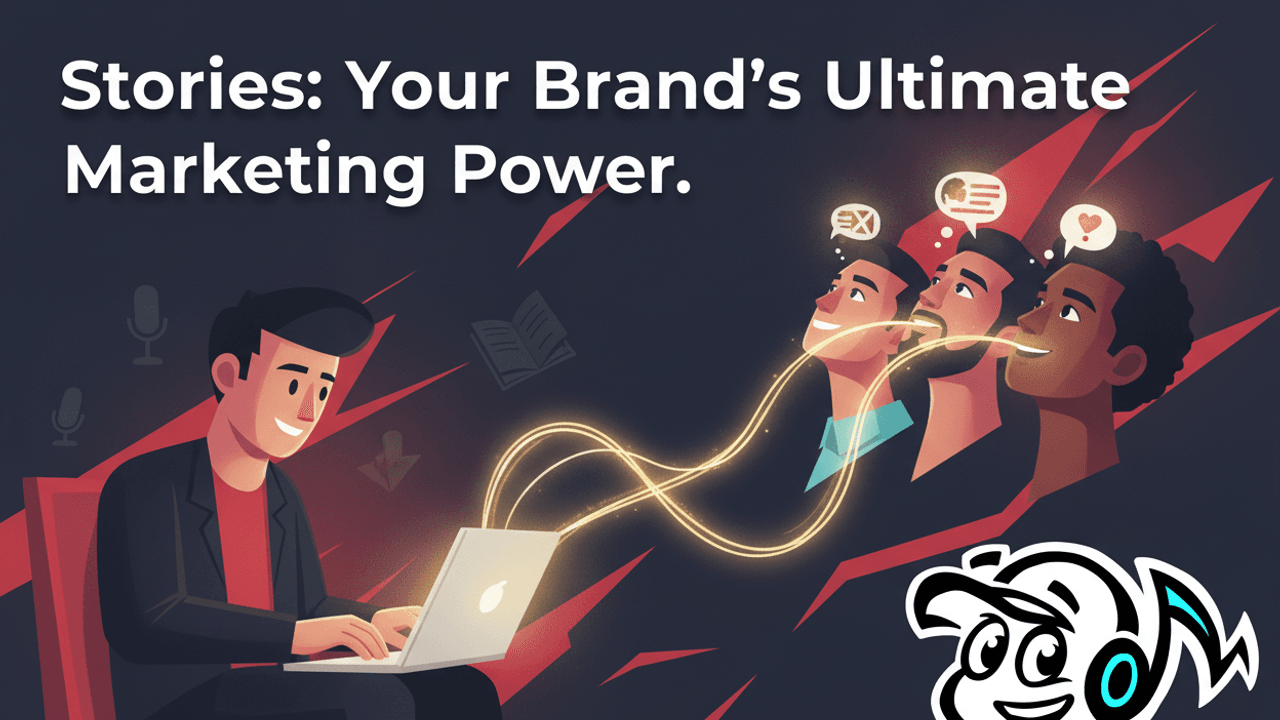
Introduction: Beyond Features and Benefits – The Human Connection
In a marketplace saturated with products, services, and an endless scroll of information, simply listing features and benefits no longer cuts through the noise. Founders, solo consultants, small business owners, and creators face an uphill battle for attention, often competing with larger entities boasting bigger marketing budgets. Yet, the most powerful marketing tool isn't about the size of your budget; it's about the depth of your connection. That tool is storytelling in marketing.
Why Stories Resonate More Than Data Sheets
Humans are inherently wired for stories. From ancient myths to modern blockbusters, narratives capture our imagination, engage our emotions, and make information memorable. A dry data sheet might convey facts, but a compelling story delivers context, meaning, and an emotional anchor. When your audience connects emotionally with your brand, they don't just understand what you do; they understand why you do it and, more importantly, how you can help them.
- Emotional Connection Drives Engagement and Recall: Emotions are powerful drivers of memory and action. A story that evokes empathy, inspiration, or a sense of shared challenge will stick with your audience far longer than a list of product specifications. This emotional resonance drives deeper engagement and increases the likelihood of your brand being recalled when a need arises.
- Differentiating Your Brand in a Crowded Market: In a world where many businesses offer similar solutions, your unique story is your strongest differentiator. It’s not just about what you sell, but the journey you’ve been on, the problems you’ve solved, and the values that guide your work. This authentic narrative sets you apart from competitors who only speak in terms of features.
- Building Genuine Trust with Your Audience Through Narrative, Not Just Claims: Trust is the bedrock of any successful business relationship. Stories, especially those that include challenges and lessons learned, demonstrate authenticity and vulnerability, fostering genuine trust. Unlike marketing claims that can feel hollow, a well-told story provides evidence of your expertise and commitment through lived experience.
- Moving Beyond Transactional Marketing to Relationship-Building: Storytelling transforms a one-time transaction into the beginning of a relationship. By sharing your brand's journey and connecting with your audience on a human level, you invite them into your world, creating loyalty and advocacy that extends far beyond the initial sale.
The Credibility Imperative in Today's Market
In an era of information overload and increasing skepticism, credibility is paramount. Consumers, clients, and partners are wary of hype and empty promises. Authentic storytelling provides a powerful antidote, grounding your brand in reality and establishing a foundation of trust. It allows you to showcase your expertise and values without resorting to aggressive sales tactics, building a reputation for reliability and integrity that is invaluable in the long run.
The Anatomy of Compelling Business Storytelling
Effective business storytelling isn't about fabricating tales; it's about uncovering and articulating the inherent narratives within your work, your mission, and your impact. For founders and consultants, this means translating complex solutions and professional expertise into relatable human experiences.
What Makes a Story 'Marketable' for Founders and Consultants?
A marketable story for a business, consultant, or creator isn't just entertaining; it's relevant, resonant, and demonstrates value. It typically revolves around a core problem that your audience faces and the transformative solution your business provides. This isn't about making your offering the star, but positioning it as the catalyst for your customer's success.
- Identifying the Core Problem-Solution Arc Relevant to Your Audience: Every great story has a central conflict. For your business, this is the pain point or challenge your target audience experiences. Your story should illustrate this problem vividly and then present your solution as the effective resolution, showcasing the positive transformation that follows.
- Developing a Relatable 'Character' – Your Founder, Your Customer, Your Brand: Who is the hero of your story? Often, it's your customer overcoming their challenges with your help. Sometimes, it's the founder's journey, driven by a passion to solve a particular problem. Your brand itself can also be a character, embodying values and a mission. The key is relatability – people connect with people (or personified entities) they understand and can root for.
- Structuring Narratives with Clear Conflict, Resolution, and Impact: A well-structured narrative follows a clear path:
- Conflict: Introduce the problem or challenge.
- Rising Action: Describe the struggle, the attempts to solve it, and why existing solutions fall short.
- Climax: Introduce your business/solution as the turning point.
- Resolution: Show how your solution effectively addresses the problem.
- Impact: Detail the positive outcomes, the transformation, and the new reality for the customer or the market.
- Emphasizing Genuine Experiences and Avoiding Manufactured Tales: Authenticity is paramount. Your audience can spot a fake a mile away. Focus on real customer success stories, genuine challenges your business overcame, or the true inspiration behind your founding. These real-world anecdotes are far more powerful than any contrived narrative.
- The Power of Vulnerability and Transparency in Building Connection: Sharing moments of doubt, setbacks, or lessons learned doesn't weaken your brand; it humanizes it. Vulnerability fosters empathy and shows that you, too, understand challenges, making your successes all the more inspiring and your brand more approachable.
To truly master the art of business storytelling to engage your audience, it's essential to understand these foundational elements. For a deeper dive into creating your brand's unique narrative, explore our insights on developing a compelling business narrative with a proven framework.
From Idea to Impact: Structuring Your Story for PR & Visibility
Having a compelling story is one thing; effectively communicating it for PR and visibility is another. This requires a strategic approach to story extraction and tailoring, ensuring your message resonates with journalists, potential customers, and the broader public.
Identifying Your Core Narrative: What's Your 'Why'?
Every business, founder, or consultant has a "why" – the driving force behind their work. Uncovering this core narrative is the first step in effective PR storytelling. It's often found in your origin story, the pivotal moments that shaped your vision, or the consistent impact you've had on your clients.
- Methods for Uncovering Your Unique Business and Founder Story:
- Reflect on Your Origin: What problem did you set out to solve? What was the "aha!" moment?
- Identify Key Milestones: What challenges have you overcome? What significant successes have you achieved?
- Listen to Your Customers: What common themes emerge from their testimonials? How have you truly transformed their situations?
- Articulate Your Values: What principles guide your decisions and your business operations?
- How Structured Interviews Clarify and Refine Your Message: Often, the best stories are hidden in plain sight, fragmented across experiences and memories. Structured interviews, whether self-conducted or facilitated, provide a framework to systematically explore these narratives. By asking targeted questions, you can extract key anecdotes, articulate your unique perspective, and refine your core message into a clear, concise, and compelling story ready for public consumption. This interview-led approach helps to distill your experiences into impactful soundbites and narratives, making your story more accessible and engaging.
- Tailoring Your Story for Different Audiences and Platforms: Your core story remains consistent, but its presentation must adapt. A pitch to a tech journalist will highlight different aspects than a LinkedIn post aimed at potential clients, or an article for an industry publication. Understanding your audience and the platform's nuances is crucial for maximizing impact.
- Crafting Narratives That Journalists and Readers Find Compelling and Newsworthy: Journalists are constantly looking for fresh angles, human interest, and stories with broader implications. Your story becomes newsworthy when it offers a unique perspective, addresses a current trend, highlights an innovative solution, or showcases a significant impact on people or industries. Focus on the "so what?" – why should anyone care about your story right now?
- Ensuring Your Story Resonates Without Sounding Salesy or Promotional: The golden rule of PR storytelling is to educate, inspire, or inform, not to sell. Your story should provide value, offer insights, or share an authentic journey. When done right, this approach builds credibility and interest naturally, leading to organic engagement and business opportunities without the overt push of a sales pitch.
For founders looking to articulate their personal journey, learning how to tell your founder story effectively (without sounding salesy) is a critical skill. And when it comes to engaging with the media, understanding storytelling for media: crafting narratives that journalists can't resist will significantly boost your visibility efforts.
Maximizing Your Narrative: Repurposing for Consistent Credibility

Once you've extracted your core narratives, the real power comes from repurposing them across various channels. This strategy ensures consistent messaging, amplifies your reach, and establishes you as a credible voice in your industry without requiring you to constantly generate entirely new content from scratch.
LinkedIn as a Premier Storytelling Platform
LinkedIn has evolved beyond a job board; it's a dynamic platform for professional storytelling, thought leadership, and networking. For founders, consultants, and creators, it offers an unparalleled opportunity to share insights, build a personal brand, and connect directly with their target audience.
- Transforming Interview-Generated Content into Diverse Formats: The rich narratives and insights captured through structured interviews are goldmines for LinkedIn content. A single interview can yield:
- Short, impactful quotes for quick posts.
- Longer articles or "LinkedIn Notes" exploring a topic in depth.
- Personal anecdotes illustrating a business lesson.
- Case studies demonstrating client success.
- Video scripts for short, engaging clips.
- Strategies for Leveraging LinkedIn for Personal Brand and Business Visibility:
- Regular Posting: Consistency keeps you top-of-mind.
- Engage with Others: Comment thoughtfully on relevant posts to expand your network and demonstrate expertise.
- Share Your Insights: Position yourself as a thought leader by offering unique perspectives on industry trends.
- Show, Don't Just Tell: Use visuals, videos, and compelling stories to make your points.
Beyond the Press Release: Articles, Bios, and Thought Leadership
While press releases have their place, a comprehensive PR strategy leverages a wider array of content formats, all stemming from your core stories. These diverse outputs build a richer, more nuanced public profile.
- Developing Long-Form Articles and Compelling Bios from Core Narratives: Your interview-led stories can be expanded into detailed articles for your blog, industry publications, or guest posts. These articles allow you to delve deeper into a topic, showcase your expertise, and provide substantial value to readers. Similarly, your founder story, key achievements, and mission can be distilled into powerful, engaging bios for your website, speaker profiles, or media kits.
- Maintaining a Cohesive Brand Story Across All Public Touchpoints: Whether it's your website's "About Us" page, a social media post, a media interview, or a keynote speech, your core narrative should shine through. Consistency reinforces your brand identity, builds trust, and ensures that every interaction strengthens your overall message. Disjointed narratives can confuse your audience and dilute your impact.
- Establishing Yourself as a Credible Expert Through Regular, Valuable Content: The more consistently you share valuable insights, experiences, and stories, the more you solidify your position as an expert in your field. This isn't about self-promotion; it's about contributing meaningfully to conversations, educating your audience, and demonstrating your depth of knowledge and unique perspective.
ToniPR: Your Partner in Authentic, Interview-Led Storytelling
For busy founders, solo consultants, and small business owners, the challenge isn't a lack of stories, but a lack of time and specialized expertise to extract and transform those stories into polished, press-ready content. This is where ToniPR steps in, bridging the gap between your invaluable insights and the credible visibility you deserve.
Simplifying the Story Capture Process for Busy Professionals
ToniPR understands that your time is your most valuable asset. Our AI-powered platform is designed to make the process of articulating your story efficient and effective, without the need for extensive writing experience or PR know-how.
- How AI-Powered Interviews Streamline Story Extraction: Our platform uses expertly crafted PR-style interview questions to guide you through sharing your experiences, insights, and unique perspective. This structured approach helps you articulate your thoughts clearly, uncover compelling anecdotes, and ensure all key aspects of your story are captured, much like a seasoned journalist would conduct an interview.
- Generating High-Quality Quotes, Posts, and Articles from Your Voice: The magic happens after the interview. ToniPR takes your recorded answers and transforms them into a suite of press-ready outputs. This means turning your authentic voice into compelling quotes, engaging LinkedIn posts, insightful articles, and impactful bios – all tailored to your specific needs. The AI acts as your personal content editor, refining your words while preserving your original tone and message.
- Empowering Founders and Consultants to Manage Their Own Credible Visibility: We believe that every founder, consultant, and creator has a powerful story to tell. ToniPR empowers you to take control of your narrative, providing the tools to generate professional-grade content that enhances your visibility and credibility. You retain full control over your message, ensuring it aligns perfectly with your brand and values.
- A Practical, Ethical Approach to PR Without the Traditional Agency Overhead: ToniPR offers a cost-effective and ethical alternative to traditional PR agencies. We focus on interview-led storytelling and content repurposing, building your foundational PR toolkit efficiently.Our emphasis is on equipping you with high-quality, authentic content to drive your own ethical PR habits and build long-term credibility.
Discover how ToniPR helps founders tell their stories effectively and build their brand's credible presence.
Frequently Asked Questions
How does storytelling directly impact marketing ROI for small businesses?
Storytelling impacts marketing ROI by increasing engagement, building stronger brand loyalty, and improving conversion rates. When customers connect emotionally with a brand's story, they are more likely to remember it, trust it, and choose it over competitors. This emotional bond leads to repeat business, organic referrals, and a reduced need for expensive, traditional advertising, ultimately lowering customer acquisition costs and boosting lifetime value. While direct ROI measurement can be complex, the enhanced brand perception and customer retention fostered by storytelling clearly contribute to a healthier bottom line over time.
What's the key difference between authentic storytelling and corporate jargon?
The key difference lies in human connection and clarity. Authentic storytelling uses relatable language, personal anecdotes, and emotional resonance to convey a genuine message that people can understand and empathize with. It focuses on experiences, challenges, and transformations. Corporate jargon, on the other hand, often relies on buzzwords, technical terms, and abstract concepts that create distance and confusion. It prioritizes sounding "professional" or "innovative" over clear, human communication, often obscuring the true value or purpose behind the words. Authentic storytelling builds bridges; corporate jargon creates walls.
Can storytelling truly differentiate a business in a highly competitive market?
Absolutely. In a highly competitive market where products and services can often appear similar, your unique story is your most powerful differentiator. It's not just about what you offer, but why you offer it, the journey you've taken, the values you uphold, and the specific impact you've had on others. While competitors may replicate features, they cannot replicate your authentic narrative, your founder's passion, or your customers' unique success stories. This human element creates a distinct identity and an emotional connection that establishes a memorable and defensible position in the market.
What are common pitfalls to avoid when using storytelling in PR?
Common pitfalls include fabricating stories or exaggerating claims, which quickly erodes trust. Another is making your brand the sole hero of the story instead of positioning your customer as the hero whose problem you helped solve. Avoiding vulnerability and presenting a sanitized, overly polished narrative can also make your story feel inauthentic. Lastly, failing to tailor your story for different platforms and audiences can lead to a lack of resonance, as a one-size-fits-all approach rarely works in PR. Always prioritize authenticity, audience relevance, and a human-centric approach.