Introduction: Beyond the Ad Buy – Why Your Message Needs a Strategy
For many small business owners, consultants, and creators, the go-to strategy for reaching new customers often begins and ends with local advertising. A well-placed ad in a community paper, a sponsored social media post, or a spot on local radio can certainly generate immediate leads and sales. But what happens when the ad budget runs dry? What remains of your brand's presence and authority?
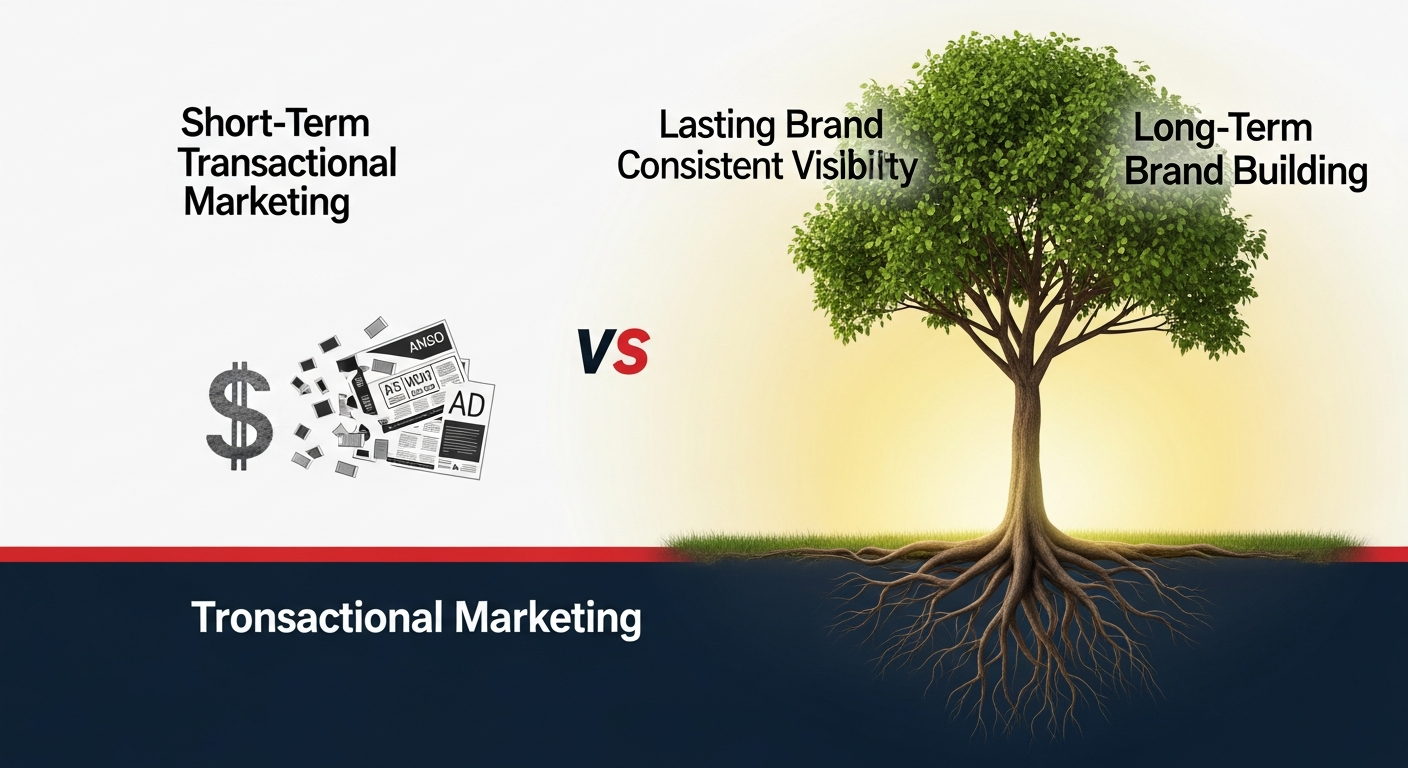
The truth is, while transactional marketing has its place, it often falls short in building the kind of lasting credibility and recognition that fuels sustainable, long-term growth. A robust small business media strategy isn't just about getting your name out there; it's about establishing your expertise, your values, and your unique story in a way that resonates deeply with your target audience, transforming fleeting attention into enduring trust.
The Limitations of Transactional Marketing for Long-Term Growth
Think about the typical local ad. It's often a direct call to action: "Buy now," "Call today," "Limited-time offer." This approach is excellent for immediate conversions, but it rarely tells the full story of your brand. It doesn't explain why you do what you do, what problems you solve beyond the surface, or the unique perspective you bring to your industry. As a result, customers might engage with a single transaction, but they don't necessarily form a bond with your business.
Relying solely on paid placements means your visibility is directly tied to your spending. When the budget tightens, your presence shrinks. This creates a reactive marketing cycle rather than a proactive brand-building one. For solo consultants, startup founders, and small business owners, this can be an unsustainable model that limits their ability to compete on anything other than price or immediate convenience.
The Power of Consistent, Credible Visibility
Imagine a scenario where your insights are featured in an industry publication, your unique approach is discussed on a relevant podcast, or your expert advice is quoted in an online article. This isn't just advertising; this is endorsement. This is how you build authentic small business visibility that transcends a single ad buy.
A strategic approach to media allows you to consistently share your expertise, your founder's journey, and your company's values with a broader, more engaged audience. This consistent, credible visibility does several things:
- Builds Trust: When a reputable third party (like a journalist or editor) features your business, it lends an immediate layer of credibility that paid ads simply can't replicate.
- Establishes Authority: Regular appearances or mentions position you as an expert in your field, making your business the go-to resource for specific solutions or insights.
- Increases Brand Equity: Over time, this consistent exposure builds a strong, recognizable brand identity that stands for something beyond its products or services.
- Generates Organic Interest: People seek out credible sources. When you're seen as one, potential customers are more likely to discover your business through organic search, word-of-mouth, or direct recommendations.
Shifting your focus from short-term transactions to long-term relationships with your audience, built through a thoughtful media strategy, is perhaps the most profound investment a small business can make in its future.
Understanding a Small Business Media Strategy: More Than Just Press Releases
When many founders hear "media strategy," their minds often jump to grand, expensive press conferences or generic press releases that rarely see the light of day. For a small business media strategy, the reality is far more nuanced, accessible, and impactful. It's not just about chasing headlines; it's about systematically telling your story and sharing your expertise where it matters most.
Defining 'Media Strategy' for Founders and SMBs
For founders, consultants, and SMBs, a media strategy is a holistic approach to consistently communicating your value, insights, and unique perspective across various platforms. It moves beyond the traditional, often transactional, view of public relations and embraces a broader landscape of storytelling opportunities. This includes, but isn't limited to, securing media mentions, contributing thought leadership articles, participating in podcasts, engaging on professional social networks like LinkedIn, and leveraging your own owned channels (like your blog or newsletter).
It's about crafting a narrative that highlights your competitive advantages and positions you as a solution provider, not just a seller. This deliberate and sustained effort helps you control your brand narrative, rather than leaving it to chance or market fluctuations.
Earned Media vs. Paid Ads: The Credibility Advantage
One of the cornerstone concepts of a strong media strategy is earned media strategy. Unlike paid advertising, where you pay for placement, earned media refers to publicity gained through promotional efforts other than paid advertising. This includes mentions in news articles, reviews, social media shares, and influencer endorsements. The key distinction is credibility.
When a reputable news outlet covers your story, or an industry expert praises your work, it carries significantly more weight than an advertisement you've paid for. Consumers are increasingly savvy; they understand the difference between an ad and an authentic endorsement. Earned media acts as a powerful third-party validation, enhancing trust and perceived authority.
While an ad might say, "We're the best," an earned media mention allows someone else to say, "They're doing incredible work." That distinction is invaluable for building a lasting brand.
The Relationship-Driven Approach to Public Relations
The landscape of PR for small business has evolved dramatically. Modern public relations is less about sending out mass press releases and more about cultivating genuine, mutually beneficial relationships. This means connecting with journalists, editors, podcasters, and industry influencers not just when you have something to "sell," but by consistently offering value and expertise.
As an Entrepreneur article wisely puts it, "PR isn't a favor — it's a relationship." This means understanding what topics resonate with their audience, providing timely and relevant insights, and being a reliable source of information. It's about demonstrating your thought leadership and offering solutions to problems their readers or listeners might have.
This relationship-driven approach is foundational to securing consistent media visibility and establishing yourself as a trusted voice in your industry. To dive deeper into how traditional PR has transformed, check out our guide on Is Traditional PR Dead? What Founders Need to Know About Modern Media.
Building Credibility and Authority Through Interview-Led Storytelling
In today's crowded marketplace, simply having a great product or service isn't enough. What truly sets successful small businesses apart is their ability to connect with their audience on a deeper level, fostering trust and establishing themselves as authoritative voices. This is where founder storytelling, particularly through interview-led content, becomes an incredibly powerful tool.
Why Your Credibility is Your Greatest Asset
Credibility isn't just a nice-to-have; it's a fundamental driver of business success. When customers perceive your brand as credible, they are more likely to:
- Trust your recommendations and expertise.
- Choose your product or service over competitors.
- Remain loyal customers over the long term.
- Refer your business to their network.
- Be more forgiving if an issue arises.
This trust directly translates into customer loyalty, repeat business, and ultimately, increased sales. It's the bedrock upon which a strong brand reputation is built, and it significantly impacts your bottom line. Building a strong online reputation doesn't have to break the bank either; learn more about How to Build a Strong Online Reputation Without a Massive Budget.
The Founder's Voice: Your Unique Competitive Advantage
As a founder, solo consultant, or small business owner, you are often the heart and soul of your brand. Your journey, your philosophy, your expertise – these are unique assets that no competitor can replicate. Leveraging your authentic voice through interview-led storytelling allows you to humanize your brand and create a genuine connection with your audience.
People want to buy from people they know, like, and trust. By sharing your insights, challenges, and successes, you invite your audience into your world, making your brand more relatable and memorable. This personal touch is a distinct competitive advantage for small businesses, allowing them to stand out in markets often dominated by larger, more impersonal corporations.
Transforming Insights into Industry Expertise
Interviews provide a structured yet natural way to articulate your thoughts, share your unique perspectives, and offer valuable insights into industry trends, challenges, and solutions. Whether it's a podcast interview, a Q&A for an online publication, or a video segment, these opportunities allow you to showcase your expertise in an engaging format.
Through thoughtful responses, you can:
- Educate your audience: Explain complex topics in an accessible way.
- Share your unique methodology: Highlight what makes your approach different and effective.
- Offer actionable advice: Provide practical takeaways that demonstrate your value.
- Predict future trends: Position yourself as a forward-thinking leader.
The long-term benefits of being recognized as an authority in your niche are profound. It attracts higher-quality leads, opens doors to speaking engagements and partnerships, and reinforces your brand's position as a trusted leader. This isn't just about getting attention; it's about earning respect and cementing your place as an indispensable resource in your industry.
Maximizing Your Message: The Art of Content Repurposing
For busy founders and small business owners, time is a precious commodity. The idea of creating a constant stream of high-quality content for a comprehensive small business media strategy can seem daunting. This is where the strategic art of content repurposing becomes not just a nice-to-have, but an essential component of efficient and impactful visibility.
Getting More Mileage from Every Interview and Insight
Imagine spending an hour in a detailed interview, sharing your expertise and stories. Without a repurposing strategy, that hour might result in just one published piece – perhaps a podcast episode or a single article. With a smart approach, however, that same hour can become the raw material for dozens of valuable content assets, extending your reach and impact exponentially.
The core idea of content repurposing strategy is to extract maximum value from every piece of original content you create or contribute to. Don't think of content creation as a one-and-done task; think of it as an investment that yields continuous returns across multiple channels and formats.
Transforming Raw Content into Diverse, Press-Ready Outputs
A single, in-depth interview is a goldmine of information. From that one source, you can generate a rich array of press-ready outputs:
- Quotes: Extract compelling soundbites for social media posts, press releases, or other articles.
- Short-form articles: Develop specific answers into standalone blog posts or thought leadership pieces.
- LinkedIn posts: Transform key insights into engaging updates for your professional network.
- Infographics: Visualize data or key takeaways from the interview.
- Video snippets: If the interview was recorded, cut out impactful moments for social media or your website.
- FAQs: Use questions and answers to build out a valuable resource section.
- Email newsletter content: Share snippets or links to the full interview with your subscribers.
This is where tools like ToniPR shine. Our AI-powered PR interview product is designed specifically to help founders, consultants, and SMBs record answers to PR-style questions and automatically turn them into these diverse, press-ready outputs. It streamlines the process of taking your raw insights and transforming them into professional, impactful content, making comprehensive content repurposing accessible even without a full PR team. Discover how ToniPR can help you transform your insights into press-ready content.
Leveraging LinkedIn and Other Platforms for Consistent Visibility
Once you have a wealth of repurposed content, the next step is strategic distribution. LinkedIn, in particular, is an incredibly powerful platform for founders and professionals to build their personal brand and expand their small business visibility.
On LinkedIn, you can:
- Share your articles and blog posts.
- Post engaging quotes and insights from interviews.
- Participate in relevant groups, offering your expert commentary.
- Connect directly with industry leaders and potential collaborators.
Beyond LinkedIn, consider other platforms relevant to your audience: industry-specific forums, podcasts as a guest, niche online communities, or even platforms like Medium for longer-form articles. The goal is to maximize the reach of every piece of content, ensuring that your message is consistently seen by the right people, reinforcing your authority and expertise over time.
By embracing content repurposing, you achieve greater efficiency and impact. You do more with less, turning every valuable insight into a multifaceted engine for your media strategy.
Practical Steps: Crafting Your Small Business Media Strategy
Developing a robust small business media strategy doesn't require a massive budget or a dedicated PR team. It requires clarity, consistency, and a commitment to ethical engagement. Here's a practical roadmap for founders, consultants, and SMBs to build their own effective strategy.
Identifying Your Core Message and Target Audience
Before you even think about outreach, you need to define two critical elements:
- Your Core Message: What is the single, most important thing you want people to know about your business? What problem do you solve? What makes you unique? This isn't just a tagline; it's the essence of your value proposition and your unique selling points. It should be consistent across all your communications.
- Your Target Audience: Who are you trying to reach? Be specific. Are they small business owners, specific industry professionals, local consumers, or a niche group of creators? Understanding your audience will dictate which media outlets you target and what kind of stories will resonate with them.
Articulating these clearly is the foundation of any successful media effort. Without a clear message and audience, your efforts will be scattered and ineffective. Take the time to refine these before moving forward.
Researching Relevant Media Outlets and Opportunities
Once your message and audience are clear, the next step is to identify where your target audience consumes information. This is where you conduct your media research. Think broadly beyond traditional news outlets:
- Industry Publications: Online and print magazines specific to your niche.
- Podcasts: Look for shows that interview experts in your field or discuss topics relevant to your business.
- Blogs & Online Communities: Influential bloggers or active forums where your audience gathers.
- Local Media: If your business has a local focus, don't overlook community newspapers, radio, or TV stations.
- Trade Associations: Many associations have newsletters, websites, or events that offer speaking or contributing opportunities.
Focus on quality over quantity. A feature in a highly relevant niche publication will often yield better results than a brief mention in a broad, general news outlet. For practical tips on how to secure credible media visibility for your small business without a large PR budget, explore our guide on How to Get Featured in Media Without a PR Agency Budget.
Preparing Your Business for Media Outreach
Before you reach out to any media contact, ensure your business is media-ready. This involves several key preparations:
- Develop a Media Kit (Simple Version): This doesn't need to be fancy. A brief, compelling bio, a high-resolution headshot, your company logo, key facts/stats, and links to your website/social media profiles are often sufficient.
- Craft Your Value Proposition: Be able to articulate quickly and clearly what makes your story newsworthy or your expertise valuable to their audience.
- Anticipate Questions: Think about potential questions journalists might ask and prepare concise, insightful answers.
- Ensure Consistent Online Presence: Your website should be up-to-date, and your professional social media profiles (especially LinkedIn) should reflect your expertise.
Being prepared demonstrates professionalism and increases your chances of successful engagement. To help you get started, review The PR Checklist: What Every SMB Needs Before Reaching Out to Media.
Consistent Engagement and Ethical PR Habits
Building media relationships is a long-game strategy. It requires consistent, respectful engagement and adherence to ethical PR practices:
- Personalize Your Pitches: Generic emails are easily deleted. Research the journalist/outlet and tailor your pitch to their specific interests and past work.
- Be Respectful of Time: Journalists are busy. Keep your pitches concise and to the point.
- Provide Value, Not Just Asks: Offer your expertise as a source for their stories, not just when you have something to announce.
- Follow Up Thoughtfully: A polite follow-up is fine, but avoid excessive or aggressive communication.
- Be Responsive and Reliable: If a journalist reaches out, respond promptly and deliver on your promises.
- Maintain Transparency: Always be honest and transparent in your communications.
These habits build trust and foster long-term relationships, making journalists more likely to consider you for future opportunities. Remember, a single piece of coverage isn't the end goal; it's about building a sustained presence through strategic, ethical engagement.
Frequently Asked Questions
What is the key difference between local advertising and a long-term media strategy for a small business?
The key difference lies in their primary objective and impact. Local advertising is primarily transactional and short-term, aiming for immediate leads or sales through paid placements. Its visibility is directly tied to your budget, and it often lacks the inherent credibility of third-party endorsement. A long-term media strategy, on the other hand, is about building sustained brand awareness, credibility, and authority through earned media and consistent storytelling. It focuses on establishing trust, positioning the founder as an expert, and creating an enduring brand narrative that isn't dependent on continuous ad spend. While local ads offer immediate reach, a media strategy builds lasting influence and genuine relationships with your audience.
How can a small business owner effectively build media relationships without a dedicated PR team?
Small business owners can absolutely build effective media relationships without a dedicated PR team by adopting a strategic, relationship-driven approach. Start by identifying relevant journalists, podcasters, or bloggers in your niche whose work aligns with your expertise. Personalize your outreach by demonstrating you've researched their content and understand their audience. Offer genuine value – pitch story ideas, provide unique insights, or offer to be an expert source on topics you specialize in, rather than just promoting your business. Be responsive, reliable, and respectful of their time. Tools like ToniPR can help you prepare your content and narrative, making it easier to present yourself professionally. Consistency and authenticity are key to nurturing these connections over time.
What types of content can I generate from a single interview or founder insight?
A single interview or deep founder insight is a rich source for a wide variety of content. From one conversation, you can generate:
- A full article or blog post detailing key takeaways.
- Multiple short-form LinkedIn posts highlighting specific quotes or insights.
- Press-ready quotes for media kits or future press releases.
- FAQs based on the questions asked and answered.
- Email newsletter snippets to engage your subscribers.
- Video clips (if recorded) for social media or your website.
- Infographics or data visualizations from any statistics or processes discussed.
- A short "myth vs. reality" post based on a common misconception debunked.
The goal is to repurpose the core message into formats suitable for different platforms and audiences, maximizing your content's reach and impact efficiently.
Is a media strategy only for large businesses, or can it genuinely impact a small business's growth?
A media strategy is absolutely not exclusive to large businesses; in fact, it can have a profound and genuine impact on a small business's growth. For small businesses, a strategic media presence can level the playing field by building credibility and authority that big marketing budgets often buy. It allows founders to position themselves as thought leaders, attract ideal clients, and gain organic visibility that fosters trust and loyalty. Unlike large corporations, small businesses often have a more authentic, relatable founder story which can be a powerful asset in media outreach. By focusing on niche media, building genuine relationships, and consistently sharing expertise, a well-executed media strategy can be one of the most cost-effective and impactful ways for a small business to achieve sustainable growth and stand out in a competitive market.