
Introduction: Why LinkedIn is Non-Negotiable for Today's Consultant
For consultants, agency owners, and B2B service providers, LinkedIn isn't just another social media platform; it's a critical professional ecosystem. In a landscape where trust and expertise are paramount, your LinkedIn presence often serves as the first impression and a vital source of credible visibility. This playbook is designed for busy professionals like you, offering practical, time-efficient strategies to elevate your profile, share your insights, and build meaningful connections without getting bogged down in endless content creation.
The Consultant's Core Challenge: Time vs. Visibility
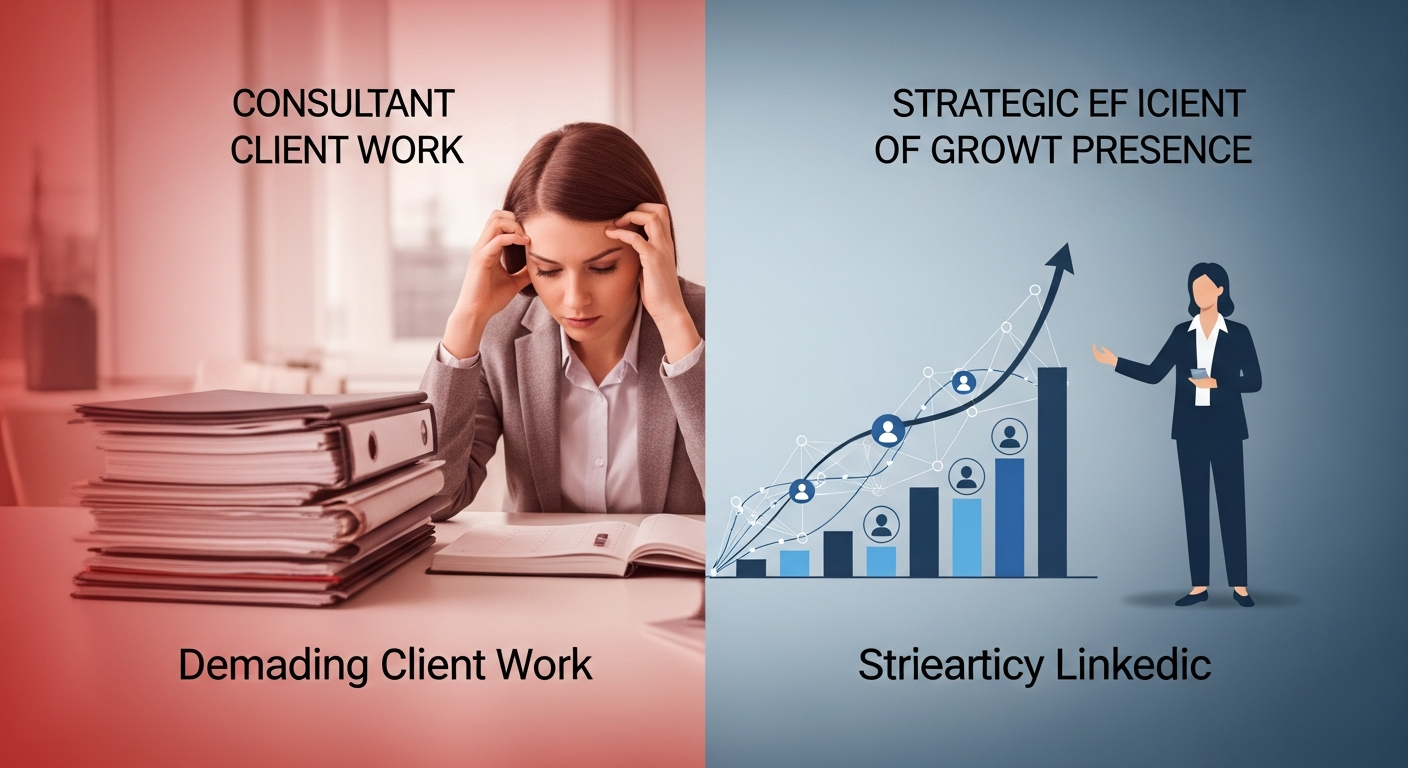
Solo consultants and small agencies often grapple with a unique dilemma: the need for consistent visibility to attract clients versus the intense demands of client work. Marketing efforts can easily fall by the wayside when project deadlines loom. Yet, without a robust online presence, particularly on LinkedIn, potential clients may never discover your valuable expertise. This challenge underscores the importance of strategic, efficient, and sustainable approaches to professional networking and content sharing.
LinkedIn: Your Professional Nexus for Credibility and Opportunity
LinkedIn stands as the unrivaled platform for B2B networking, lead generation, and establishing thought leadership. It's where industry peers connect, potential clients vet service providers, and professional opportunities emerge. By strategically engaging with the platform, you transform it into a powerful engine for building trust, showcasing your unique value proposition, and fostering connections that can lead to lucrative partnerships and projects. It’s about being seen as a credible expert in your field, not just another service provider.
Setting Realistic Expectations for Sustainable Growth
In the world of online visibility, quick fixes and overnight virality are often elusive and rarely sustainable. Our approach emphasizes consistent, ethical strategies that build genuine authority and long-term impact. This playbook focuses on practical steps that busy consultants can integrate into their existing routines, ensuring that your LinkedIn efforts contribute to genuine business growth rather than becoming another time sink. Remember, sustainable growth on LinkedIn is a marathon, not a sprint, built on authenticity and consistent value. For more on how to strategically position your services, read our guide on positioning your expertise in professional services.
Optimizing Your LinkedIn Profile: Your Credible Digital Shopfront
Your LinkedIn profile isn't just an online resume; it's your digital shopfront, your professional business card, and often the first point of contact for potential clients. A well-optimized profile communicates your value, builds trust, and makes you discoverable to those who need your expertise.
Beyond the Resume: Crafting a Compelling Narrative
Move past merely listing job titles and responsibilities. Your profile should tell a story – your story – highlighting your unique perspective, the challenges you solve for clients, and the impact you deliver. Think of it as a dynamic portfolio that continuously evolves with your professional journey. Every section should contribute to a cohesive narrative that positions you as the go-to expert in your niche. This narrative approach helps you stand out from the crowd and resonate with your target audience.
Headline and Summary: Your Instant Value Proposition
Your headline is your digital elevator pitch. It should be keyword-rich, clearly stating what you do, who you help, and the unique value you provide. Avoid generic titles. Instead of "Marketing Consultant," try "Growth Marketing Strategist for B2B SaaS Startups | Scaling Revenue through Data-Driven Campaigns." Your summary expands on this, offering a concise yet engaging overview of your expertise, your philosophy, and the tangible results you achieve for clients. Use this space to demonstrate your personality and passion, inviting further connection. For insights on building trust, consider these 9 Ways To Build Credibility On LinkedIn Fast.
Showcasing Expertise, Experience, and Social Proof
The experience section should focus on quantifiable achievements and client impact, not just duties. Integrate media, links to case studies, or relevant projects to visually enhance your credibility. Crucially, leverage social proof: actively seek recommendations from satisfied clients and colleagues. These testimonials are powerful endorsements that significantly boost trust. Endorsements for skills, while less impactful than recommendations, still contribute to your overall authority and searchability. Remember, for small businesses and consultants, every element of your profile contributes to your overall LinkedIn marketing strategy.
Performing a Practical Profile Audit
Regularly review and update your profile. Ask yourself:
- Does my profile clearly articulate my niche and value proposition?
- Are there specific keywords my ideal clients would use to find me?
- Is my profile picture professional and approachable?
- Do I have recent, relevant recommendations?
- Are there any outdated sections or information?
- Is my contact information easily accessible?
Content Strategy for the Time-Strapped Consultant: Quality Over Quantity
Consistency is key on LinkedIn, but for busy consultants, this doesn't mean posting daily. It means posting valuable, high-impact content that resonates with your audience, even if less frequently. The focus should always be on quality and relevance, not just filling your feed.
Defining Your Niche and Voice: Who Are You Speaking To?
Before you even think about what to post, clarify your target audience. Who are your ideal clients? What are their pain points, challenges, and aspirations? Once you understand them, you can craft a distinct voice that speaks directly to their needs. Your voice should reflect your expertise, personality, and values, establishing you as a relatable and authoritative figure in your niche. This clarity ensures your content cuts through the noise and reaches the right people.
High-Impact Content Types That Resonate on LinkedIn
LinkedIn thrives on professional insights, advice, and human connection. Consider these effective content types:
- Short-form insights: Quick tips, actionable advice, or a concise take on an industry trend.
- Case studies (anonymized if necessary): Share a client's problem, your solution, and the results. Quantifiable outcomes are highly impactful.
- Personal reflections: Share lessons learned from projects, challenges overcome, or professional growth experiences. Authenticity builds connection.
- Industry analysis: Offer your unique perspective on news, reports, or shifts within your sector. This demonstrates thought leadership.
- "How-to" guides or checklists: Provide practical value that your audience can immediately apply.
The Power of Interview-Led Storytelling and Repurposing Content
One of the most efficient ways to generate diverse, high-quality content is through interview-led storytelling. Instead of staring at a blank page, imagine answering questions about your expertise as if you were speaking to a journalist. This natural, conversational approach often yields authentic insights that are hard to capture through traditional writing. Tools like ToniPR excel at this, allowing founders, consultants, and creators to record answers to PR-style interview questions. From these spoken answers, ToniPR can generate a wealth of press-ready outputs, including compelling LinkedIn posts, articles, quotes, and even bios. This means you can create a significant amount of content from a single, focused input session, maximizing your time and ensuring consistency across various platforms. Learn more about how ToniPR can help you generate press-ready content for LinkedIn and beyond.
Repurposing is crucial for busy professionals. A key insight from a client project can become:
- A short LinkedIn post.
- Expanded into a longer article (an "article" on LinkedIn Pulse).
- A bulleted list of tips in an infographic format.
- A snippet in a newsletter.
Implementing a Consistent, Sustainable Content Calendar
A content calendar doesn't have to be rigid or complex. Start by identifying 1-2 slots per week or bi-weekly where you can dedicate time to content creation and scheduling. Batching your content creation – dedicating a few hours once a month to outline and draft several pieces – can be highly effective. Use scheduling tools available through LinkedIn or third-party platforms to ensure your content goes out consistently. Remember, for a small business, a consistent content strategy is vital for LinkedIn marketing success. The goal is sustainability, not burnout.
Engaging Strategically: Building Authentic Connections and Community
Posting great content is only half the battle. To truly leverage LinkedIn, you must engage strategically, turning passive connections into active relationships and community members. This means moving beyond superficial interactions to foster meaningful dialogue.
Beyond the 'Like': Cultivating Meaningful Interactions
While a 'like' acknowledges content, a thoughtful comment initiates a conversation. When you engage with others' posts, aim to add value. Ask insightful questions, share a relevant perspective, or offer a constructive idea. This demonstrates that you're an active participant in your industry, not just a broadcaster. Meaningful interactions build your reputation as a knowledgeable and engaged professional, making others more likely to seek out your profile and content.
The 10-Minute Daily Engagement Habit for Busy Professionals
Even the busiest consultant can carve out 10 minutes a day for strategic LinkedIn engagement. Here’s a simple routine:
- First 5 minutes: Scroll your feed. Identify 2-3 posts from your target audience, industry influencers, or potential clients. Leave genuine, value-adding comments.
- Next 3 minutes: Check your notifications. Respond to comments on your posts or messages.
- Final 2 minutes: Review your "My Network" tab for new connection requests or suggestions. Personalize any new connection requests you send.
Participating in Relevant Groups and Industry Conversations
LinkedIn Groups can be goldmines for connecting with niche audiences and demonstrating expertise. Join groups relevant to your industry, your target clients, or specific problem areas you solve. Don't just lurk; actively participate. Share your insights, answer questions, and start discussions. This not only expands your network but also positions you as an authoritative voice within specific communities. Remember to adhere to group rules and always provide value, avoiding overt self-promotion.
Turning Connections into Credible Opportunities
The ultimate goal of LinkedIn engagement is to nurture relationships that can lead to credible opportunities. When a connection shows genuine interest or engages meaningfully with your content, consider taking the conversation off-platform. A quick message suggesting a brief virtual coffee or a phone call can deepen the relationship. Focus on understanding their needs and offering genuine help, rather than immediately pitching your services. Building trust and rapport is the foundation for turning connections into client relationships or valuable partnerships.
Leveraging Thought Leadership: Beyond Self-Promotion
True thought leadership isn't about self-promotion; it's about consistently offering unique perspectives, solving complex problems, and contributing meaningfully to your industry. For consultants, this is a powerful differentiator.
What Thought Leadership Means for the Modern Consultant
In today's crowded market, clients seek not just service providers, but trusted advisors. Thought leadership positions you as that advisor. It means having a distinct point of view on industry trends, future challenges, and innovative solutions. It's about educating, inspiring, and challenging conventional wisdom. When you consistently share valuable insights, you build a reputation as an expert whose opinions matter, attracting clients who value strategic guidance over transactional services.
Demonstrating Expertise Through Value-Driven Insights
Every piece of content you create and every interaction you have on LinkedIn is an opportunity to demonstrate your expertise. This doesn't mean revealing proprietary secrets, but rather sharing frameworks, lessons learned, or predictions that resonate with your audience's challenges. Focus on insights that help your audience understand their problems better or see new possibilities. Whether it's a short post, a detailed article, or a thoughtful comment, ensure it provides tangible value. This consistent delivery of value is how you cultivate genuine thought leadership and authority.
Ethical PR Habits: Building Authority Without Hype
Credibility is fragile, and ethical PR habits are essential for long-term success. Avoid exaggerated claims, guaranteed outcomes, or overly promotional language. Focus on authenticity, transparency, and delivering genuine value.Your authority should stem from the depth of your insights and the consistency of your contributions, not from marketing hype. Building credibility on LinkedIn is a marathon, not a sprint, and these 9 ways to build credibility can help you stay on track. For consultants, strategic positioning of expertise is crucial, as discussed in our article on positioning your expertise in professional services.
Measuring Your Impact and Iterating for Continuous Growth
To ensure your LinkedIn efforts are yielding results, it's crucial to track your progress and be willing to adjust your strategy based on what you learn. This iterative approach allows for continuous improvement and ensures your time is spent effectively.
Key Metrics for Consultants on LinkedIn
While 'likes' and 'views' can be motivating, focus on metrics that truly reflect business impact:
- Profile Views: Indicates interest in your professional background. An increase suggests your content or engagement is driving traffic.
- Engagement Rate: Not just total likes, but comments and shares relative to your post's reach. High engagement signals your content resonates.
- Connection Quality: Are you connecting with your target audience (potential clients, strategic partners, industry leaders)?
- Direct Messages & Inquiries: The most direct indicator of lead generation. Are people reaching out for consultations or collaborations?
- Website Traffic/Conversions: If you link to your website, track how much traffic comes from LinkedIn and what those visitors do.
Adjusting Your Strategy Based on Performance
Regularly review your LinkedIn analytics (available for free on your profile). Identify which types of content generate the most engagement, which topics spark the most conversations, and which calls to action lead to inquiries. Don't be afraid to experiment with different posting times, content formats, or messaging. If a certain approach isn't working, iterate. For example, if short tips get more engagement than long articles, lean into that. If questions in your posts generate more comments, incorporate more questions. This continuous refinement ensures your LinkedIn strategy remains dynamic and effective.
The Long Game: Consistency is Your Greatest Asset
Building a strong, credible presence on LinkedIn is not a short-term project; it's a long-term investment. Consistency in posting valuable content, engaging thoughtfully, and optimizing your profile will yield compounding returns. There will be periods of high engagement and quieter times, but the cumulative effect of consistent effort builds lasting authority and a robust professional network. Embrace the long game, stay authentic, and your LinkedIn presence will become an invaluable asset for your consulting business.
Frequently Asked Questions
How often should a busy consultant post on LinkedIn to maintain visibility?
For busy consultants, quality trumps quantity. Aim for 1-3 high-value posts per week. Consistency is more important than daily posting. A sustainable schedule ensures you can maintain the effort without burnout, keeping your audience engaged with thoughtful insights rather than overwhelming them with frequent, low-quality content. Even a highly impactful post once a week, coupled with consistent engagement on others' content, can be very effective.
What types of content are most effective for attracting B2B clients on LinkedIn?
The most effective content for attracting B2B clients on LinkedIn includes actionable advice, case studies (even anonymized ones demonstrating impact), thought-provoking industry analyses, and personal reflections on professional challenges and solutions. Content that educates, solves a problem, or offers a unique perspective tends to perform best. Interview-led storytelling, using tools like ToniPR to convert spoken insights into diverse content formats, is an excellent way to consistently produce such valuable material.
How can I measure the actual ROI of my LinkedIn activities as a solo consultant?
Measuring ROI goes beyond vanity metrics. Track direct inquiries, new client leads, and ultimately, signed projects that originated or were influenced by LinkedIn. Use LinkedIn's native analytics to monitor profile views, post engagement (comments and shares are key indicators), and how your network quality evolves. If you link to your website or a lead magnet, use UTM parameters to track LinkedIn-specific traffic and conversions. Consistently connecting these activities to tangible business outcomes will reveal your true ROI.
Is it necessary to use LinkedIn Premium or Sales Navigator for increased visibility?
While LinkedIn Premium and Sales Navigator offer enhanced features for networking, lead generation, and analytics, they are not strictly necessary for increased visibility, especially when you're starting. A free LinkedIn account, optimized with a strong profile and a consistent, strategic content and engagement plan, can yield significant results. Premium tools become more valuable when you have a clear strategy, a specific target audience, and are ready to scale your outreach and lead nurturing efforts.