Introduction: Why Your Personal Brand Matters (Even on a Shoestring Budget)
In today's competitive landscape, a strong personal brand is no longer a luxury reserved for celebrities or large corporations. For founders, solo consultants, small business owners, agency leads, and creators, it's a foundational asset that drives credibility, attracts talent, secures funding, and ultimately, builds trust. Many believe that building a robust personal brand requires deep pockets and a full PR team. We're here to tell you that's simply not true. You can achieve significant visibility and authority through smart, strategic, and budget-friendly personal branding for founders.
This guide will demystify personal branding, offering practical, actionable strategies that empower you to take control of your narrative and elevate your professional presence without breaking the bank. We'll focus on leveraging your unique expertise, ethical practices, and the power of your own voice to create an authentic and influential brand.
The Founder's Advantage: Trust and Visibility
As a founder, you are the face of your business. Your personal brand is inextricably linked to your company's reputation. People invest in people first, and a well-cultivated personal brand fosters connection, demonstrating your vision, values, and expertise. This direct connection creates a powerful competitive advantage, enabling you to stand out in crowded markets. It's about more than just marketing; it's about building genuine relationships and becoming a trusted voice in your industry. For non-marketers, understanding how to articulate your value and build this presence is crucial. Learn more about how to demystify personal branding for non-marketers and make it work for you.
Beyond the Hype: Credibility Over Celebrity
Forget the notion of needing to be a "celebrity" or generating viral content. True personal branding for founders is about sustained credibility. It's about consistently sharing valuable insights, demonstrating your expertise, and engaging authentically with your audience. This approach builds a reputation that lasts, attracting the right opportunities and partnerships. Our focus here is on practical, credible personal brand building—strategies that emphasize substance over fleeting trends, ensuring your efforts lead to lasting professional respect and impact.
Way 1: Define Your Core Narrative and Unique Value Proposition
Before you can effectively communicate your personal brand, you need to understand what it is. This foundational step involves deep self-reflection to articulate your mission, values, and what truly sets you apart. It’s not about inventing a persona, but rather unearthing and refining your authentic self as a professional.
Unearthing Your Authentic Founder Story
Every founder has a story—a journey, a motivation, a turning point that led them to where they are today. This founder story is one of your most powerful assets. It humanizes your brand, creates an emotional connection with your audience, and explains the "why" behind your work. Think about:
- What problem did you identify that compelled you to start your business?
- What personal experiences shaped your approach?
- What values guide your decisions and your company culture?
- What challenges have you overcome, and what lessons did you learn?
Crafting a compelling narrative around these elements allows you to share your unique perspective, making your brand relatable and memorable. This isn't about lengthy autobiographies, but concise, impactful anecdotes that illustrate your purpose. For a deeper dive into leveraging your personal journey, explore how to leverage your founder story as a powerful marketing asset.
What Makes You, You? Identifying Your Niche Expertise
Beyond your story, you need to pinpoint your unique value proposition (UVP) and niche expertise. What specific knowledge, skills, or experiences do you possess that solve a particular problem for a particular audience? This clarity helps you position yourself as an authority, making your personal brand relevant and indispensable.
- Identify your core strengths: What do you do exceptionally well?
- Define your ideal audience: Who do you serve best, and what are their specific needs?
- Articulate your unique approach: How do you solve problems differently or more effectively than others?
- Pinpoint your industry niche: What specific area within your broader industry do you specialize in?
By clearly defining these elements, you create a solid framework for all your future content and interactions. This strategic clarity is a key affordable personal branding tip that ensures your efforts are focused and impactful, even with a limited budget.
Way 2: Generate High-Value Content Through Interview-Led Storytelling
One of the biggest hurdles for founders and consultants on a budget is consistent content creation. The good news? You already possess an inexhaustible source of high-value content: your own expertise and insights. The challenge is often in extracting and refining that knowledge into usable formats. This is where interview-led storytelling transforms the game, offering a powerful DIY personal branding strategy.
Turning Expertise into Press-Ready Assets
Imagine being asked a series of thoughtful, PR-style questions about your business, your industry, or your unique perspective. Your natural, conversational answers, when recorded and transcribed, become raw material for an incredible range of press-ready outputs. This method bypasses the blank page syndrome and allows you to articulate your thoughts fluidly, just as you would in a real interview.
The beauty of this approach is that it captures your authentic voice and nuanced understanding. Instead of struggling to write an article from scratch, you're simply speaking your expertise. These recorded insights can then be processed and transformed into:
- Direct Quotes: Perfect for media outreach, social media, or website testimonials.
- LinkedIn Posts: Engaging, insightful updates that establish your authority.
- Article Drafts: Fully fleshed-out pieces that require minimal editing to publish on your blog or as guest posts.
- Bios and About Sections: Compelling narratives for your professional profiles.
This method drastically reduces the time and effort typically associated with personal brand content creation, making it an incredibly efficient and affordable personal branding tip.
The Power of Your Own Voice: Simplifying Content Creation
Your unique voice is your most authentic asset. Interview-led content harnesses this power by allowing you to speak naturally, without the pressure of formal writing. This approach is particularly effective for founders who may not identify as writers but are experts in their field. It leverages AI to bridge the gap between spoken insight and polished, professional output.
Think of it as having a dedicated PR assistant who asks the right questions and then helps package your answers beautifully. This streamlined process means you can generate a wealth of valuable content in a fraction of the time it would take to write it manually. It's a game-changer for maintaining a consistent content pipeline and reinforcing your credible personal brand building efforts.
To experience how your insights can be seamlessly turned into powerful content, consider exploring platforms that specialize in this method. For instance, you can turn your insights into press-ready content with ToniPR, simplifying your content creation journey significantly.
Way 3: Maximize Your Reach and Credibility on LinkedIn
For founders, consultants, and business owners, LinkedIn isn't just a professional networking site; it's a critical platform for personal brand building. It's where industry leaders connect, insights are shared, and professional reputations are forged. Leveraging LinkedIn effectively is a cornerstone of affordable personal branding tips, offering unparalleled reach and credibility without significant advertising spend.
LinkedIn as Your Professional Visibility Hub
Your LinkedIn profile serves as your professional homepage. It needs to be more than just an online resume; it should be a dynamic representation of your expertise, your founder story, and your company's mission. Optimizing your profile is the first step in establishing a strong presence:
- Professional Headshot & Banner: Ensure they are high-quality and reflect your brand.
- Compelling Headline: Go beyond your job title. Use keywords that describe your expertise and value proposition.
- Detailed & Keyword-Rich "About" Section: Tell your story, highlight your achievements, and articulate your unique insights. Incorporate relevant keywords to improve searchability.
- Showcase Your Work: Utilize the "Featured" section to display key articles, videos, or projects.
- Seek Endorsements & Recommendations: Social proof from colleagues and clients significantly boosts credibility.
A well-optimized profile ensures that when potential investors, partners, or clients search for expertise in your field, you stand out as a credible authority. This directly contributes to your overall budget personal branding for founders strategy.
Content Strategies for Building Authority Without Oversharing
Simply having an optimized profile isn't enough; consistent, valuable content is key to building authority. The goal is to share insights that educate, inform, and spark meaningful conversations, rather than just self-promoting. Here are some effective content strategies for LinkedIn personal branding for founders:
- Share Original Insights: Don't just reshare. Offer your unique perspective on industry trends, challenges, and solutions. These can be short posts, longer articles (LinkedIn Articles), or even short videos.
- Leverage Interview-Led Content: As discussed, your interview answers can be easily repurposed into compelling LinkedIn posts, offering digestible nuggets of your expertise.
- Engage Authentically: Comment thoughtfully on posts from others in your industry. Ask questions, offer constructive feedback, and participate in relevant discussions. This builds relationships and visibility.
- Highlight Company Milestones (with personal insights): Share company news, but always frame it with your personal takeaways, lessons learned, or the broader impact.
- Avoid Over-Personalization: While authenticity is important, LinkedIn is a professional platform. Focus on insights relevant to your industry and professional network, maintaining a balance between personal connection and professional decorum. For more on this, check out this Forbes article on how to build an authoritative personal brand on LinkedIn without oversharing.
By consistently providing value and engaging ethically, you can significantly boost your professional visibility on LinkedIn, establishing yourself as a thought leader. Discover more strategies to boost your professional visibility on LinkedIn and solidify your reputation.
Way 4: Implement a Smart Content Repurposing Strategy
For founders and small business owners operating with limited time and resources, content repurposing is not just a smart tactic—it's an essential DIY personal branding strategy. The goal is to maximize the utility and reach of every piece of content you create, ensuring that your efforts yield multiple assets across various platforms. This approach directly supports budget personal branding for founders by making every minute of content creation count.
One Interview, Many Assets: Maximizing Your Output
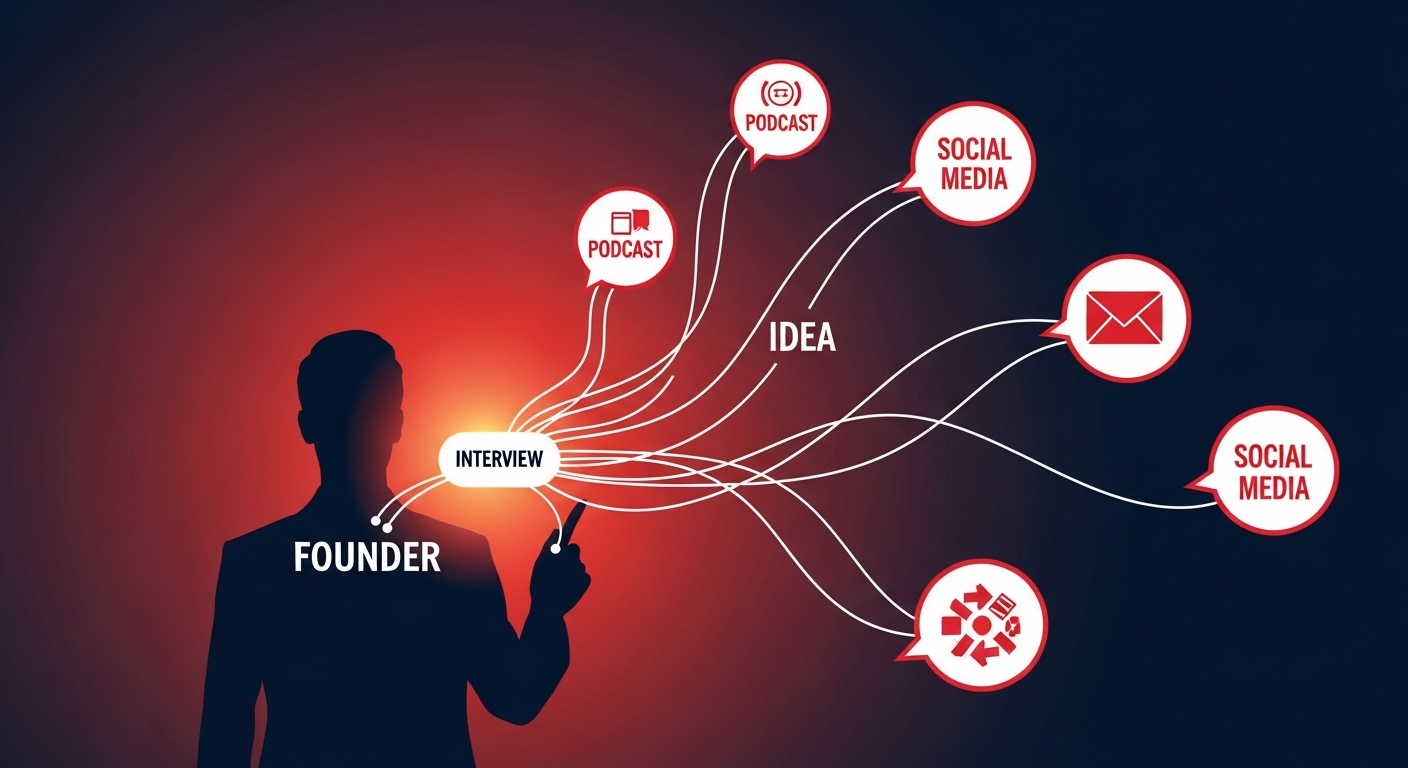
The beauty of interview-led storytelling is that a single core interview can serve as the "motherlode" for an entire content ecosystem. Once you've captured your insights through an interview, you're not just creating one blog post or one social media update; you're generating a wealth of raw material that can be segmented, re-formatted, and tailored for different audiences and platforms. This is fundamental to personal brand content creation on a budget.
Consider the following transformations from a single interview transcript:
- Long-form Blog Post: The full interview transcript can be edited into a comprehensive blog post for your website, offering deep insights on a particular topic.
- Multiple LinkedIn Posts: Extract key quotes, statistics, or actionable tips from the interview to create several shorter, engaging LinkedIn updates throughout the week or month.
- Email Newsletter Snippets: Pull out a compelling paragraph or a key takeaway to include in your weekly or monthly email newsletter, linking back to the full article.
- Social Media Graphics: Design simple graphics with impactful quotes from the interview to share on platforms like Instagram, Facebook, or X (formerly Twitter).
- Short Video Clips: If the interview was recorded on video, you can easily snip out 30-60 second segments that address specific questions or offer quick tips, ideal for Reels, Shorts, or LinkedIn video posts.
- Podcast Episode or Audio Snippets: If audio quality permits, the interview can be an episode for a nascent podcast or short audio clips for sharing.
- Guest Post Pitches: Adapt sections of your interview into a unique angle for a guest post on an industry publication.
This strategic approach allows you to permeate various channels with your message, reinforcing your expertise and reaching different segments of your audience where they naturally consume content. It’s a powerful method for extending your personal brand content creation efforts without constant new ideation.
Efficiency is Your Budget's Best Friend: Extending Content Shelf-Life
Repurposing isn't just about creating more content; it's about doing so efficiently. Each time you transform a core piece of content into a new format, you're saving significant time and resources that would otherwise be spent on ideation, research, and creation from scratch. This efficiency is a critical aspect of affordable personal branding tips.
Moreover, repurposing extends the shelf-life of your content. An insight shared in a blog post can resurface months later as a social media graphic, reaching new audiences or reminding existing ones of your valuable perspective. This consistent presence, even with a limited amount of original source material, helps to solidify your credible personal brand building.
By adopting a robust repurposing strategy, founders can ensure their valuable insights are seen, heard, and read across multiple touchpoints, maximizing their personal brand's impact with minimal additional investment. This strategic approach ensures every effort contributes significantly to your overall visibility and authority.
Way 5: Build Authentic Connections and Ethical Engagement
In the age of digital noise, genuine connection and ethical practices stand out. For founders focused on budget personal branding, building authentic relationships isn't just good etiquette; it's a cornerstone of sustainable, credible personal brand building. This approach moves beyond mere self-promotion to foster a community around your expertise and values.
Beyond Self-Promotion: The Art of Giving and Collaborating
A truly powerful personal brand isn't built in a vacuum. It thrives on interaction, mutual support, and collaboration. Instead of solely focusing on what you can gain, shift your mindset to what you can offer to your network. This "give first" mentality is an invaluable affordable personal branding tip that yields long-term dividends.
- Offer Value Generously: Share your knowledge, offer advice (when asked), and provide resources without expecting immediate returns. This positions you as a helpful expert and builds goodwill.
- Engage with Others' Content: Actively read, comment on, and share posts from peers, industry leaders, and potential collaborators. Offer thoughtful insights that add to the conversation, rather than just a superficial "like."
- Seek Collaboration Opportunities: Look for chances to partner on projects, co-host webinars, or participate in panel discussions. Collaborations expand your reach to new audiences and lend mutual credibility.
- Mentor or Advise: If you have the capacity, offering mentorship or informal advice to emerging professionals can significantly enhance your reputation as a knowledgeable and supportive leader.
This approach transforms your network from a list of contacts into a vibrant community, where trust and mutual respect are paramount. It's a key component of credible personal brand building that costs nothing but your time and genuine effort.
Cultivating a Credible Online Presence Through Consistent Interaction
Consistency in interaction and adherence to ethical PR habits are vital for maintaining a credible online presence. Your digital footprint should reflect honesty, transparency, and reliability. Avoid the temptation of hype or exaggerated claims, as these can quickly erode trust.
- Be Consistent: Regular, thoughtful engagement is more impactful than sporadic bursts of activity. Establish a rhythm for commenting, sharing, and creating your own content.
- Be Transparent: Clearly disclose partnerships, affiliations, or any potential conflicts of interest. Authenticity builds trust.
- Be Respectful: Always maintain a professional and respectful tone, even when disagreeing. Engage in constructive dialogue rather than confrontational arguments.
- Honor Your Word: If you commit to something, follow through. Your reliability is a direct reflection of your personal brand.
- Protect Your Reputation: Be mindful of what you share and how it might be perceived. A strong online reputation is an invaluable asset. For more insights on this, read our guide on how to build a strong online reputation without a massive budget.
By consistently upholding these ethical PR habits, founders can cultivate a personal brand that is not only visible but also deeply respected and trusted. This long-term strategy ensures your personal brand remains a powerful asset, attracting opportunities and fostering lasting relationships.
Frequently Asked Questions
How can founders build a personal brand without a large marketing budget?
Building a personal brand without a large marketing budget is entirely achievable by focusing on strategic, cost-effective methods. The core strategy involves leveraging your existing expertise as content, prioritizing authentic engagement, and maximizing the reach of every effort. Start by clearly defining your unique narrative and value proposition (Way 1). Then, use interview-led storytelling to generate high-value content efficiently (Way 2), transforming your spoken insights into various press-ready outputs. Focus on platforms like LinkedIn (Way 3) for organic reach and credibility. Implement a smart content repurposing strategy (Way 4) to ensure one piece of content yields multiple assets across different channels. Finally, build authentic connections and engage ethically (Way 5), prioritizing giving value over self-promotion. These DIY personal branding strategies emphasize time and expertise over financial investment, making a strong personal brand accessible to all founders.
What is the most effective platform for founders to build a credible personal brand?
For founders, LinkedIn is arguably the most effective platform for building a credible personal brand. Its professional-centric environment naturally aligns with the goals of establishing authority, networking with industry peers, attracting talent, and connecting with potential investors or clients. Unlike other social media platforms, LinkedIn users typically seek professional insights and connections, making it an ideal space to share your expertise without the distraction of purely social content. By optimizing your profile, consistently sharing valuable, original insights, and engaging authentically in industry discussions (Way 3), founders can significantly boost their visibility and credibility. While other platforms can complement your strategy, LinkedIn provides the most direct and impactful avenue for professional personal brand building.
How can I create compelling content for my personal brand if I'm not a marketer?
You don't need to be a seasoned marketer or a professional writer to create compelling content for your personal brand. Your greatest asset is your expertise and unique perspective as a founder. The most effective method for non-marketers is interview-led storytelling (Way 2). Instead of facing a blank page, you simply answer PR-style questions about your industry, business, or insights, just as you would in a conversation. Tools like ToniPR can then take your spoken answers and transform them into polished outputs like quotes, LinkedIn posts, and article drafts. This approach leverages your natural voice, making content creation more intuitive and less daunting. By focusing on sharing genuine insights and solving problems for your audience, you inherently create compelling, valuable content that resonates, reinforcing your credible personal brand building.
Is personal branding truly necessary for early-stage founders and consultants?
Yes, personal branding is absolutely necessary for early-stage founders and consultants. In the initial stages, your personal brand often serves as the primary face of your company or service. People are more likely to invest in or work with individuals they trust and perceive as knowledgeable and passionate. A strong personal brand helps you:
- Attract Early Adopters and Clients: People buy into the founder's vision before the product is fully mature.
- Secure Funding: Investors often back founders as much as they back ideas. Your credibility and vision are paramount.
- Recruit Talent: Top talent is drawn to inspiring leaders with a clear mission.
- Build Industry Credibility: Establishing yourself as a thought leader early on can open doors to partnerships and media opportunities.
- Differentiate Yourself: In a crowded market, your unique story and expertise can set you apart.
Personal branding is not just about marketing; it's about building foundational trust and visibility that is critical for growth. It's a strategic investment that yields significant returns, even with a budget-friendly approach.