In today's dynamic business landscape, being an exceptional consultant is no longer enough. To truly thrive, attract ideal clients, and secure lasting success, you need a powerful, authentic personal brand. For solo consultants, small business owners, startup founders, and agency leads, your personal brand is your most valuable asset – it's your reputation, your unique promise, and your credibility rolled into one.
This guide will walk you through a practical, step-by-step process to build a robust personal brand that differentiates you, communicates your value, and establishes you as a thought leader in your field. We’ll focus on actionable strategies that prioritize authenticity and ethical visibility, ensuring your brand works for you without requiring a full-scale PR team.
Introduction: Why Personal Branding is Non-Negotiable for Consultants Today
The consulting world has evolved dramatically. The days of solely relying on word-of-mouth referrals, while still valuable, are giving way to a more proactive, visible approach. Your personal brand is the engine that drives this new visibility, helping you stand out in a crowded market.
The Evolving Consulting Landscape: Beyond Traditional Referrals
For decades, a consultant's career was largely built on a strong network and client referrals. While these remain crucial, the digital age has introduced new dimensions to client acquisition. Potential clients no longer just ask their peers; they conduct online research, scrutinize LinkedIn profiles, and seek out thought leadership. This shift means that consultants must move beyond being reactive to proactive in showcasing their expertise. A well-defined personal brand is essential for this proactive visibility, acting as your digital handshake and a constant advocate for your value, even when you're not actively networking.
The Power of Proactive Visibility: Attracting Ideal Clients
Imagine a client searching for someone with your exact expertise. Without a strong personal brand, they might never find you. Proactive visibility ensures that you're not just found, but sought after. By consistently sharing your insights and demonstrating your unique approach, you attract clients who genuinely align with your values and methodology. This isn't about chasing every lead; it's about positioning yourself as the go-to expert for your ideal client, allowing them to discover you and recognize your distinct competitive advantage. It's about building a consultant personal brand strategy that works while you're focused on client work.
Credibility in a Crowded Market: Building Trust and Authority
Every industry is teeming with consultants. What makes you different? What makes you trustworthy? Your personal brand answers these questions. It's the sum of your reputation, your proven track record, and the consistent message you convey. In a market saturated with options, credibility is paramount. A strong personal brand builds trust by consistently delivering value and demonstrating authority, transforming you from just another option into a recognized leader. This credibility building for consultants is the bedrock upon which long-term success is built.
Embracing the idea of being your own best advocate without a large PR team is not just empowering; it’s a strategic imperative. Your personal brand is your consistent message, your unique voice, and your professional legacy.
Step 1: Define Your Authentic Brand Foundation
Before you can effectively communicate your brand, you must first understand it. This foundational step is about deep self-reflection and strategic positioning, ensuring your personal brand is built on authenticity and a clear purpose.
Unearthing Your Core Expertise and Unique Value Proposition
What makes you truly stand out? Begin by conducting a thorough self-assessment. List your specialized skills, your unique experiences, and the problems you consistently solve better than anyone else. Think about your methodologies, your industry insights, and the specific outcomes you deliver. Your unique value proposition (UVP) isn't just what you do; it's the specific benefit you provide and how you provide it differently. For instance, instead of "I offer marketing consulting," consider "I help SaaS startups scale their user acquisition by optimizing their content-to-conversion funnels with data-driven strategies." This clarity is crucial for developing a compelling consultant personal brand strategy.
Identifying Your Ideal Client and Niche Market
Who do you most enjoy working with? Who benefits most from your expertise? Building a strong personal brand isn't about appealing to everyone; it's about resonating deeply with a select group. Define your ideal client beyond basic demographics. Understand their specific pain points, their aspirations, their industry challenges, and even their preferred communication styles. The more precisely you define your niche, the more effectively you can tailor your message and attract clients who are genuinely a perfect fit, leading to more fulfilling and impactful engagements. This focus is key to building a consultant brand that speaks directly to those who need you most.
Crafting Your Brand Message: What Do You Stand For?
Your brand message is the concise, compelling narrative that articulates your unique offering and differentiates you from others. It should answer: "Who are you, what do you do, and for whom, and what unique value do you bring?" This isn't a slogan, but a consistent theme that permeates all your communications. It should reflect your values, your approach, and your passion. Prioritize authenticity; your brand must genuinely reflect who you are and what you do. An authentic message builds trust and ensures that the clients you attract are aligned with your true self, fostering stronger, more enduring relationships. This is how to build a consultant brand that truly represents you.
Step 2: Develop Your Story & Content Strategy
Once your foundation is solid, the next step is to translate your expertise and unique value into engaging content. This is where your personal brand truly comes alive, demonstrating your thought leadership and connecting with your audience on a deeper level.
The Power of Strategic Storytelling for B2B Success
Facts and figures are important, but stories resonate and are remembered. For consultants, strategic storytelling means weaving your expertise into narratives that illustrate challenges, solutions, and successful outcomes. This could involve anonymous client case studies, lessons learned from past projects, or even personal anecdotes that highlight your values and approach. Effective storytelling helps your audience understand not just what you do, but why it matters and how it can benefit them. It transforms abstract concepts into relatable experiences, building emotional connection and demonstrating your thought leadership for consultants in a compelling way. This is a core component of how to build a consultant brand with impact.
Transforming Expertise into Engaging, Repurposable Content
You possess a wealth of knowledge; the challenge is to package it into accessible, engaging content. This includes blog posts, articles, whitepapers, presentations, and even short social media updates. The key is to think "repurpose." A single in-depth piece of content – like a comprehensive guide or a detailed case study – can be broken down into numerous smaller pieces: a series of LinkedIn posts, an infographic, a webinar topic, or even a podcast segment. This maximizes your effort and ensures consistent visibility across various platforms. Focus on practical insights, actionable advice, and clear value for your audience. This approach significantly boosts your visibility and establishes you as a consistent source of value.
Leveraging Interview-Led Insights with Tools like ToniPR
Creating high-quality content consistently can be time-consuming. This is where interview-led content creation becomes invaluable. Instead of staring at a blank page, imagine simply answering questions about your expertise, much like a PR interview. Tools like ToniPR are designed precisely for this. You record your answers to PR-style questions, and the AI transforms those insights into various press-ready outputs: polished quotes, engaging LinkedIn posts, comprehensive articles, and professional bios. This dramatically streamlines the content creation process, allowing you to turn your deep knowledge into published content efficiently. It’s an effective way to generate authentic, credible content that showcases your thought leadership for consultants without the heavy lifting of traditional writing.
Step 3: Amplify Your Presence: Strategic Visibility Channels
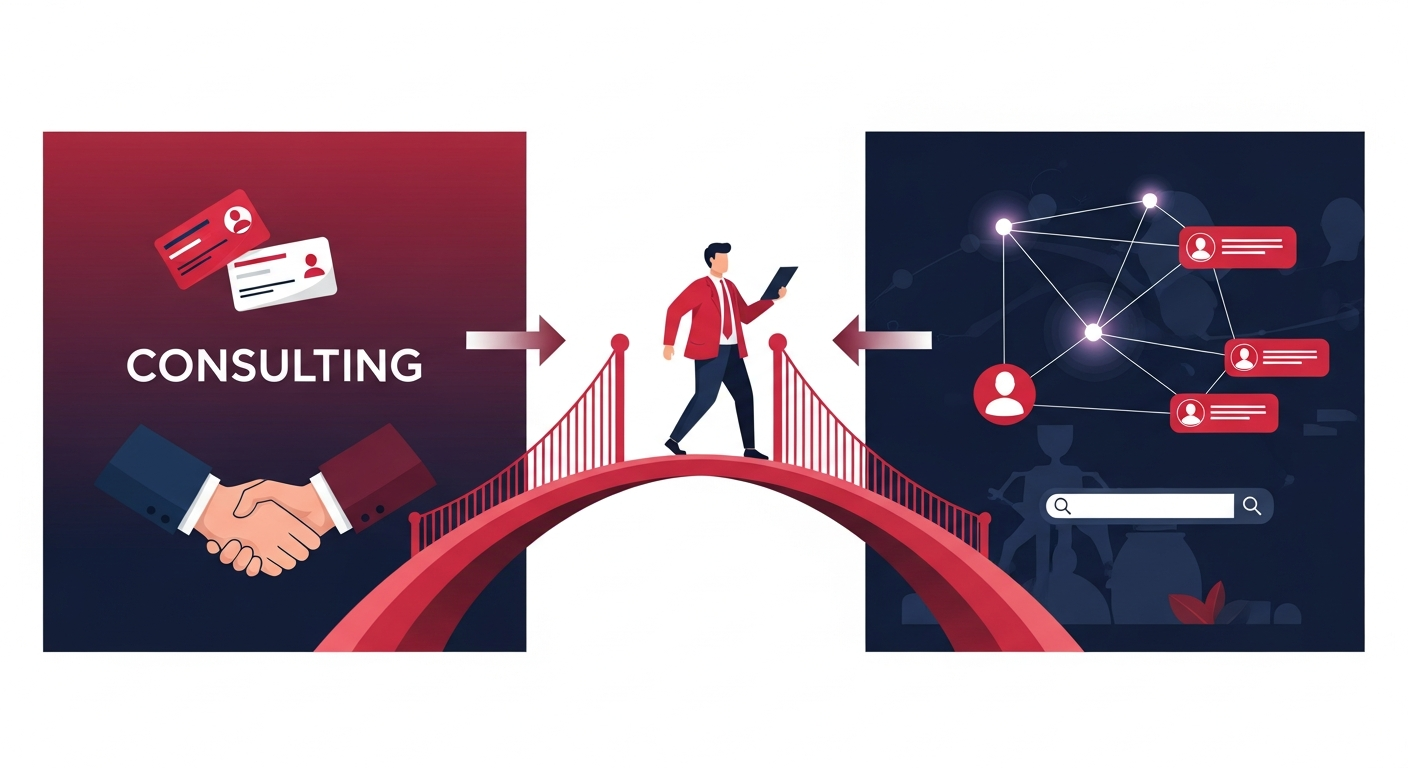
With your brand foundation and content strategy in place, the next step is to strategically amplify your presence across the most relevant platforms. This is about being seen and heard by your ideal clients where they already spend their time.
Mastering LinkedIn for Consultant Personal Branding
For consultants, LinkedIn is often the most critical platform for personal branding. It's not just a resume site; it's a professional networking hub, a content distribution channel, and a powerful search engine for B2B services. To master LinkedIn:
- Optimize Your Profile: Ensure your headline clearly states your value proposition, your "About" section tells your story and highlights your expertise, and your experience section showcases quantifiable achievements. Include relevant keywords that your ideal clients might search for.
- Consistent Content Sharing: Regularly share your original insights, articles, and repurposed content. Comment thoughtfully on industry news and posts from others.
- Engage Actively: Don't just post; interact. Respond to comments, ask questions, and participate in relevant discussions. This builds connections and demonstrates your engagement with the industry.
- Build Your Network Strategically: Connect with ideal clients, industry peers, and thought leaders. Personalize your connection requests.
These strategies are key to becoming a LinkedIn personal branding consultant that stands out.
Beyond LinkedIn: Exploring Industry Platforms and Communities
While LinkedIn is primary, don't overlook other platforms where your ideal clients gather. This might include:
- Industry-Specific Forums & Groups: Participate in online communities relevant to your niche. Offer valuable insights, answer questions, and establish yourself as a helpful expert.
- Guest Blogging & Podcasts: Contribute articles to reputable industry blogs or appear as a guest on podcasts. This exposes you to new audiences and lends third-party credibility.
- Speaking Engagements: Present at industry conferences, webinars, or local business events. Public speaking is a powerful way to demonstrate expertise and build authority.
- Online Courses/Workshops: Consider creating a mini-course or workshop related to your niche. This positions you as an educator and expert.
Each of these channels provides unique opportunities for thought leadership for consultants.
Ethical Networking and Collaborative Opportunities
True personal branding isn't just about broadcasting; it's about building genuine relationships. Focus on ethical networking – giving more than you take, offering help, and celebrating others' successes. Seek out collaborative opportunities with non-competing professionals. This could involve co-hosting a webinar, writing a joint article, or cross-promoting each other's services. Such collaborations expand your reach, introduce you to new networks, and reinforce your credibility through association. Remember, your network is not just about who you know, but who knows you and trusts your expertise.
Step 4: Build and Maintain Unwavering Credibility
Credibility is the currency of consulting. Without it, even the most brilliant personal brand will falter. This step focuses on the practices that establish and sustain trust and respect in the eyes of your clients and peers.
Upholding Ethical PR and Business Practices
At the core of a strong personal brand is unwavering integrity. This means consistently upholding ethical standards in all your interactions. Be transparent about your services, pricing, and capabilities. Always deliver on your promises. Avoid making exaggerated claims or guaranteeing outcomes you can't control. Ethical practices aren't just about avoiding pitfalls; they're about proactively building a reputation for honesty, reliability, and respect. This forms the bedrock of credibility building for consultants, ensuring that your public persona aligns with your professional conduct. Your commitment to ethical PR habits should be evident in every piece of content and every client interaction.
The Role of Testimonials, Endorsements, and Case Studies
Social proof is incredibly powerful. Potential clients want to know that you can deliver results, and there's no better way to demonstrate this than through the positive experiences of others. Actively solicit testimonials from satisfied clients – ask for specific details about the problem you solved and the impact you made. Leverage LinkedIn endorsements for your skills. Develop detailed case studies that outline a client's challenge, your approach, and the tangible results achieved. These elements don't just showcase your capabilities; they provide verifiable evidence of your value, building trust and confidence in your expertise. This is a critical aspect of how to build a consultant brand that clients can trust.
Consistent Value Delivery and Client Satisfaction
Ultimately, your personal brand is defined by the quality of your work and the satisfaction of your clients. Consistent, high-quality service is not just good business; it's the most powerful form of personal branding. Every successful project, every problem solved, and every client delighted reinforces your reputation and strengthens your brand. Focus on understanding client needs, communicating effectively, and exceeding expectations. Word-of-mouth referrals from genuinely satisfied clients are priceless, serving as organic endorsements of your brand. Avoid the temptation of hype; instead, focus on demonstrable results and cultivating genuine, long-term client relationships. This commitment to excellence ensures your consultant personal brand strategy remains strong and reputable.
Step 5: Measure, Adapt, and Scale Your Personal Brand
Building a personal brand isn't a one-time project; it's an ongoing journey. To ensure your efforts are effective and continue to yield results, you must regularly measure your impact, adapt your strategies, and plan for long-term growth.
Beyond Vanity Metrics: Tracking Real Personal Brand Impact
It's easy to get caught up in "vanity metrics" like the number of LinkedIn connections or blog post views. While these have some value, true personal brand impact goes deeper. Identify key performance indicators (KPIs) that reflect genuine brand growth and align with your business goals. These might include:
- Increased qualified inbound inquiries.
- More speaking invitations or media mentions.
- Higher conversion rates on proposals.
- Growth in average client project value.
- Positive shifts in brand perception surveys (even informal ones).
- The number of quality referrals received.
Focus on metrics that indicate a direct impact on your business and influence, rather than just surface-level engagement. This allows you to truly measure your personal brand impact.
Iterating on Your Strategy Based on Feedback and Results
The market is constantly evolving, and so should your personal brand strategy. Regularly analyze what content resonates most with your audience, which platforms yield the best engagement, and what type of interactions lead to desired outcomes (e.g., initial inquiries, discovery calls). Pay attention to direct feedback from clients and peers, as well as indirect signals from your analytics. Be prepared to refine your message, adjust your content topics, and even pivot your niche if market conditions or your own expertise shift. Agility is key to maintaining relevance and ensuring your personal brand remains potent.
Sustaining Long-Term Growth and Influence
Personal branding is a marathon, not a sprint. Sustaining long-term growth and influence requires consistent effort and a commitment to continuous learning. Stay curious, keep abreast of industry trends, and continually hone your skills. Regularly update your content with fresh insights and perspectives. Nurture your network and maintain relationships. As your expertise deepens and your experience grows, your personal brand will naturally evolve and strengthen. The goal isn't just to build a brand, but to cultivate a lasting reputation as a trusted, authoritative, and valuable consultant who makes a real difference for clients. This ongoing process of learning and adaptation is fundamental to how to build a consultant brand that endures.
Frequently Asked Questions
How long does it take to build a strong personal brand as a consultant?
Building a strong personal brand is a continuous process, not a one-time task. While you can start seeing initial results and increased visibility within 6-12 months of consistent effort, developing a truly robust and recognized personal brand that positions you as a leading authority can take 2-5 years. The key is consistency, authenticity, and continuous engagement. It's about building trust over time through valuable contributions and reliable service.
What's the most effective social media platform for consultants to build a personal brand?
For most B2B consultants, LinkedIn is undeniably the most effective platform. Its professional focus, networking capabilities, and content distribution features make it ideal for showcasing expertise, connecting with decision-makers, and establishing thought leadership. However, the "most effective" platform ultimately depends on your specific niche and target audience. For some, industry-specific forums, professional communities, or even platforms like X (formerly Twitter) for real-time industry commentary might also be highly valuable. The best approach is to master LinkedIn first, then strategically expand to other relevant channels where your ideal clients are active.
Can personal branding help me attract higher-paying clients?
Absolutely. A strong personal brand positions you as an expert and a valuable thought leader, rather than just a commodity. When clients perceive you as an authority with a unique approach and proven results, they are often willing to pay a premium for your specialized expertise. Personal branding helps you move away from competing on price and towards competing on value and unique solutions. It attracts clients who understand the significant impact you can deliver and are prepared to invest accordingly, leading to more fulfilling and higher-value engagements.
How can I maintain authenticity while promoting myself?
Maintaining authenticity is crucial for long-term personal brand success. It starts with genuinely understanding your core values, expertise, and what you truly stand for (as outlined in Step 1). Here's how to ensure authenticity:
- Be Yourself: Don't try to imitate others. Let your unique personality, style, and perspective shine through.
- Share Your True Expertise: Only speak and write about topics where you have genuine knowledge and experience.
- Be Transparent: Be honest about your capabilities, your process, and any limitations. Avoid exaggerating claims.
- Engage Genuinely: Interact with your audience in a way that feels natural to you. Respond thoughtfully and respectfully.
- Focus on Value: Your promotion should always be centered on providing value to your audience, not just selling yourself.
- Embrace Vulnerability (where appropriate): Sharing lessons learned from challenges can humanize your brand and build deeper connection.
Authenticity means being true to who you are, what you do, and what you believe in, consistently across all your professional interactions and communications.