In today's dynamic business landscape, simply having a great product or service isn't enough. The market is saturated, attention spans are short, and every founder, consultant, and creator is vying for visibility. So, how do you cut through the noise and genuinely connect with the right audience? The answer often lies in defining your unique market niche.
At ToniPR, we believe that authentic storytelling, rooted in clarity about who you are and who you serve, is your most powerful PR tool. This isn't about hype; it's about practical, credible positioning that resonates.
Introduction: Why Your Unique Niche is Your PR Superpower
Imagine trying to sell a specialized medical device to everyone on the street. Inefficient, right? Now imagine trying to promote your cutting-edge consulting service or artisanal craft to "everyone who needs it." The principle is the same. Without a clear, unique market niche, your marketing efforts scatter, your message dilutes, and your potential clients struggle to understand why you're the ideal choice.
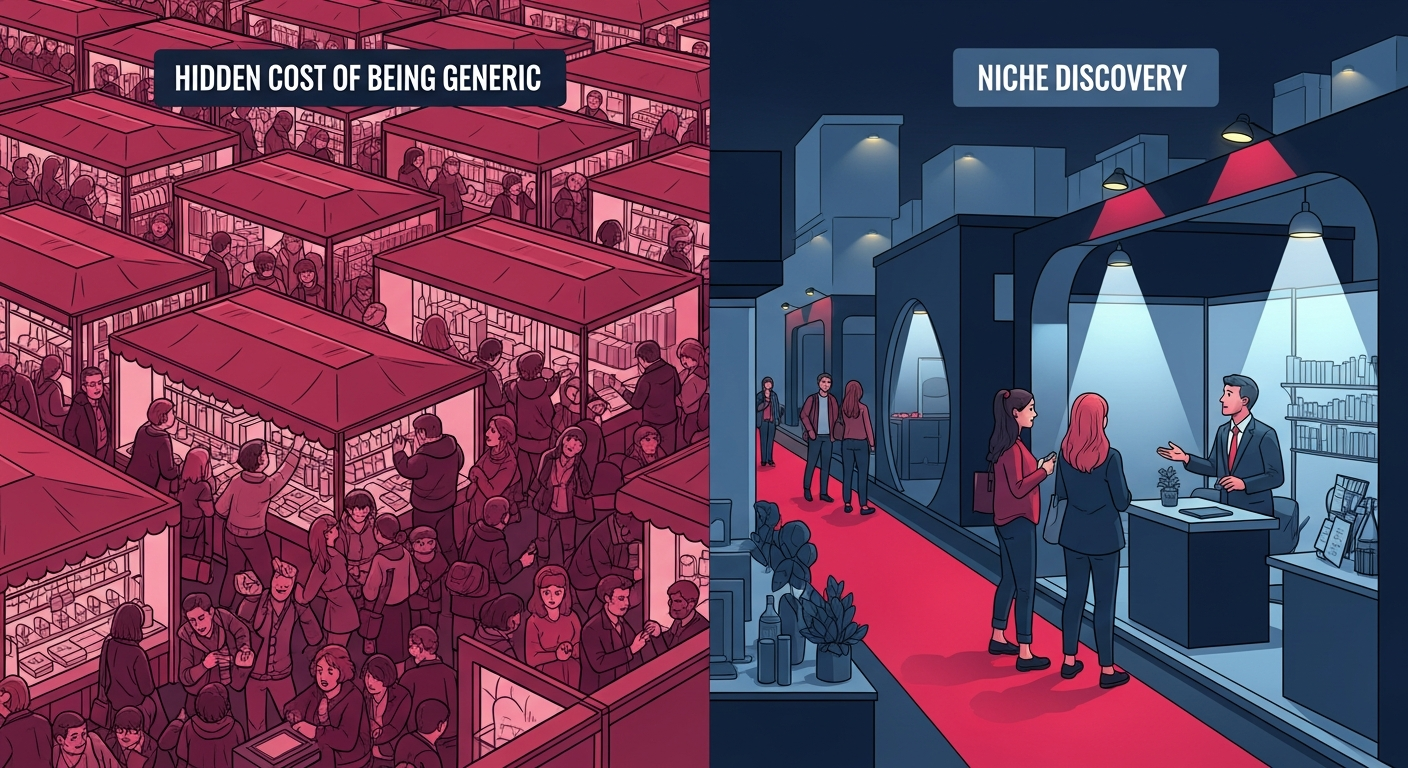
The Hidden Cost of Being Generic in a Crowded Market
Many founders and consultants start broad, fearing that niching down will limit their opportunities. However, the opposite is often true. Being generic means you're competing on price, struggling to differentiate, and attracting clients who may not be the best fit for your specific strengths. This leads to burnout, lower profitability, and a constant uphill battle for attention. The hidden cost isn't just lost revenue; it's lost credibility and diminished impact.
The ToniPR Approach to Niche Discovery: Beyond Surface-Level Insights
At ToniPR, we understand that uncovering your unique position isn't a quick survey; it's a process of introspection and strategic articulation. Our AI-powered platform helps you do this through guided, PR-style interviews. These aren't just questions; they're prompts designed to help you articulate your expertise, pinpoint your ideal audience's pain points, and define your unique solutions. By focusing on interview-led introspection, you don't just identify a niche; you understand its nuances and can communicate it with confidence and credibility.
- Understanding how a clearly defined niche cuts through noise and builds credibility is foundational to effective PR.
- Connecting niche identification directly to generating highly targeted, press-ready content ensures your message is always relevant.
- Emphasizing interview-led introspection is a core method for uncovering your unique position, allowing you to articulate it authentically.
Discover how ToniPR can help you articulate your unique brand positioning and transform your insights into powerful PR assets. Visit ToniPR — AI PR interviews.
Deconstructing 'Unique Market Niche': More Than Just a Buzzword
The term "niche" is often thrown around in business discussions, but what does it truly mean for a solo consultant, a small business owner, or a startup founder? It's not just about picking a smaller audience; it's about strategic alignment and differentiation.
What Truly Defines a Niche for Founders and Consultants?
A unique market niche isn't simply a segment of a larger market. It's the precise intersection of three critical elements:
- A Specific Problem: You solve a distinct, often underserved problem that a particular group faces. This problem is significant enough that your target audience actively seeks solutions.
- A Specific Audience: You serve a clearly defined group of people or businesses who experience this problem. You understand their demographics, psychographics, behaviors, and most importantly, their aspirations and frustrations.
- Your Unique Solution: You offer a distinct approach, methodology, or expertise that differentiates you from generalists or other niche players. This is where your brand differentiation strategy truly shines.
When these three converge, you've found your sweet spot – a place where you can be the go-to expert, not just another option.
Why a Niche Isn't Limiting – It's Your Strategic Advantage
The biggest misconception about niching down is that it limits your potential. In reality, it liberates you. By focusing your efforts, you:
- Attract Ideal Clients: You stop chasing every lead and start attracting clients who specifically need what you offer, are willing to pay for your expertise, and are a joy to work with.
- Enhance Credibility: When you're known for solving a particular problem for a particular group, your authority grows exponentially. You become the specialist, not the generalist.
- Sharpen Your Message: With a clear audience and problem, your messaging becomes laser-focused, making your PR and marketing efforts far more effective.
- Boost Profitability: Specialists command higher fees and experience less price sensitivity because they offer unique value that is harder to replicate.
This clarity enhances your competitive advantage definition and brings value proposition clarity. For creators, leveraging this focused expertise is crucial for building a loyal audience. Learn more about how creators can turn niche expertise into a thriving audience.
Practical Steps to Uncover and Define Your Niche Through Strategic Interviewing
Defining your unique market niche isn't about guesswork; it's about systematic inquiry. Our interview-led approach helps you dig deep and articulate what makes you stand out.
Self-Interviewing for Clarity: Asking the Right Questions
Before you can articulate your niche to the world, you must first articulate it to yourself. This internal reflection is a critical step in your brand differentiation strategy. Use structured self-interview questions to explore:
- What problems do I genuinely love solving? (Hint: these often align with your core strengths and passions.)
- What unique skills, experiences, or perspectives do I bring to the table that others might not?
- What results have I consistently delivered for clients or customers that truly made a difference?
- What topics do I find myself constantly learning about, discussing, or teaching?
These questions help articulate your expertise, passions, and problem-solving abilities, forming the bedrock of your niche.
Analyzing Your Ideal Client: Who Do You Truly Serve?
Your niche is as much about who you serve as what you do. This is your target audience identification phase. Move beyond broad demographics and develop detailed ideal client personas:
- What specific industry or demographic do they belong to?
- What are their biggest pain points, challenges, or frustrations related to the problem you solve?
- What are their aspirations, goals, and desired outcomes?
- Where do they seek information, and what channels do they use?
- What objections might they have, and what motivates them to make decisions?
Understanding these details allows you to tailor your solutions and messaging directly to their needs, ensuring your value proposition clarity.
Mapping the Competitive Landscape: Identifying White Space
A niche isn't just about what you do; it's also about where you fit in the existing market. Conduct a thorough competitive advantage definition analysis:
- Who are your direct and indirect competitors?
- What problems do they solve, and for whom?
- What are their strengths and weaknesses?
- Where are the gaps in their offerings? What needs are currently underserved or overlooked?
Identifying this "white space" allows you to position yourself uniquely, highlighting how your solution fills a specific void or offers a superior approach. This strategic positioning is key for strategies for business positioning and market differentiation.
Identifying Your Unique Value Stack: What Makes You Indispensable?
Once you understand the problem, the audience, and the competitive landscape, it's time to solidify your unique value. This is your value proposition clarity statement, directly addressing your competitive advantage definition.
- What specific benefits do clients receive when working with you? (Focus on outcomes, not just features.)
- How do you solve their problem differently or better than anyone else?
- What is your unique process, methodology, or philosophy?
- What specific results or transformations do you enable?
Clearly defining your unique selling propositions and how they address specific market needs makes your offering irresistible to your target niche. This forms the basis of a powerful elevator pitch strategy for founders.
Crafting Your Differentiated Brand Story and Messaging
Defining your unique market niche is only the first step. The next is to translate those insights into a compelling narrative that resonates with your ideal audience and establishes your credibility.
From Niche Insights to a Compelling Narrative
Your niche isn't just a business strategy; it's the foundation of your brand story. This story should articulate your "why," your journey, and how your unique perspective leads to your unique solution. It's about transforming your niche definition into an authentic and engaging brand story that draws people in.
- What problem compelled you to specialize in this niche?
- What specific experiences or expertise qualify you to serve this niche?
- How has your approach evolved to best meet the needs of your target audience?
An authentic story fosters connection and trust, which are invaluable assets in PR. Learn more about crafting your brand story: why authenticity wins customers.
Articulating Your Value Proposition with Precision and Credibility
Your value proposition is the concise promise of value you deliver. For your niche, this must be incredibly precise and credible. It moves beyond generic statements to directly address the specific pain points of your target audience and highlight your unique solution. Ensuring your value proposition clarity communicates the unique benefits you offer is paramount.
- "I help [specific niche audience] achieve [specific desired outcome] by [your unique method/solution]."
- Focus on the transformation you provide, not just the service you offer.
- Use language that your niche understands and values.
Developing Your Core Messaging Pillars for Consistent Communication
Once your brand story and value proposition are clear, establish your core messaging pillars. These are the 3-5 key themes or messages you consistently communicate across all platforms. They act as guardrails, ensuring that every piece of content, every social media post, and every interview answer reinforces your unique niche and strengthens your brand.
- These pillars should directly reflect your expertise, your audience's needs, and your unique approach.
- Establishing consistent messaging that resonates with your target audience across all platforms builds recognition and trust.
- Emphasizing authenticity is the foundation of effective brand storytelling, preventing your message from sounding forced or inauthentic.
Activating Your Niche for Credible PR and Content Repurposing
A well-defined unique market niche is a goldmine for PR and content creation. It provides endless opportunities to generate highly relevant, credible, and impactful content that speaks directly to your ideal audience.
Repurposing Niche Insights for Maximum Reach and Impact
This is where ToniPR truly shines. Once you've articulated your niche through our interview process, those insights don't just sit there. We help you transform them into a wealth of press-ready outputs:
- Quotes: Ready-to-use soundbites for media inquiries or your website.
- LinkedIn Posts: Engaging content that positions you as a thought leader in your niche.
- Articles & Blog Posts: In-depth explorations of niche-specific problems and solutions.
- Bios: Sharpened personal and company descriptions that clearly state your niche.
Turning interview answers about your niche into these diverse content formats ensures maximum reach and impact from your core expertise.
LinkedIn as Your Niche Storyboard: Building Thought Leadership
LinkedIn is an indispensable platform for solo consultants, founders, and small business owners to showcase their niche expertise. Your profile, your posts, and your interactions should consistently reflect your unique market niche. By regularly sharing insights, commenting thoughtfully on industry news, and engaging with your target audience, you build a powerful presence as a go-to authority.
- Leveraging LinkedIn to showcase your niche expertise allows you to engage directly with your target audience and establish thought leadership.
- Consistent, niche-focused content strengthens your brand’s authority and attracts relevant opportunities.
Ethical PR: Building Trust, Not Hype
In the ToniPR philosophy, PR is about building genuine connections and credibility, not making unrealistic promises. When you have a clear unique market niche, your PR efforts become inherently more ethical and effective. You're not trying to be everything to everyone; you're offering genuine value to a specific group that truly needs it. This focus on genuine value and credible storytelling is the bedrock of long-term trust.
- Fostering ethical PR habits means focusing on genuine value and credible storytelling, rather than sensationalism.
- Your niche expertise allows you to offer authentic insights that resonate, rather than generic platitudes.
Ready to activate your niche and transform your expertise into powerful PR outputs? Explore how ToniPR can help.
The Long-Term Impact: Sustainable Growth, Authority, and Authenticity
Defining and consistently communicating your unique market niche isn't a one-time exercise; it's a strategic commitment that yields profound long-term benefits for your business and personal brand.
Beyond Visibility: Attracting the Right Opportunities
When you're clearly positioned within a specific niche, you move beyond simply gaining visibility to attracting the *right* kind of visibility. This means:
- More Qualified Leads: People who reach out already understand your specific expertise and are pre-qualified for your services.
- Strategic Partnerships: Other businesses or individuals whose niches complement yours will naturally seek you out for collaboration.
- Speaking Engagements & Media Features: You become a sought-after expert for specific topics, leading to high-value opportunities that enhance your authority.
A well-defined niche leads to more qualified leads and strategic partnerships, driving sustainable growth.
Becoming the Go-To Expert in Your Field
The journey from being a generalist to a recognized authority is paved by consistent, niche-focused effort. By concentrating your expertise and continually delivering value within your chosen market, you build a reputation that precedes you. This authority leads to:
- Premium Pricing: As a specialist, you can command higher fees for your unique insights and solutions.
- Increased Demand: As your reputation grows, demand for your services will naturally increase, often leading to waitlists or the ability to be more selective with clients.
- Lasting Impact: You contribute meaningfully to your chosen community or industry, leaving a legacy of expertise and value.
Reinforcing the value of authenticity in building a lasting brand and reputation ensures that your growth is not only sustainable but also deeply fulfilling.
Frequently Asked Questions
How do I know if my chosen niche is too narrow or too broad?
A niche is too broad if you struggle to identify specific pain points common to everyone in that group, if your messaging feels generic, or if you face overwhelming competition from generalists. It's too narrow if there isn't a sufficient number of people or businesses willing and able to pay for your specific solution, or if the problem you're solving is too infrequent. The sweet spot is a niche large enough to sustain your business, but small enough for you to be a recognized expert and easily differentiate yourself. Test your assumptions by talking to potential clients and researching market size.
What's the key difference between identifying a target market and defining a unique market niche?
A target market is a broader segment of the population you aim to serve (e.g., "small business owners," "marketing professionals"). A unique market niche goes deeper, identifying a *specific problem* within that target market that you are uniquely qualified to solve for a *specific subgroup* of that market. For example, "small business owners" is a target market. "Small business owners struggling with ethical AI implementation in their customer service" is a unique market niche. The niche implies specialization and a distinct competitive advantage, whereas a target market is simply who you're aiming at.
Can my unique market niche evolve over time, and if so, how do I manage that?
Absolutely, your unique market niche can and often should evolve. As you gain more experience, the market shifts, and your own passions develop, you might discover new problems to solve or new audiences to serve. Managing this evolution involves continuous self-assessment, client feedback, and market research. Don't be afraid to pivot if your original niche no longer serves you or the market effectively. The key is to be intentional about it, ensuring your messaging and services adapt consistently to your refined focus, and communicating these changes transparently to your audience.
How does defining my niche directly translate into more effective PR and content strategy?
A well-defined niche is the bedrock of effective PR and content. First, it provides clarity for your messaging, ensuring every piece of content speaks directly to your ideal audience's specific needs and pain points. This makes your content more relevant and engaging. Second, it allows you to position yourself as an authority on specific topics, making you a more attractive source for journalists and media outlets seeking expert commentary. Instead of broadly pitching yourself, you can offer highly specific, valuable insights that fit a reporter's exact story. Finally, it enables efficient content repurposing; answers to niche-specific interview questions can be transformed into targeted blog posts, social media updates, and quotes, amplifying your message across various channels with minimal extra effort. It streamlines your efforts, ensuring every piece of communication builds your credibility within your chosen field.